

Some bodybuilders inspire you with trophies. Others inspire you with a shape, a work ethic, or a story that refuses to quit. 🏋️
This list brings together five very different icons — four competitive champions and one famous exception. That exception matters, so let us be clear from the start: Sylvester Stallone never competed on a bodybuilding stage.
He is included here as a cultural and fitness inspiration, not as a competitive bodybuilder. His screen physiques sent millions of people to the gym, and that influence is real — it just belongs in a different category from an Olympia title.
The other four earned their place on stage. Together, they cover almost every way this sport can inspire: beauty, intensity, brains, and sheer star power. 💪
1. Serge Nubret: The Black Panther
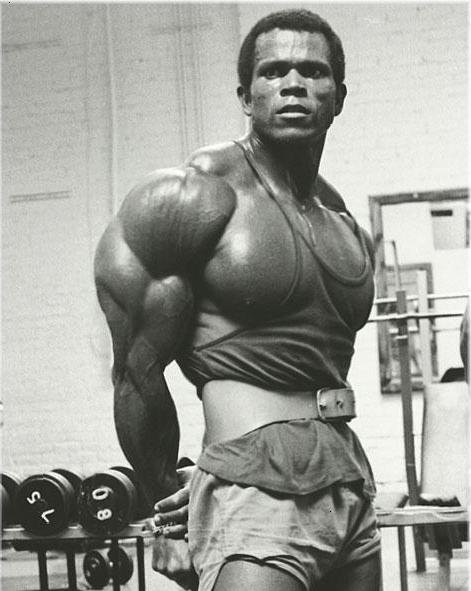
Serge Nubret, born on 6 October 1938 in Anse-Bertrand, Guadeloupe, was nicknamed “The Black Panther” — and one look at his physique explains why. 🐆
His shape was the definition of classic: full, round muscles, a small waist, and a flow from shoulders to calves that still shows up in gym posters today.
Nubret never won the Mr. Olympia, but he came close. He placed third in 1972 and finished second in the heavyweight class in 1975, behind Arnold Schwarzenegger.
After a bitter break with the IFBB in 1975, he simply won elsewhere. He took the NABBA Pro Mr. Universe title in London in 1976, then world titles with other federations, including the WABBA World Championships in 1981 and 1983.
He also founded WABBA himself in 1975, shaping the sport off stage as well as on it. His training was built on high volume and chasing the pump — lighter weights, lots of sets, and almost no rest.
Nubret died on 19 April 2011, but his lesson survives: you do not need to be the biggest person on stage to be the one everyone remembers. Read his full story here.
2. Dorian Yates: The Shadow
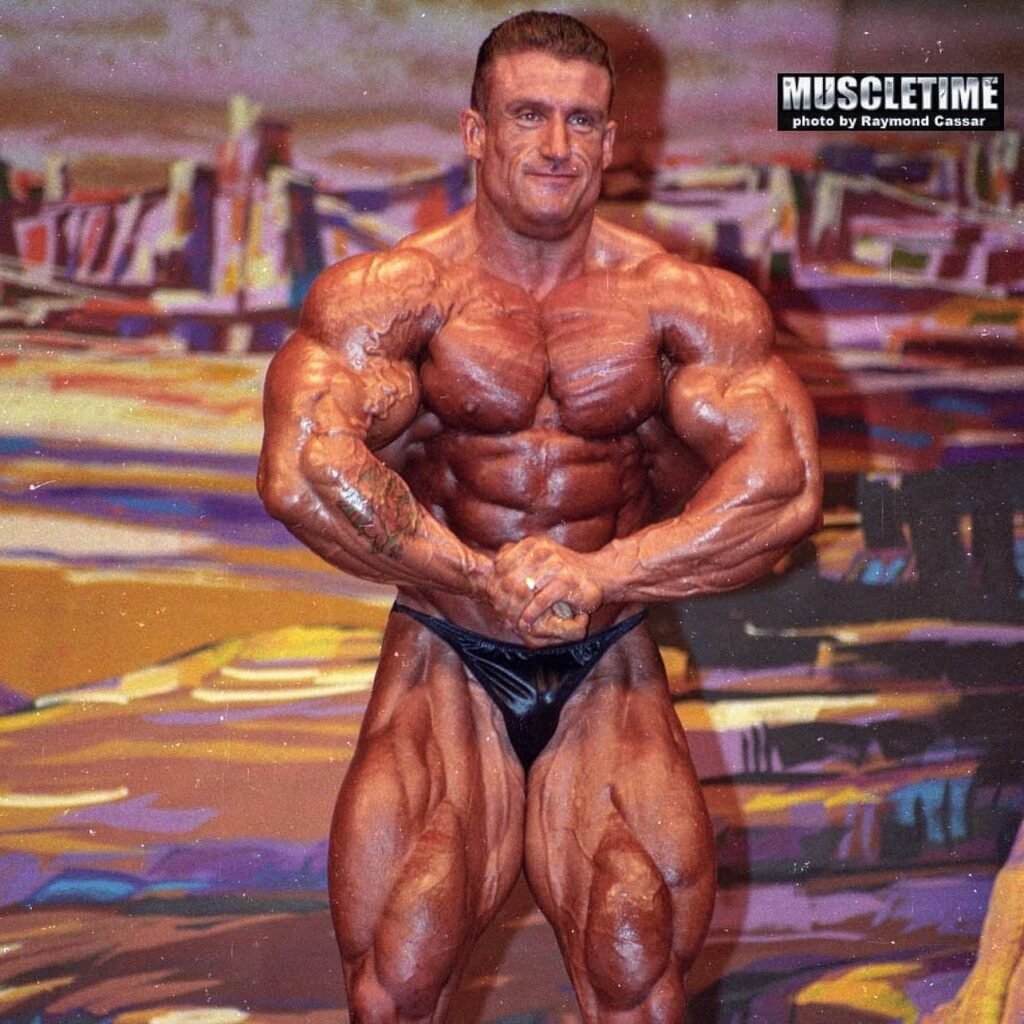
Dorian Yates, born on 19 April 1962 in Solihull, England, earned the nickname “The Shadow” because he trained away from the spotlight — then arrived on stage looking unbeatable. 🌑
He finished second at the 1991 Mr. Olympia behind Lee Haney. Then he won six in a row, from 1992 to 1997, and changed what a champion’s body looked like.
Yates brought a new combination of size and grainy, hard conditioning. His back, in particular, set a standard that rivals spent years trying to match.
His method was famously brutal and brief. Influenced by Mike Mentzer’s high-intensity ideas, his “Blood and Guts” training pushed a few all-out sets to the limit instead of piling on endless volume.
The cost was real. Injuries, including torn biceps and triceps, helped end his career after his 1997 win — a win he took just weeks after tearing a triceps.
Yates proved that discipline and intensity, applied with total focus, can carry a quiet man from a Birmingham gym to the top of the sport. See where Dorian Yates is now.
3. Frank Zane: The Chemist
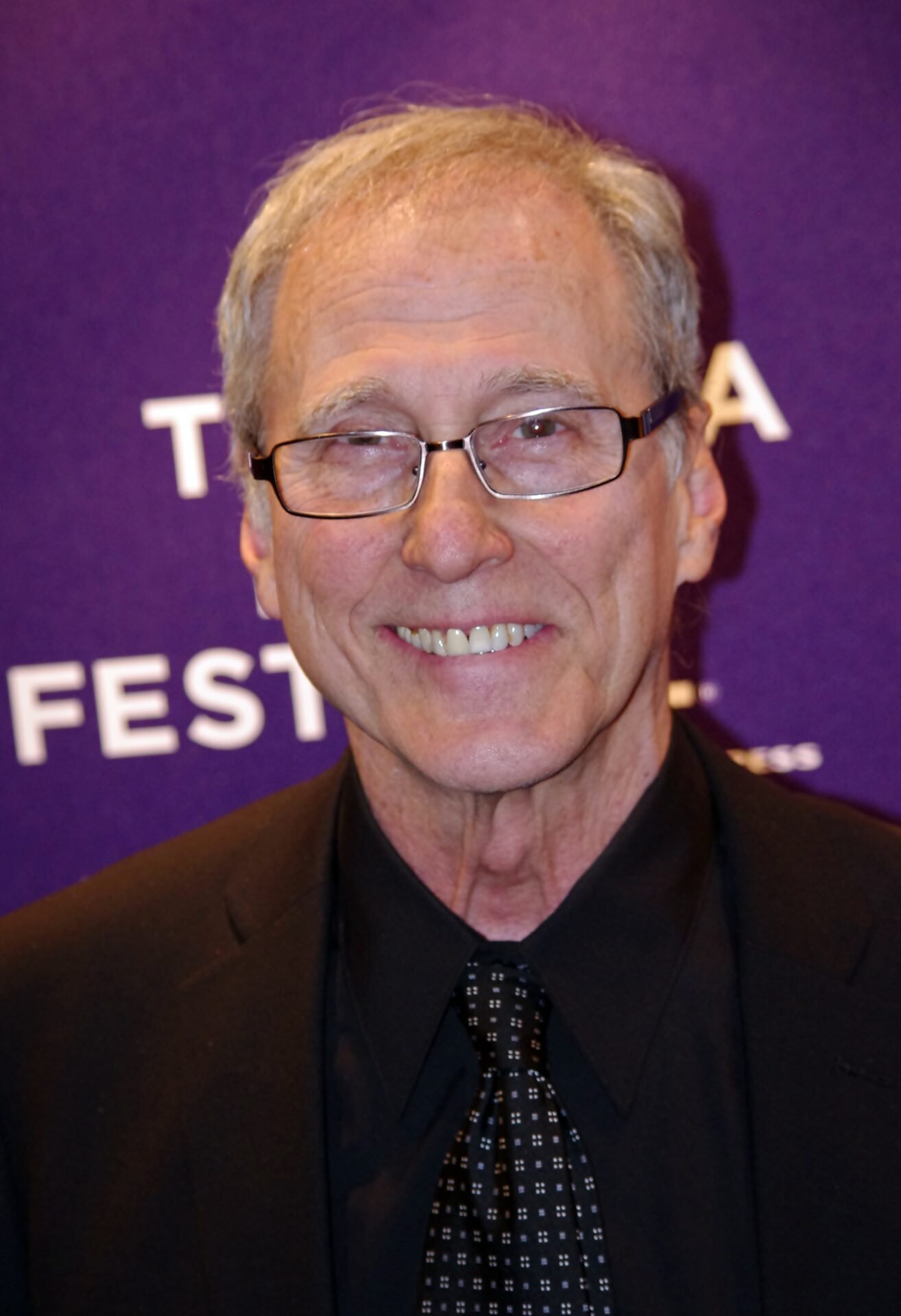
Frank Zane, born on 28 June 1942 in Kingston, Pennsylvania, was the thinking man’s champion — a former science and maths teacher nicknamed “The Chemist.” 🧪
He won the Mr. Olympia three years running, in 1977, 1978 and 1979. At around 5 ft 9 in and under 200 lb, he beat bigger men with proportion, symmetry, and a vacuum pose that made his waist look impossibly small.
His most famous win came before any Olympia. At the 1968 IFBB Mr. Universe, Zane beat a young Arnold Schwarzenegger — one of only three men ever to beat Arnold in a bodybuilding contest.
Zane’s approach was precise. He treated training, diet and posing as a craft, holding each pose until it looked like a photograph and preparing his mind as carefully as his muscles.
His reign ended at the 1980 Mr. Olympia, where Arnold’s contested comeback win left Zane in third. But his message only grew stronger with time.
In a sport that often rewards size above all, Zane proved that shape and presentation can still win — and that lesson now lives on in the Classic Physique division. Read about Frank Zane’s diet and training.
4. Sylvester Stallone: Hollywood’s Fitness Icon (Not a Competitive Bodybuilder)
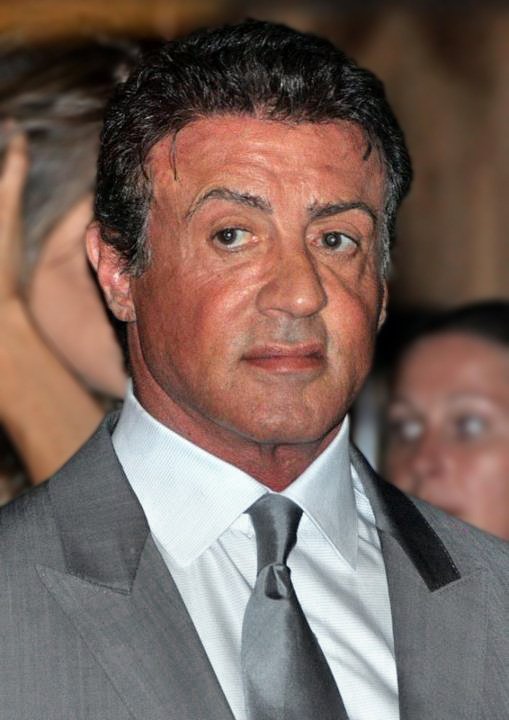
Let us say it plainly once more: Sylvester Stallone is an actor, not a competitive bodybuilder. He never entered a bodybuilding contest, and no contest record should ever be invented for him. 🎬
Born on 6 July 1946 in New York City, Stallone wrote and starred in Rocky (1976), playing underdog boxer Rocky Balboa. He followed it with John Rambo in First Blood (1982).
Those two characters did something no trophy could. They put a lean, hard-working, muscular hero on screens around the world — and gyms filled up with people who wanted to train like Rocky and Rambo.
For Rocky III (1982), Stallone transformed himself into an exceptionally lean, muscular shape through boxing, weight training and cardio. That look set a new standard for Hollywood fitness.
His long rivalry and later friendship with Arnold Schwarzenegger became part of the legend too — two action stars pushing each other, on screen and in the gym, for decades.
Stallone belongs on this list for one reason only: inspiration. Millions started training because of him, even though he never stood on a bodybuilding stage. That is influence, honestly labelled.
5. Arnold Schwarzenegger: The Austrian Oak
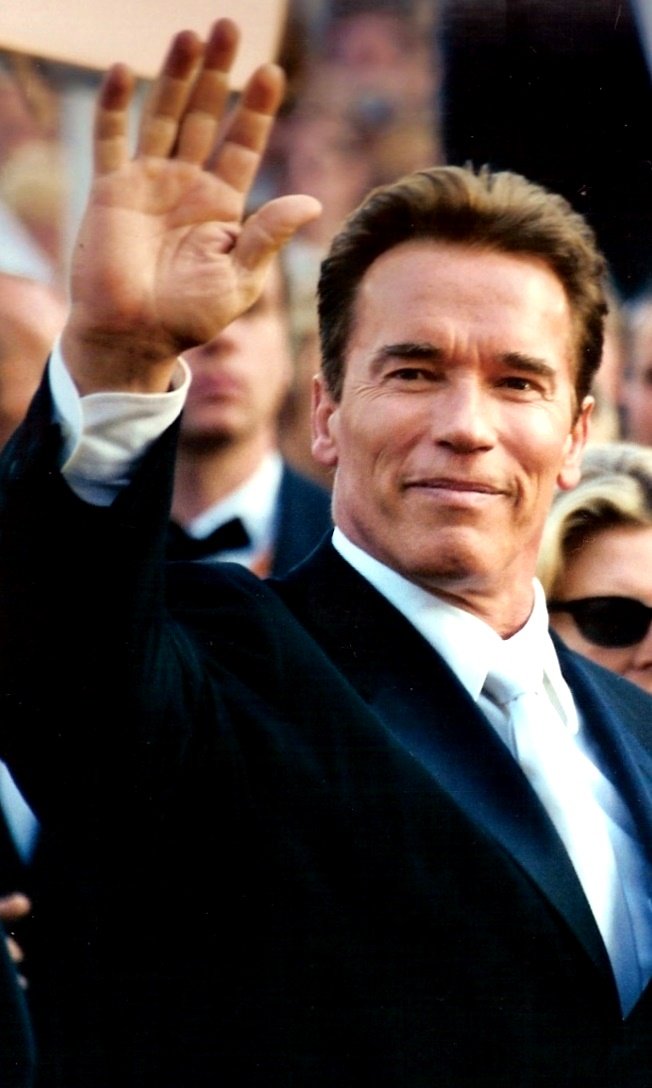
No list of bodybuilding icons is complete without Arnold Schwarzenegger. Born on 30 July 1947 in Thal, Austria, he was nicknamed “The Austrian Oak” — and he grew into the most famous bodybuilder who ever lived. 🌳
He won the NABBA Mr. Universe amateur title in 1967 at just 20, then lost his first Mr. Olympia attempt in 1969 to Sergio Oliva. He did not lose again for six years.
Arnold won seven Mr. Olympia titles: six in a row from 1970 to 1975, and a seventh in 1980. That last win, a comeback after five years away, remains contested — many felt other competitors deserved it that night.
His training was high volume and high intensity, built on visualising success and attacking weaknesses until they became strengths. His chest, biceps and calves became the sport’s reference points.
Then he carried bodybuilding to the world. His films, his book The Encyclopedia of Modern Bodybuilding, and the Arnold Sports Festival took the sport far beyond gym walls.
From a small Austrian village to Hollywood and the California governor’s office, Arnold’s story is the sport’s greatest proof that muscle can open any door. Read the full Arnold retrospective here. For the men who stood against him, see Arnold’s top bodybuilding rivals.
What These Five Icons Teach Us
Nubret teaches shape. Yates teaches intensity. Zane teaches precision. Stallone teaches that inspiration can come from a screen as well as a stage. Arnold teaches ambition. ✨
Different paths, different bodies, same lesson: pick your standard, train for it honestly, and keep going long after the excitement fades.
That is why these five still matter in 2026. Not because they were perfect, but because each of them changed what lifters believed was possible.
Frequently Asked Questions
Was Sylvester Stallone a competitive bodybuilder?
No. Stallone is an actor and fitness icon. He never competed in a bodybuilding contest. He is included in this list only as a cultural and fitness inspiration, and that distinction is stated in his section and in the introduction.
Did Serge Nubret ever win Mr. Olympia?
No. His best Olympia result was second place in the heavyweight class in 1975, behind Arnold Schwarzenegger. He went on to win the NABBA Pro Mr. Universe in 1976 and WABBA world titles in 1981 and 1983.
How many Mr. Olympia titles did Dorian Yates win?
Six, consecutively from 1992 to 1997. He finished second in 1991 to Lee Haney before starting his winning run, and retired after his 1997 victory.
How did Frank Zane beat bigger bodybuilders?
With proportion, symmetry, conditioning and posing. Zane won the Mr. Olympia in 1977, 1978 and 1979 at under 200 lb, and he had already beaten Arnold Schwarzenegger at the 1968 IFBB Mr. Universe.
Why is Arnold Schwarzenegger’s 1980 Olympia win called contested?
Because Arnold returned after five years away and won with only a short preparation, while several rivals and fans felt other competitors were in better shape that night. The title stands in the record books, but the debate has never gone away.