

Ronnie Coleman is, for most fans, simply “The King” — the man who turned professional bodybuilding into a one-man era. 👑
Between 1998 and 2005 he won the Mr. Olympia eight years in a row, tying the all-time record, and collected 26 professional titles along the way.
He did the first half of it while working full-time as a Texas police officer. This is his complete, verified story — the record, the lifts, the surgeries, and the fight for his life that came long after the trophies.
⚡ Quick Facts
| Full Name | Ronald Dean Coleman |
| Nickname | The King |
| Born | May 13, 1964 — Monroe, Louisiana, USA |
| Height | 5 ft 11 in (180 cm) |
| Contest Weight | Reported around 287–300 lb (130–136 kg) in his prime years |
| Division | IFBB Pro League Men’s Open Bodybuilding |
| Pro Card | 1991 IFBB World Amateur Championships — Heavyweight winner |
| Pro Wins | 26 |
| Mr. Olympia Titles | 8 (1998–2005) — tied all-time record |
| Day Job | Arlington, Texas police officer (1989–2000; reserve until 2003) |
| Status | Retired (2007) |
| @ronniecoleman8 |
🌱 Louisiana Roots and a Football Scholarship
Ronald Dean Coleman was born on May 13, 1964, in Monroe, Louisiana, and raised in nearby Bastrop. Sport came early — and so did the work ethic his household was built on.
He went to Grambling State University, where he played football as a middle linebacker under the legendary coach Eddie Robinson and graduated cum laude with a degree in accounting. 🎓
The accounting jobs never came. Coleman worked at Domino’s Pizza — by his account, so short of money that he lived on the free pizza — before finding a different uniform altogether.
👮 The Officer From Arlington
In 1989, Coleman joined the Arlington Police Department in Texas. He would serve as a full-time officer until 2000, and as a reserve officer until 2003.
His career in uniform ran alongside the first act of his bodybuilding life. A fellow officer, Gustavo Arlotta, pointed him toward Metroflex Gym, owned by amateur bodybuilder Brian Dobson.
Dobson made him an offer: a free lifetime membership, if Dobson could coach him for the 1990 Mr. Texas. Coleman accepted — and won the heavyweight and overall titles, beating his own coach in the process. 🏆
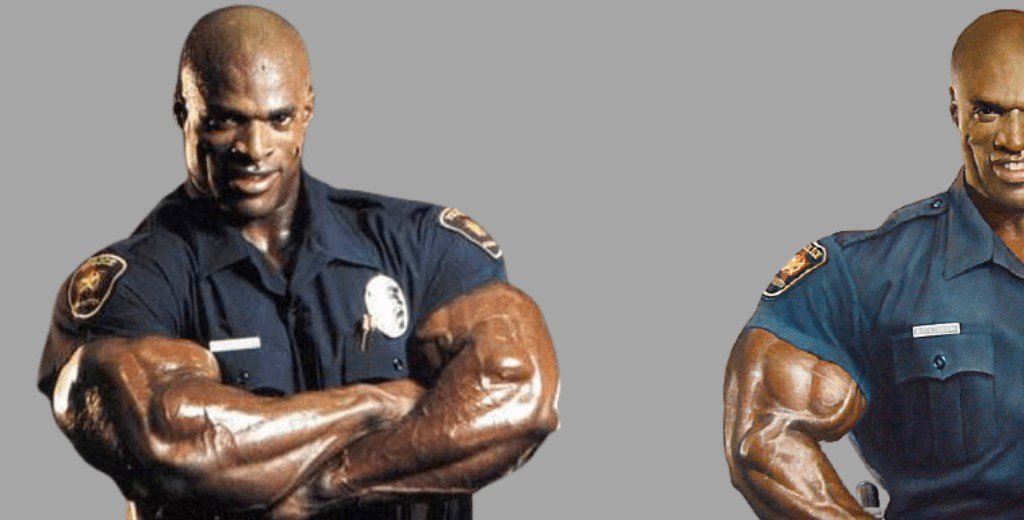
He followed it with third place in the heavyweight class at the 1990 NPC Nationals. The patrol car and the posing stage were now officially sharing a calendar.
🎟️ The Pro Card and the Long Apprenticeship (1991–1994)
In 1991, Coleman won the heavyweight class at the IFBB World Amateur Championships and earned his professional card. It is worth pausing on what happened next: almost nothing, for years.
His pro debut came at the 1992 Chicago Pro, where he placed 11th. At his first Mr. Olympia that year he finished 16th — outside the top 15 entirely.
Through 1993 and 1994 he ground through the Grand Prix circuit — 6th in Chicago, 4th at the French Grand Prix, 3rd at both the French and German Grand Prix in 1994 — while Dorian Yates redefined the sport above him.
Coleman’s Olympia placing crept from 16th to 15th. Nothing about those years suggested a king in waiting. Everything about them explains the one who arrived. 💪
🏆 First Wins and the Climb (1995–1997)
The breakthrough came in 1995, when Coleman won the Canada Pro Cup — his first professional victory. He won it again in 1996, and added the Russian Grand Prix in 1997.
His Olympia placings told the story of a man closing in: 11th in 1995, 6th in 1996, then a step back to 9th in 1997 in the last year of the Yates era.
He was still a full-time police officer through all of it, training at Metroflex before and after shifts — a schedule that would have broken most contenders before the judges ever saw them.
👑 The Reign: Eight Straight (1998–2005)
Dorian Yates retired after the 1997 Olympia, and Flex Wheeler was the favourite to succeed him. Nobody told Ronnie Coleman.
He opened 1998 with wins at the Finnish and German Grand Prix, the Night of Champions and the Toronto Pro. Then, at Madison Square Garden in New York, weighing 248 lb and shredded to the bone, he beat Wheeler to become Mr. Olympia. 🔥
From 1998 to 2005, the Sandow stayed in the same house for eight straight autumns. Coleman defended the title in 1999 and 2000 with perfect scores, getting bigger almost every year.
In 2001 he made history of a different kind, winning the Arnold Classic and the Mr. Olympia in the same calendar year — the first bodybuilder ever to do it.
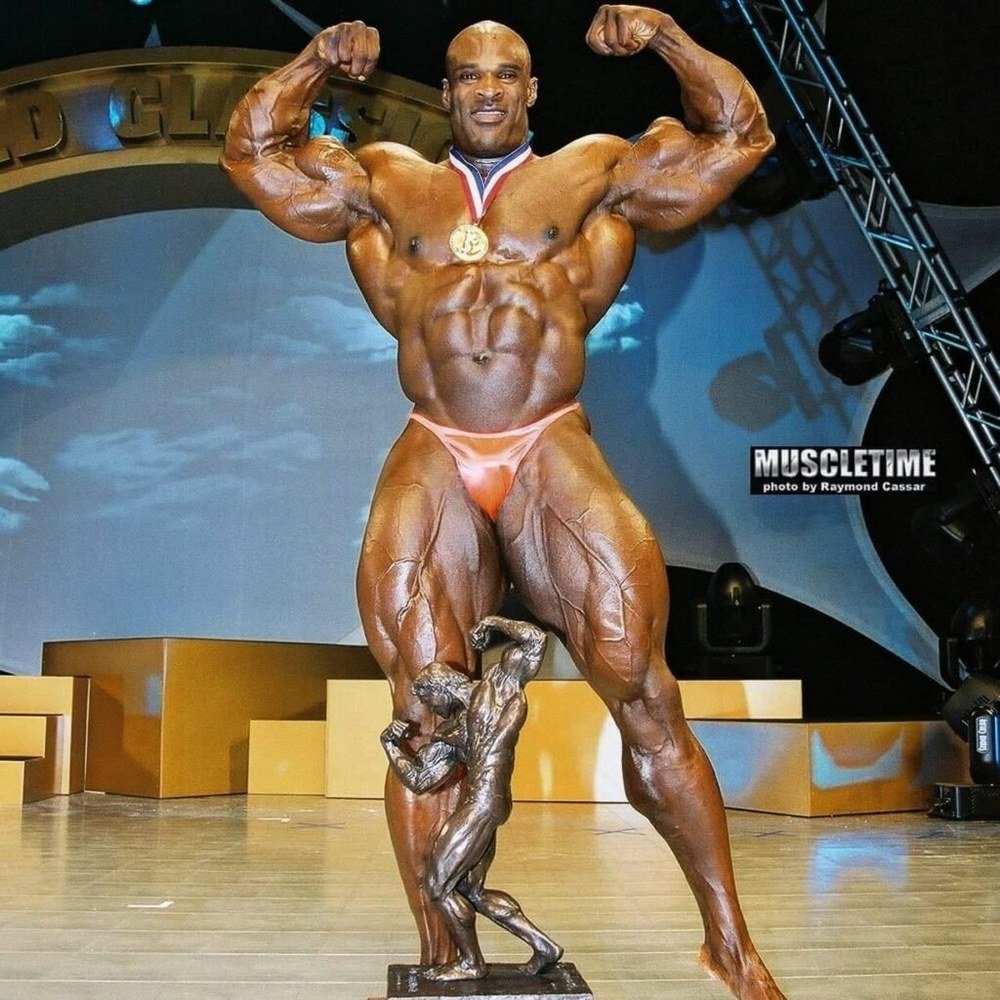
By 2003 he was stepping on stage at around 292 lb, a size-and-condition combination judges and rivals described as something the sport had never seen. The 2004 title tied Arnold Schwarzenegger’s seven.
The eighth, in 2005, tied the record held by Lee Haney — the man whose eight straight titles (1984–1991) had looked untouchable for a generation.
⚔️ Cutler, and the End of the Reign (2006–2007)
Every reign ends. Jay Cutler — Coleman’s runner-up four times — finally beat him at the 2006 Mr. Olympia, where Coleman placed 2nd with visible imbalance in his back.
He took three more second places on that autumn’s Grand Prix tour, then returned for one final Olympia in 2007, placing 4th. At 43, he announced his retirement.
The rivalry is covered from the other side in our Jay Cutler biography — the man who chased Coleman for half a decade before the crown changed hands.
🏋️ The Lifts That Built the Legend
Coleman’s stage physique was built on gym numbers that still sound invented. They were filmed, repeatedly, for his own training videos — these are gym feats, not contest records.
He deadlifted 800 lb for two reps and squatted 800 lb for two reps, benched 500 lb for five, and leg-pressed well over 2,000 lb — usually while shouting his own motivation: “Yeah buddy!” and “Light weight, baby!” 🗣️
“Ain’t nothin’ but a peanut” became the sport’s most quoted catchphrase. It also, in time, became the receipt: the heaviest training in bodybuilding history was done by the man who paid the highest physical price for it.
🩺 The Price: Surgeries and the Wheelchair
The years of extreme lifting damaged Coleman’s back and hips. Since 2007 he has undergone 13 surgeries — his own count — including double hip replacements and repeated operations on his neck, back and spine.
The procedures left him unable to walk unassisted. He moves with crutches and a wheelchair, and trains today with light weights — a story told in full in the 2018 Netflix documentary Ronnie Coleman: The King.
Asked about regrets, he has never given the expected answer. Coleman maintains he would do it again: he was determined to be the best bodybuilder he could be, at whatever cost. 🤷
🚨 June 2025: The Fight for His Life
In late June 2025, Coleman cancelled a planned trip to the UK and was hospitalised with a bloodstream infection. On June 29–30 his family confirmed the emergency; the diagnosis was sepsis, the body’s life-threatening response to infection.
Family statements described him as serious but stable at a specialist facility. Doctors found and treated the source of the infection, and he underwent a successful, minimally invasive heart procedure.
In later interviews, Coleman revealed how close it came: during septic shock he was placed in a coma and on a breathing tube, with his heart function down to around 20%. He credited his 13-year-old daughter with saving his life. ❤️
“It’s been a long and scary two weeks battling my complications from sepsis — one of the toughest fights of my life,” he wrote on July 13, 2025, signing off with the words his fans needed to hear: “It still ain’t nothing but a peanut.”
Out of that scare came the Ronnie Strong campaign, launched with his family to raise awareness of sepsis, with a portion of net proceeds pledged to the Sepsis Alliance.
📍 Ronnie Coleman in 2026
Coleman returned to the gym in August 2025, training lightly around regular medical check-ups. By the end of 2025 he was posting that he was looking forward to a full year of training in 2026, after the longest layoff of his life.
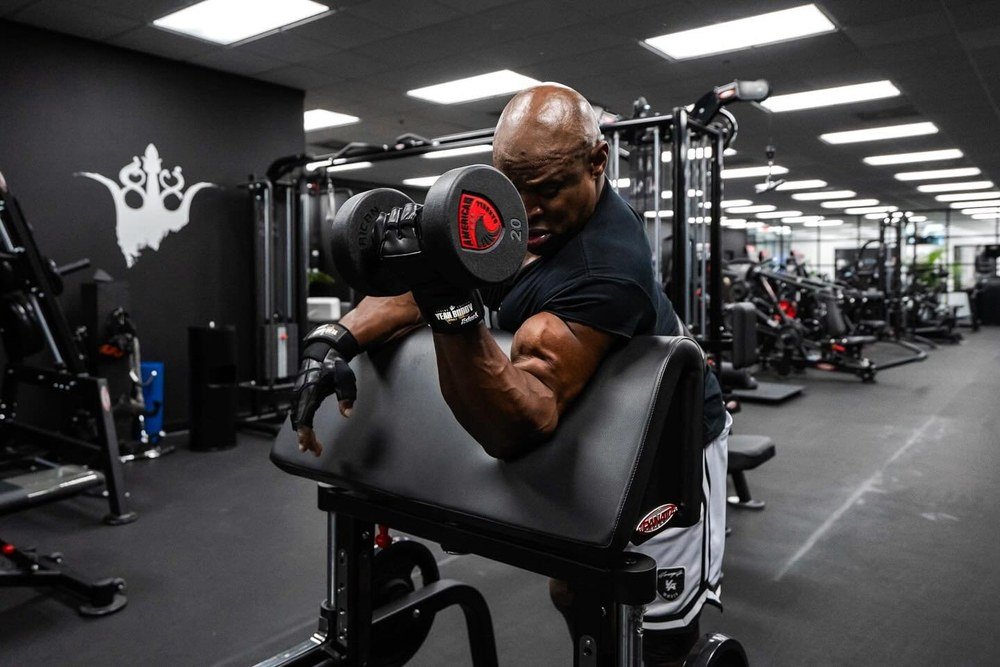
His rehabilitation continues — therapy sessions and pool work alongside his gym training. And he has set himself a public deadline: Coleman has committed to walking unassisted again by January 2027, a goal he was still stating through 2026. 🎯
Away from the gym he runs the supplement company he founded in 2011, Ronnie Coleman Signature Series, and remains one of the sport’s most decorated ambassadors — a 2016 International Sports Hall of Fame inductee who received the Arnold Classic Lifetime Achievement Award in 2021.
On this site’s all-time ranking, he sits exactly where the record says he should: number one in our Top 15 Bodybuilders in History.
📊 Contest Record
| Year | Show | Placing |
|---|---|---|
| 1990 | Mr. Texas (Heavyweight & Overall) | 1st 🏆 |
| 1990 | NPC Nationals (Heavyweight) | 3rd |
| 1991 | NPC Nationals (Heavyweight) | 4th |
| 1991 | NPC USA Championships (Heavyweight) | 14th |
| 1991 | IFBB World Amateur Championships (Heavyweight) | 1st 🏆 Pro card |
| 1992 | Chicago Pro Championships | 11th |
| 1992 | Night of Champions | 14th |
| 1992 | Mr. Olympia | 16th |
| 1993 | Chicago Pro Championships | 6th |
| 1993 | Grand Prix France | 4th |
| 1993 | Grand Prix Germany | 6th |
| 1993 | Niagara Falls Pro | 6th |
| 1994 | Grand Prix France | 3rd |
| 1994 | Grand Prix Germany | 3rd |
| 1994 | Mr. Olympia | 15th |
| 1994 | San Jose Pro Invitational | 4th |
| 1995 | Canada Pro Cup | 1st 🏆 |
| 1995 | Grand Prix France | 4th |
| 1995 | Grand Prix Russia | 6th |
| 1995 | Grand Prix Ukraine | 3rd |
| 1995 | Houston Pro Championships | 6th |
| 1995 | Night of Champions | 3rd |
| 1995 | Mr. Olympia | 11th |
| 1996 | Canada Pro Cup | 1st 🏆 |
| 1996 | Florida Pro Invitational | 2nd |
| 1996 | Grand Prix England | 5th |
| 1996 | Grand Prix Germany | 5th |
| 1996 | Grand Prix Spain | 5th |
| 1996 | Night of Champions | 2nd |
| 1996 | Mr. Olympia | 6th |
| 1997 | Arnold Classic | 4th |
| 1997 | Grand Prix Czech Republic | 4th |
| 1997 | Grand Prix England | 5th |
| 1997 | Grand Prix Finland | 3rd |
| 1997 | Grand Prix Germany | 5th |
| 1997 | Grand Prix Hungary | 6th |
| 1997 | Grand Prix Russia | 1st 🏆 |
| 1997 | Grand Prix Spain | 7th |
| 1997 | Ironman Pro Invitational | 3rd |
| 1997 | Mr. Olympia | 9th |
| 1997 | San Jose Pro Invitational | 6th |
| 1998 | Grand Prix Finland | 1st 🏆 |
| 1998 | Grand Prix Germany | 1st 🏆 |
| 1998 | San Francisco Pro | 2nd |
| 1998 | Night of Champions | 1st 🏆 |
| 1998 | Mr. Olympia | 1st 🏆 |
| 1998 | Toronto Pro | 1st 🏆 |
| 1999 | Grand Prix England | 1st 🏆 |
| 1999 | Mr. Olympia | 1st 🏆 |
| 1999 | World Pro Championships | 1st 🏆 |
| 2000 | Grand Prix England | 1st 🏆 |
| 2000 | Mr. Olympia | 1st 🏆 |
| 2000 | World Pro Championships | 1st 🏆 |
| 2001 | Arnold Classic | 1st 🏆 |
| 2001 | Grand Prix New Zealand | 1st 🏆 |
| 2001 | Mr. Olympia | 1st 🏆 |
| 2002 | Grand Prix Holland | 1st 🏆 |
| 2002 | Mr. Olympia | 1st 🏆 |
| 2002 | Show of Strength Pro Championships | 2nd |
| 2003 | Grand Prix Russia | 1st 🏆 |
| 2003 | Mr. Olympia | 1st 🏆 |
| 2004 | Grand Prix England | 1st 🏆 |
| 2004 | Grand Prix Holland | 1st 🏆 |
| 2004 | Grand Prix Russia | 1st 🏆 |
| 2004 | Mr. Olympia | 1st 🏆 |
| 2005 | Mr. Olympia | 1st 🏆 |
| 2006 | Grand Prix Austria | 2nd |
| 2006 | Grand Prix Holland | 2nd |
| 2006 | Grand Prix Romania | 2nd |
| 2006 | Mr. Olympia | 2nd |
| 2007 | Mr. Olympia | 4th |
❓ Frequently Asked Questions
How many Mr. Olympia titles did Ronnie Coleman win?
Eight — all in a row, from 1998 to 2005. He shares the all-time record with Lee Haney, who won eight straight from 1984 to 1991. Nobody has won nine.
How many professional shows did Ronnie Coleman win?
26 IFBB pro titles, including his eight Olympias and the 2001 Arnold Classic. That total is second all-time, behind only Dexter Jackson’s 29 pro wins.
What were Ronnie Coleman’s biggest lifts?
In his own training videos he deadlifted 800 lb for two reps and squatted 800 lb for two reps, and benched 500 lb for five reps. These were gym feats filmed at Metroflex Gym, not powerlifting contest results.
Why does Ronnie Coleman use a wheelchair?
The extreme training of his career damaged his back and hips. He has had 13 surgeries (including both hips replaced) and can no longer walk unassisted, so he uses crutches and a wheelchair — while still training with light weights.
What happened to Ronnie Coleman in 2025?
In June 2025 he was hospitalised with sepsis, a life-threatening bloodstream infection. He survived — later revealing he had been in a coma during septic shock — recovered, returned to the gym that August, and launched the Ronnie Strong campaign to raise sepsis awareness.
Does Ronnie Coleman regret his heavy training?
No — by his own repeated statements, he does not. He has said he was determined to be the best bodybuilder he could be at any cost, and that if anything he regrets not doing even more. His current goal is simpler: walking unassisted again by January 2027.
🏁 Final Word
Ronnie Coleman’s record is a study in extremes: eight Olympias and 26 pro wins built by a full-time policeman, and a retirement spent in surgeries, a wheelchair — and, in 2025, a hospital bed he very nearly did not leave.
What has never changed is the attitude. The man who shouted “light weight, baby” at 800 lb now aims the same stubbornness at walking unaided by 2027, and calls his near-fatal infection “nothing but a peanut.”
Others have matched his title count — and one man, Phil Heath, came within one title of it in a different era — but there has only ever been one King. 👑