

Nasser El Sonbaty never won the Mr. Olympia title — yet decades later, fans still argue that he should have. 🏆
The German-born giant known as “The Professor” combined a master’s degree, seven languages and close to 300 lb of muscle into one of the most distinctive physiques in bodybuilding history.
This is his full story: the rise, the controversial night in 1997, the glory that followed, his decline and death — and why his name still carries such weight in 2026.
Nasser El Sonbaty Quick Facts
| Full name | Nasser El Sonbaty |
| Nickname | “The Professor” |
| Born | October 15, 1965 — Stuttgart, West Germany |
| Died | March 20, 2013 — Cairo, Egypt (aged 47) |
| Height | 5 ft 11 in (180 cm) |
| Contest weight | 265–290 lb (120–131 kg) |
| Off-season weight | 300–315 lb (136–143 kg) |
| Best win | Arnold Classic, 1999 |
| Best Mr. Olympia placing | 2nd (1997) |
| Pro career | 1990–2005 — 53 IFBB pro shows, nine Mr. Olympia appearances |
| Education | Master’s degree in history, political science and sociology, University of Augsburg |
| Languages | Seven — German, English, Arabic, Serbo-Croatian, French, Italian and Spanish |
| Represented | Yugoslavia |
Early Life: The Reluctant Bodybuilder
Nasser El Sonbaty was born on October 15, 1965, in Stuttgart, West Germany, to an Egyptian father and a Yugoslav mother from Novi Pazar, in today’s Serbia. He grew up in Germany, one of five children.
As a teenager he was a keen soccer player who only began lifting to build leg strength for football — and at first he disliked the oversized bodies he saw in the bodybuilding magazines.
A former Hungarian weightlifter at his gym saw his potential and persuaded him to train his whole body, not just his legs. Within two years he entered a junior state championship in 1985 and placed sixth — the judges praising his abs.
The studying mattered just as much as the training. At the University of Augsburg, El Sonbaty earned a master’s degree in history, political science and sociology. 🎓
Fluent in seven languages and rarely seen without his round spectacles, he earned the nickname that followed him for life: “The Professor.”
The Rise: From the Grand Prix Circuit to the Olympia
El Sonbaty earned his IFBB pro card in 1990 and served his apprenticeship on the European Grand Prix circuit, posting top-ten finishes in year one.
By 1993 those had become podium finishes — third at the Grand Prix France and Grand Prix Germany — and in 1994 he placed second at the Night of Champions.
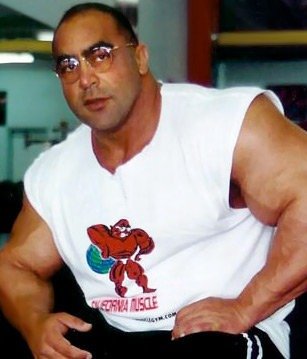
His Mr. Olympia debut came in 1994. Nobody expected him to trouble champion Dorian Yates, but his seventh place — ahead of Andreas Münzer, Samir Bannout and a young Ronnie Coleman — caught the eye of Joe Weider, who signed him to a full-time contract.
The breakthrough arrived in 1995: wins at the Houston Pro and the Night of Champions, and third place at the Mr. Olympia, behind Kevin Levrone and Yates.
In 1996 he placed third on the Olympia stage again — only to be disqualified a month later after failing a test for a banned diuretic. He accepted the punishment, admitting he had gambled that the test would never be enforced.
1997: The Title That Slipped Away
The 1997 Mr. Olympia, held in Long Beach, California, remains the most debated result of its era.
Dorian Yates was chasing his sixth straight title, a reign that began when he succeeded Lee Haney as the sport’s dominant champion. But Yates arrived injured, having torn his triceps weeks before the show, and he was visibly short of his best.
El Sonbaty, by contrast, arrived bigger and leaner than ever. From the front, much of the arena had him winning — the mass, the shape and the famous midsection all matched or bettered the champion pose for pose.
The counter-argument has always been the back. When the two men turned around, Yates’ back — considered the finest in the sport — was widely judged to be the difference.
Yates took his sixth title and retired. The debate never stopped: fellow champions, Ronnie Coleman and Jay Cutler among them, have since said that El Sonbaty deserved to win that night.
For El Sonbaty, it was the turning point of his career — and a result he believed, to the end of his life, had been decided unfairly.
Peak Years and the Arnold Classic Crown
His peak straddled 1997. He finished runner-up at the Arnold Classic in both 1997 and 1998, and placed third at the 1998 Mr. Olympia, behind Flex Wheeler and surprise winner Ronnie Coleman.
Then, in 1999, came the biggest win of his career. After two near misses, El Sonbaty finally won the Arnold Classic — one of the sport’s two great titles — defeating Kevin Levrone to do it. 🥇
The consistency behind those headlines was extraordinary. Between 1993 and 1999, he placed in the top three at 31 shows — proof that a man of nearly 300 lb could still bring the symmetry and polish judges claimed to reward.
Training: Size With a Scholar’s Patience
El Sonbaty was a mass monster with a difference. He competed between 265 and 290 lb, and climbed past 300 lb in the off-season — yet could still display a full set of abs at that size.
His shoulders rank among the finest the sport has produced, and his front poses — the lat spread and the most-muscular, performed in his spectacles — became defining images of the 1990s.
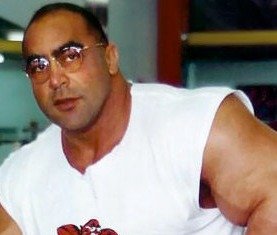
He was also unusually candid for a star of his era, speaking openly in interviews about the role of performance-enhancing drugs in professional bodybuilding when almost no rival would.
The Long Decline
After 1999, the placings slid: sixth at the 1999 Mr. Olympia, fifth in 2000, ninth in 2001 and 15th in 2002.
He kept going until 2005, when the Europa Supershow closed a career of 53 IFBB pro shows. He had qualified for ten consecutive Mr. Olympias and competed in nine.
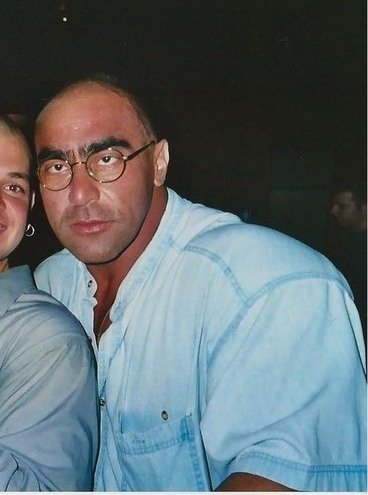
Retirement brought no peace. In a famous series of interviews in 2008, he attacked judges, officials and fellow competitors, and made clear he still believed 1997 had been taken from him — a bitterness that saddened many who remembered the friendly young man of his early years.
Death in Cairo
His health deteriorated badly towards the end. A few months before his death, he was admitted to hospital in San Diego with breathing problems and diagnosed with heart failure and kidney damage.
He was placed on dialysis — and, according to his training partner at the time, his heart was too weak for him to qualify for the transplant that might have saved him.
In March 2013 he travelled to Cairo to visit family — and there, on March 20, he died in his sleep, aged 47. 🕊️
Contemporary reports attributed his death to heart failure and kidney failure. A claim found in some later articles — that he had been infected with malaria in Egypt — was not part of the original reporting and has never been substantiated.
The Legacy in 2026: Cult of the Uncrowned King
More than a decade after his death, El Sonbaty’s following has only grown. Contest footage and interviews circulate constantly among younger fans who never saw him compete.
The “what if 1997?” argument remains a fixture of Olympia history — debated as fiercely as any result from the Haney era or the Phil Heath years that followed.
He is also credited with inspiring generations of bodybuilders across the Arab world — young lifters who saw the son of an Egyptian father reach the sport’s biggest stage and understood that it was open to them too.
The fairest verdict came from journalist Peter McGough, one of the men El Sonbaty had criticised: a one-off, a maverick who did things his own way.
Frequently Asked Questions
Did Nasser El Sonbaty ever win the Mr. Olympia?
No. His best result was second place in 1997, behind Dorian Yates. Because so many fans and fellow champions believe he deserved that title, he is often called the greatest “uncrowned” Mr. Olympia.
Why was Nasser El Sonbaty called “The Professor”?
Because of his master’s degree from the University of Augsburg, his fluency in seven languages, his articulate interviews — and the round spectacles he famously wore while training and guest posing.
What was Nasser El Sonbaty’s biggest win?
The 1999 Arnold Classic, where he beat Kevin Levrone after finishing runner-up at the show in 1997 and 1998. He also won several IFBB Grand Prix events and the 1995 Night of Champions.
How much did Nasser El Sonbaty weigh?
He competed at between 265 and 290 lb (120–131 kg) at 5 ft 11 in, and weighed over 300 lb in the off-season — while still showing abdominal muscles.
What happened at the 1996 Mr. Olympia?
He placed third on the night, but was disqualified about a month later after testing positive for a banned diuretic, and the placing was taken away. He accepted the decision, saying he had gambled that the IFBB would not enforce the test.
How did Nasser El Sonbaty die?
He died in his sleep in Cairo on March 20, 2013, aged 47, while visiting family. He had been diagnosed with heart failure and kidney damage and was receiving dialysis; reports attributed his death to heart and kidney failure.
The Bottom Line
His career remains bodybuilding’s great what-if: the size, the shape and the mind — everything except the one trophy he was convinced was his.
But a Sandow was never the whole story. The Professor proved that a near-300 lb physique could still be symmetrical, articulate and intelligent — and a generation of fans, in 2026 and beyond, still refuses to forget him. 💪