

A plyometric box is the simplest jump station in the home gym — a sturdy platform, floor space, and your own bodyweight. No motor, no screen, no subscription. Just jumps, step-ups, and split squats, for as long as your legs and landings hold out. 🦘
Stand in front of the box, jump onto it, step down, repeat. The box’s height decides the difficulty, its material decides the landing, and its stability decides whether the whole thing feels safe or sketchy.
But let us be plain from the start: a box gives you a stable platform for jumps and step-ups, but it does not build power or prevent injury by itself, it does not replace progressive training, and it does not make a wobbly or damaged box safe.
Used the right way — the right height for your landing, checked before every session, on a level floor with clear space around it — a plyo box is one of the cheapest ways to add real jump training to a home gym.
How We Picked These Plyometric Boxes
Photo: Taco fleur / Wikimedia Commons
This guide is research-based. We did not buy or hands-on test these boxes, and we do not claim otherwise.
We compared verified buyer reviews and manufacturer specifications, and we checked each product’s Amazon listing status through search results and listing trackers.
We picked 6 boxes that are genuinely sold and cover different needs: a best-overall wood box, a foam box, a stackable foam set, a firm foam box, a steel platform set, and a budget wood box.
Prices are not quoted in this guide because they change often. The check-price links take you to the current listing, where you can see the latest price and availability.
Availability and size options vary, so if your option shows as unavailable, check the listing’s other options before switching products.
One note before we start: height is the least forgiving figure in this guide. A box you can jump onto is not the same as a box you can land on softly, and the right height is the one you land on quietly — read the height section before you trust any single number.
Quick Comparison
Photo: GymNation / Wikimedia Commons
| Box | Type | Heights | Best for |
|---|---|---|---|
| Yes4All 3-in-1 Wooden | Wood, 3-in-1 | 20 / 24 / 30 in | Best overall wood box |
| BalanceFrom 3-in-1 Foam | Foam, 3-in-1 | 16 / 20 / 24 in | Best foam box |
| REP Stackable Soft Foam Set | Foam, stackable | 6 / 12 / 20 in | Best stackable set |
| Titan Heavy Foam 3-in-1 | Foam, 3-in-1 | 16 / 18 / 20 in | Best firm foam box |
| VEVOR Steel Platform Set | Steel, 3 platforms | 12 / 18 / 24 in | Best steel platform |
| CAP Barbell 3-in-1 | Wood, 3-in-1 | 12 / 14 / 16 in | Best budget wood box |
1. Yes4All 3-in-1 Wooden Plyo Box, 30 × 24 × 20 Inches — Best Overall Wood Box
Photo: Wikimedia Commons
Who it suits: lifters who want one classic, firm, no-fuss box for jumps, step-ups, dips, and lunges, at the lowest honest cost for a full-size wood box.
Yes4All’s 3-in-1 wooden plyo box is a plywood box that rotates to three heights — 20, 24, and 30 inches — with smooth edges and wide built-in handles, rated by the maker at 450 pounds. The same box comes in three smaller sizes — 16 by 14 by 12 inches, 20 by 18 by 16 inches, and 24 by 20 by 16 inches — so the family scales from beginner to advanced.
Wood is the honest default here: it does not compress, it does not wobble, and it gives the same landing every rep, which is exactly what you want when you are learning to land. The built-in handles matter more than they sound — a 30-inch wood box is awkward to move without them.
Pros: three heights in one box; firm, predictable landings; 450-pound maker rating; smooth edges and wide built-in handles; four sizes in the same family; long-running budget brand with a large buyer base.
Cons: one recent listing crawl showed no featured offers available, so check availability before ordering; wood edges are unforgiving on a missed jump — beginners should start on the lowest height; a 30-inch wood box is heavy and bulky to store, so check your floor space first.
👉 Check price on Amazon (check availability — one recent crawl showed no featured offers).
2. BalanceFrom 3-in-1 Foam Plyo Box, 16 / 20 / 24 Inches — Best Foam Box
Photo: Tyler Read / Wikimedia Commons
Who it suits: beginners and home lifters who want softer edges and landings, and who jump in a living room or garage where a missed rep meets furniture, not a gym floor.
BalanceFrom’s 3-in-1 foam box rotates to three heights — 16, 20, and 24 inches — with a high-density foam core and a textured non-slip surface, weighing about 10 pounds. It is one of the best-reviewed foam boxes in the category, with thousands of buyer ratings behind it and broadly positive feedback.
Foam is the beginner’s friend for one reason: a missed jump onto foam stings, while a missed jump onto wood or steel can cut. The trade is firmness — foam compresses slightly on landing, so the landing feels softer but less crisp than wood.
Pros: three heights in one box; soft, shin-friendly edges and landings; light at about 10 pounds, so it moves and stores easily; textured non-slip surface; large, broadly positive buyer base.
Cons: CAPACITY NOTE — the compact 16/20/24-inch model is rated at 220 pounds, while some listings and roundups cite higher figures for other BalanceFrom sizes, so confirm the listing matches this exact model and its rating before ordering; foam compresses under heavy or repeated landings, so heavier lifters should check the rating twice; the tallest height here is 24 inches, so advanced jumpers will outgrow it.
👉 Check price on Amazon (confirm the listing matches the 16/20/24-inch model — capacity figures vary by size).
3. REP Fitness Stackable Soft Foam Plyo Box Set, 6 / 12 / 20 Inches — Best Stackable Set
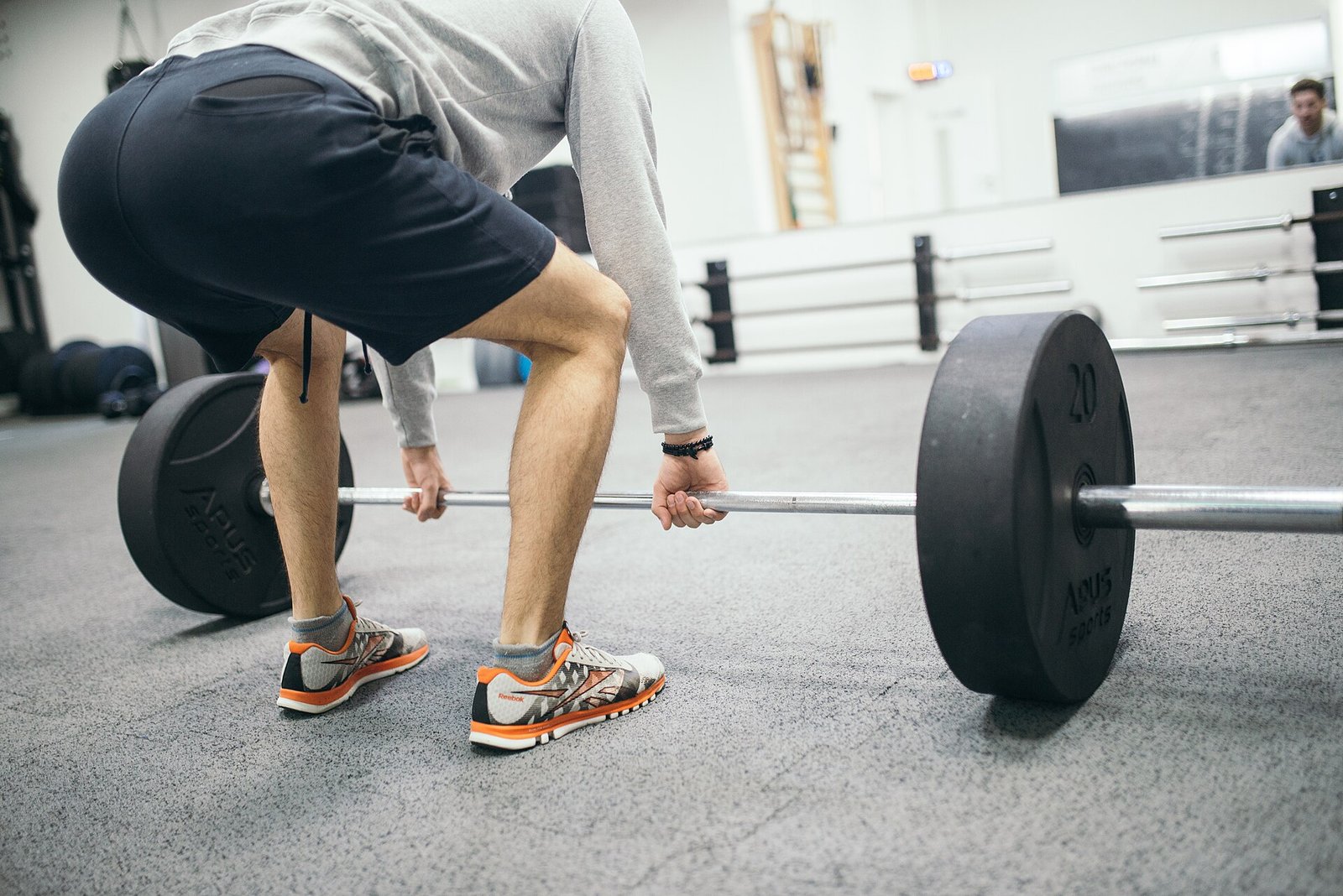
Photo: Nenad Stojkovic / Wikimedia Commons
Who it suits: lifters who want progressive height in small steps, and households where several people train at different levels.
REP Fitness’ stackable soft foam set bundles three foam boxes — 6, 12, and 20 inches — made from ultra-dense foam covered in tough vinyl, designed to be heavier than typical foam boxes so they stay put underfoot. The same boxes come in 4, 8, 12, 20, and 24-inch sizes, so the set can grow with your training.
Stacking is the honest advantage here: one box is a step, two stacked are a jump, three stacked are a challenge — and the soft edges make missed landings safer than wood or metal at every height. That matters most for beginners, whose misses are the most frequent.
Pros: stackable for progressive height in small steps; ultra-dense foam with a tough vinyl cover; soft edges reduce shin-injury risk versus wood or metal; use one box as a step or stack them all for a challenge; long-running strength brand.
Cons: a set costs more than a single box — beginners may never use the tallest stack at first; stacked boxes need checking before every set, since a shifted layer changes the landing; foam, even dense foam, compresses slightly, so landings feel softer than wood.
4. Titan Fitness Heavy Foam Plyo Box, 16 / 18 / 20 Inches — Best Firm Foam Box
Photo: Wikimedia Commons
Who it suits: lifters who want a foam box that feels closer to wood — firm, stable, and rated for heavier use — without giving up soft edges.
Titan Fitness’ heavy foam box rotates to three heights — 16, 18, and 20 inches — with a high-density EPE foam core rated at 330 pounds, a slip-resistant vinyl surface, and a weight of about 24 pounds. It suits jumps, step-ups, box squats, and HIIT work.
The weight is the tell here: at 24 pounds, this foam box is more than twice as heavy as the BalanceFrom, and that weight is what keeps it planted under a hard landing. A light foam box that slides on a smooth floor is worse than no box at all.
Pros: firm high-density foam core rated at 330 pounds; slip-resistant vinyl landing surface; heavier than most foam boxes, so it stays put; three close heights (16, 18, 20) for fine progression; long-running strength brand.
Cons: one recent listing crawl showed no featured offers available, so check availability before ordering; the tallest height is 20 inches, so advanced jumpers will outgrow it; at 24 pounds it is heavier to move and store than a light foam box.
👉 Check price on Amazon (check availability — one recent crawl showed no featured offers).
5. VEVOR Steel Plyometric Jump Box Set, 12 / 18 / 24 Inches — Best Steel Platform
Photo: Jdsteakley / Wikimedia Commons
Who it suits: lifters who want a rigid, compact platform for step-ups and controlled jumps, and who train in a garage or gym where a steel frame will never be a problem.
VEVOR’s steel platform set bundles three trapezoidal alloy-steel platforms — 12, 18, and 24 inches — with rubber feet and a textured silicone top, designed to stack or come apart for storage. The platforms suit box jumps, step-ups, push-ups, squats, and conditioning work.
Steel is the most honest material here in one way: it never compresses, never flexes, and never lies about its height. The trade is the landing — steel is the hardest surface in this guide, so it rewards clean landings and punishes sloppy ones without mercy.
Pros: rigid alloy-steel frame with no flex; three platforms for progressive height; rubber feet and textured top for grip; stacks or comes apart for storage; compact footprint per platform.
Cons: the Amazon link below rests on a single source — a reseller mirror — so confirm the listing matches the VEVOR 12/18/24-inch steel set before ordering; CAPACITY CONFLICT — roundups cite 500 pounds, while the reseller listing notes a 350-pound recommended maximum per box, so treat 350 pounds as the safe figure until the listing confirms otherwise; steel is the hardest landing here, so beginners should start on the 12-inch platform.
👉 Check price on Amazon (please confirm the listing matches the VEVOR steel set — its link is single-source, see the note in our research — and confirm the capacity, since sources conflict).
6. CAP Barbell 3-in-1 Plyometric Box, 16 × 14 × 12 Inches — Best Budget Wood Box

Photo: U.S. Marine Corps / Wikimedia Commons
Who it suits: beginners and lifters who want the cheapest honest wood box for step-ups, low jumps, and conditioning, and who do not need 30-inch heights yet.
CAP Barbell’s 3-in-1 plyometric box rotates to three lower heights — 12, 14, and 16 inches — with an interlocking engineered-wood build, a textured traction surface, finished edges, and built-in handles. The wood is CARB compliant, and the same box comes in foam and rubber-textured versions.
Lower heights are a feature, not a limitation, for beginners: most first box jumps should be 12 to 16 inches, and a box that tops out at 16 inches keeps a beginner honest instead of tempting a 30-inch attempt on day one.
Pros: cheapest wood approach here; three lower heights ideal for beginners and step-ups; interlocking engineered-wood build with a textured surface; finished edges and built-in handles; long-running budget brand.
Cons: one recent listing crawl showed no featured offers available, so check availability before ordering; 16 inches is the tallest height — progressing jumpers will outgrow it; CAP sells foam, rubber-textured, and wood versions under close names, so confirm the listing matches the wood box.
👉 Check price on Amazon (check availability — one recent crawl showed no featured offers — and confirm the listing matches the wood version).
How to Choose the Right Plyometric Box

Photo: Shixart1985 / Wikimedia Commons
Start with your landing, then your material, then your room. A box you cannot land on softly is the wrong box whatever its height says, and a box that slides on your floor is the wrong box whatever its material says.
Then buy in this order: a foam or low wood box first if you are new, a 3-in-1 wood box second when landings come cleanly, and a steel platform only when you want a rigid surface and already land well.
Box type: wood vs foam vs steel — what each actually does
Photo: Rodhullandemu / Wikimedia Commons
Wood boxes (Yes4All, CAP) are firm, predictable, and long-lasting: the same landing every rep, no compression, no flex. They suit experienced jumpers and step-up training, and they punish missed jumps with hard edges — which is why beginners should start low on wood.
Foam boxes (BalanceFrom, REP stackable, Titan) are soft-edged and forgiving: a missed jump stings instead of cutting, and a light foam box moves and stores easily. They suit beginners, HIIT, and home gyms — but foam compresses, so landings feel softer and less crisp than wood, and light foam boxes can slide on smooth floors.
Steel platforms (VEVOR) are rigid and compact: no flex, no compression, a small footprint, and a surface that never lies about its height. They suit step-ups, controlled jumps, and conditioning — but steel is the hardest landing here, so it belongs to lifters who already land well.
Height and progression: what each height actually suits
Photo: Taco fleur / Wikimedia Commons
12–16 inches suits beginners and step-ups: the CAP box tops out here, and the REP set’s 6 and 12-inch boxes live here. If you cannot land softly and quietly at this height, you have no business jumping higher yet.
18–24 inches suits most home lifters: the BalanceFrom, Titan, and VEVOR boxes all cover this range, and the Yes4All box’s 20 and 24-inch sides live here. This is where most real jump training happens.
30 inches suits advanced jumpers only: the Yes4All box’s tallest side, and a height that demands a clean, quiet landing every rep. Do not buy 30 inches hoping to grow into it quickly — a box you cannot land on is a shin injury waiting for a date.
Progress in small steps: add 2 to 4 inches at a time, and only when you can land softly for three sets of clean reps at the current height. A 3-in-1 box or a stackable set makes that progression natural; a fixed-height platform does not.
Footprint and storage

Photo: Wikimedia Commons
A 3-in-1 box (Yes4All, BalanceFrom, Titan, CAP) is one piece that rotates to three heights — the smallest footprint per height, and nothing to stack or lose. That is the whole point for apartment lifters.
Stackable sets (REP) and platform sets (VEVOR) need a corner to live in: stacked, they are one tall pile; unstacked, they are three pieces. Measure your storage before ordering — a 30-inch wood box plus a lifter landing on it plus room to step back needs more space than the box’s own footprint.
Weight cuts both ways: a 10-pound foam box (BalanceFrom) is easy to move and store, but light boxes slide more easily on smooth floors; a 24-pound foam box (Titan) or a wood box stays put, but it stays where you put it. Pick the trade that fits your room.
Surface and grip: what keeps a landing safe

Photo: Wikimedia Commons
Texture decides grip: a textured non-slip surface (BalanceFrom, CAP), a slip-resistant vinyl top (Titan), or a textured silicone top (VEVOR) all hold shoes better than bare wood or smooth foam. Check the top before ordering — a slick box is a fall, not a feature.
Edges decide consequences: finished wood edges (Yes4All, CAP) are smoother than raw plywood but still hard; soft foam edges (BalanceFrom, REP, Titan) forgive a clipped shin; steel edges (VEVOR) forgive nothing. Beginners should buy soft edges first and earn hard ones.
Feet decide stability: rubber feet (VEVOR) or a heavy base (Titan, wood boxes) keep the box planted, but no feet save a box on a wet or dusty floor. Wipe the floor and the box’s feet before every session — five seconds that prevent the commonest plyo-box accident.
What no box makes safe
Photo: Tyler Read / Wikimedia Commons
A box does not make a jump safe by itself, does not fix a floor that is uneven or slippery, and does not protect knees or ankles that are already injured. The box gives you a platform; it does not judge whether the jump is wise.
Check the box before every session: level, stable, feet clean, no cracks, no loose layers, no wobble when you push it. A box that rocks on your floor is not a box problem alone — check the floor is level first, and move the box before blaming the frame.
Land softly with knees tracking over toes, and step down — do not jump down — until landings are clean. Never jump onto a box higher than you can land on safely, and never train through sharp pain. If you have an injury, or a condition that affects how safely you can jump, talk to a clinician or qualified coach before starting plyometric training. This guide is general information only, not medical advice.
Frequently Asked Questions
Photo: Nenad Stojkovic / Wikimedia Commons
What height plyo box should a beginner buy?
A 12 to 16-inch box: low enough to land softly, high enough to train real jumps. The CAP box tops out at 16 inches for exactly this reason, and the REP set’s 6 and 12-inch boxes are the gentlest start of all.
Is wood, foam, or steel better?
None is better in general — wood suits firm, predictable landings; foam suits beginners and soft edges; steel suits rigid, compact platforms for lifters who already land well. Buy the material that matches your landing confidence, not the one that looks toughest.
Can I use a plyo box for step-ups and strength work too?
Yes — step-ups, split squats, box squats, elevated push-ups, dips, and hip thrusts all use the same box, and for many home lifters step-ups are the box’s most-used exercise. A box that only ever sees jumps is a box half-used.
Will a foam box hold my weight?
Check the rating for your exact model, not the brand: the compact BalanceFrom is rated at 220 pounds, the Titan at 330 pounds, and the REP set is built heavier than typical foam. Count body weight plus any load you carry, and buy above that total.
How much floor space does a box need?
More than the box itself: room to stand back, jump, land, and step down, with clear floor on all sides. A 3-in-1 box is one piece, but the landing zone around it is the real footprint — measure that, not just the box.
When should I replace a plyo box?
When wood cracks or splits, foam compresses permanently or tears through to the core, steel welds crack or feet wear smooth, or any box wobbles even when level. Worn boxes fail without warning — replace them before they do.
Our Pick in One Line
Photo: U.S. Air Force / Wikimedia Commons
If you want one answer: the Yes4All 3-in-1 wooden box is the best all-round buy because its three heights, firm landings, and 450-pound rating cover almost any home-gym jumper — but if you are new to jumping, buy the BalanceFrom foam box first, because soft edges forgive the misses that teach you to land.
For the rest of your home-gym setup, see our battle ropes guide and our jump ropes guide, and for the bench those jumps complement, see our weight benches guide.
As an Amazon Associate, we earn from qualifying purchases made through links on this page, at no extra cost to you.
This guide is research-based: we compared verified buyer reviews and manufacturer specifications, and we did not buy or hands-on test these products. Prices and availability change, so check the listing before ordering. The training information here is general information only, not medical advice — if you have an injury or a condition that affects how safely you can jump, talk to a clinician first.