

A pull-up is the simplest test in the home gym — hang from a bar, pull your chin over it — and the hardest first rep to earn. A band does not change the movement. It just takes weight off the hardest part, so you can train the full range instead of jumping and hoping. 💪
Loop the band over the bar, step or kneel into it, and pull. The band stretches most at the bottom, where you are weakest, and helps least at the top, where you are strongest. That is the whole trick, and it is a good one — as long as the band’s thickness matches your strength.
But let us be plain from the start: a band makes a pull-up easier by offloading weight at the bottom, but it does not build pull-up strength by itself, it does not replace progressive training, and it does not make a worn or nicked band safe.
Used the right way — the right thickness, checked before every session, anchored correctly, progressed down as you get stronger — a band is the cheapest coach a pull-up ever had.
How We Picked These Pull-Up Bands
Photo: PTPioneer / Wikimedia Commons
This guide is research-based. We did not buy or hands-on test these bands, and we do not claim otherwise.
We compared verified buyer reviews and manufacturer specifications, and we checked each product’s Amazon listing status through search results and listing trackers.
We picked 6 bands and sets that are genuinely sold and cover different needs: a starter loop set, a light single band, a heavy single band, an adjustable foot-rest system, a full-range five-band set, and a budget set.
Prices are not quoted in this guide because they change often. The check-price links take you to the current listing, where you can see the latest price and availability.
Availability and size options vary, so if your option shows as unavailable, check the listing’s other options before switching products.
One note before we start: assistance figures are estimates, not measurements. A band rated 25–80 pounds helps by roughly that much at full stretch and far less near the top — read the thickness section before you trust any single number.
Quick Comparison
Photo: PTPioneer / Wikimedia Commons
| Band | Type | Assistance | Best for |
|---|---|---|---|
| Serious Steel 3-Band Set (#1–#3) | Loop set, 3 bands | 5–80 lb across bands | Best overall loop set |
| WODFitters #1 Red Single | Single loop | 10–35 lb | Best light first band |
| Iron Core Fitness Green Single | Single loop | 50–120 lb | Best heavy single band |
| INNSTAR Adjustable Foot-Rest System | Adjustable system | 165–265 lb combined | Best adjustable system |
| Tribe Lifting Green 5-Band Set | Loop set, 5 bands | 10–170 lb across bands | Best full-range set |
| LEEKEY 5-Band Set | Loop set, 5 bands | 5–125 lb across bands | Best budget set |
1. Serious Steel 41″ 3-Band Set (#1, #2, #3) — Best Overall Loop Set
Photo: Maksim Sokolov / Wikimedia Commons
Who it suits: lifters who want one trusted starter set that covers the whole journey from first assisted rep to near-unassisted.
Serious Steel’s 3-band set bundles three 41-inch loop bands: the #1 (5–35 pounds), the #2 (10–50 pounds), and the #3 (25–80 pounds), all made from layered natural latex. Serious Steel has sold assisted pull-up bands since 2009, and this is the set most pull-up programmes point beginners toward.
Three bands is the right count for progression: start on the #3, move to the #2 when reps come easily, then the #1, then none. One band alone cannot do that journey; five bands is more than most beginners need at the start.
Pros: three-step progression in one purchase; layered latex construction from a long-running band specialist; 41-inch loops fit any standard pull-up bar; the #1 band doubles as a stretching and mobility band.
Cons: the set tops out at 80 pounds of assistance — heavier lifters may need a thicker band first; sold as a set, so you cannot buy just the #3 alone here; check the listing matches the #1–#3 set, since Serious Steel sells several sets under close names.
One scope note: our general resistance bands guide already covers Serious Steel’s larger Complete Set (#0–5). This 3-band set is a different, smaller product — the starter version, not a repeat.
2. WODFitters #1 Red Single Band, 10–35 lb — Best Light First Band
Photo: Everkinetic / Wikimedia Commons
Who it suits: lifters who can nearly do a pull-up already and need only a small push — or who want a light band for stretching and warm-ups.
WODFitters’ #1 Red band is a single 41-inch loop, half an inch wide and 4.5 millimetres thick, rated at 10–35 pounds of assistance. It is the lightest band in WODFitters’ five-band range, which runs up to a 65–175 pound blue band.
Light bands are underrated for pull-ups: a band that helps too much teaches a swing, not a pull, and the #1 Red is for the last step before unassisted reps, when form matters more than help. It also doubles as a stretching band for shoulders and hips.
Pros: the right thickness for the final progression step; single-band purchase, so you pay for one band, not five; 41-inch loop fits any standard bar; long-running CrossFit-focused brand.
Cons: the Amazon link below rests on a single source, so confirm the listing matches the WODFitters #1 Red band before ordering; a single light band cannot help a lifter who cannot yet hang from the bar — heavier lifters should start thicker; sold singly, so building a full set means five separate purchases.
👉 Check price on Amazon (please confirm the listing matches the WODFitters #1 Red band — its link is single-source, see the note in our research).
3. Iron Core Fitness Green Single Band, 50–120 lb — Best Heavy Single Band
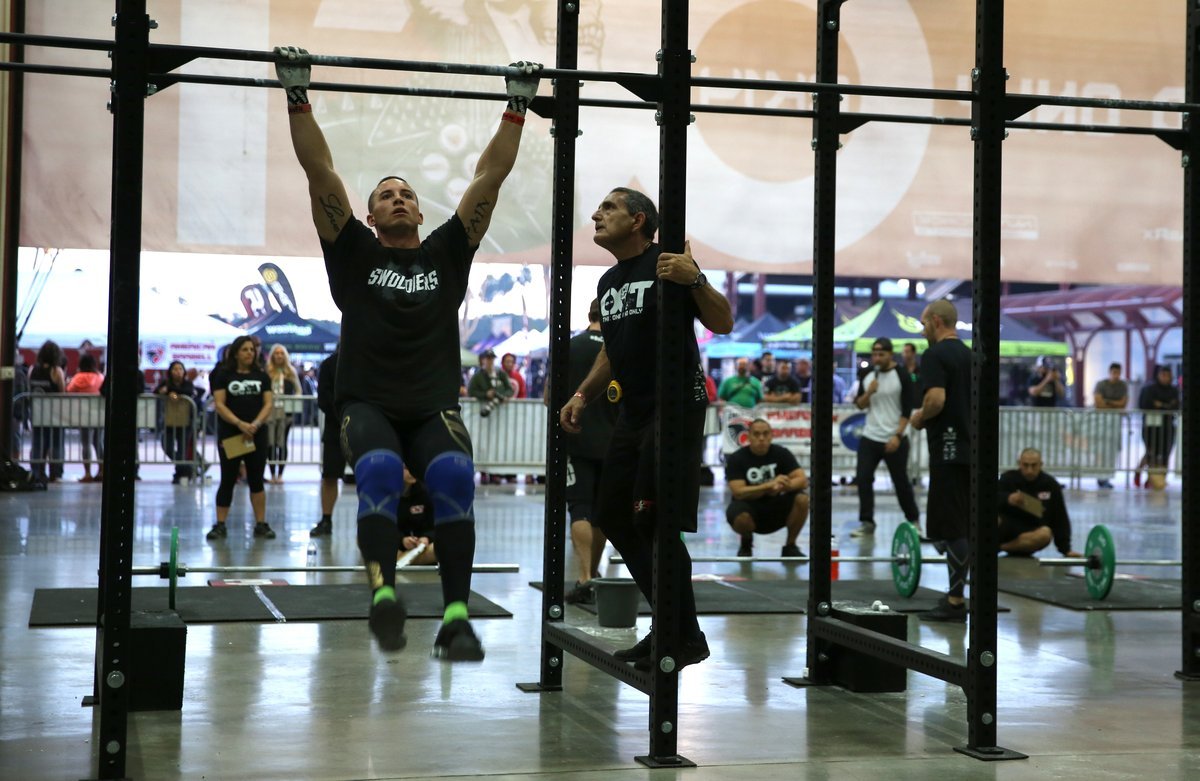
Photo: Lance Cpl. Christopher Johns / Wikimedia Commons
Who it suits: heavier lifters, and anyone whose bodyweight sits roughly between 165 and 210 pounds and who needs real help at the bottom of the rep.
Iron Core Fitness’ Green band is a single 41-inch loop rated at 50–120 pounds of assistance — the brand’s heavy workhorse, and the one its own guidance points lifters of 165–210 pounds toward for pull-ups. It also suits muscle-ups, stretching, and mobility work.
A heavy single beats a thin set for bigger lifters: three light bands combined still do not stretch the way one thick band does, and a thick band’s help arrives exactly where it is needed — at the dead hang. Iron Core backs the band with a two-year warranty and includes ebooks and a workout chart.
Pros: genuine heavy assistance in a single band; maker guidance matches it to bodyweight, not guesswork; two-year warranty; ebooks and workout chart included for progression.
Cons: a single heavy band is a blunt tool — as you get stronger you will still need a thinner band next, so budget for that; 50–120 pounds is a wide estimate range, and your actual help depends on how far you stretch it; sold singly, not as a set.
4. INNSTAR Adjustable Pull-Up Assist System, 165–265 lb — Best Adjustable System
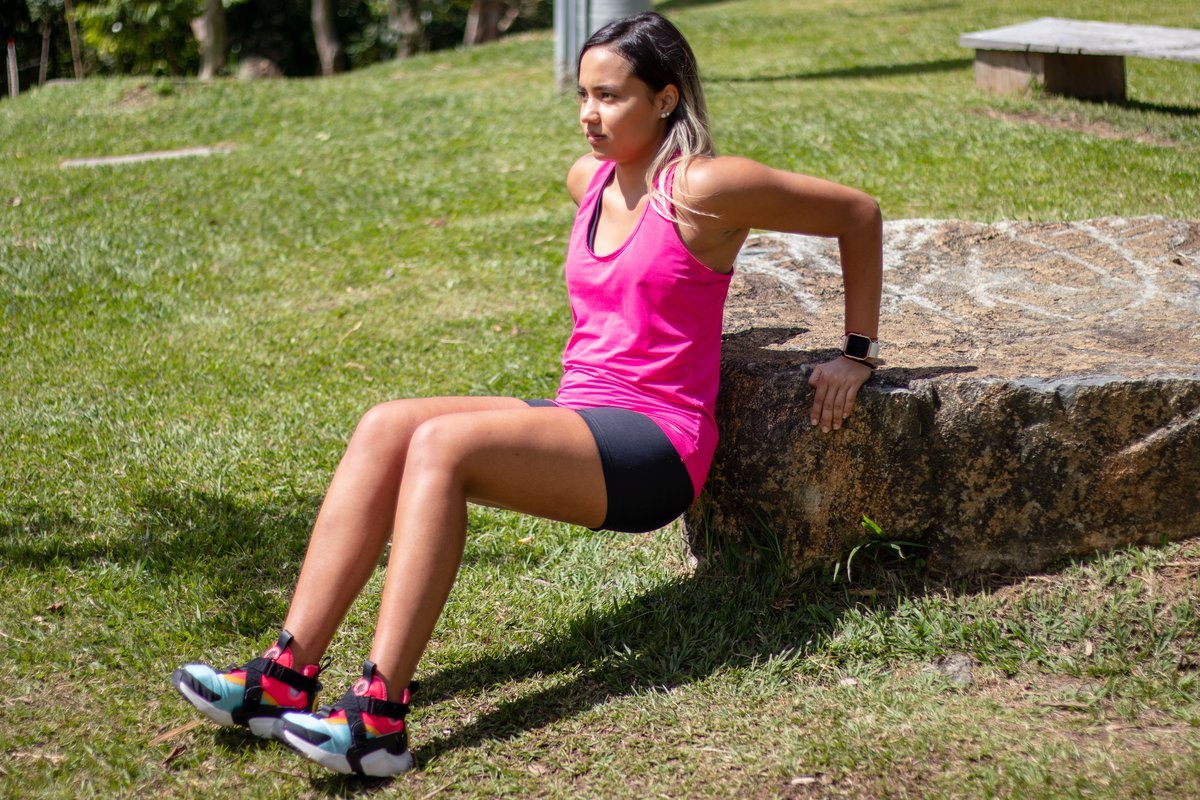
Photo: PTPioneer / Wikimedia Commons
Who it suits: lifters who want a foot rest instead of a loop under the knee, and who want to dial assistance up and down without buying five bands.
INNSTAR’s system pairs three latex bands — 55 pounds each — with a fabric foot and knee rest, giving 165 to 265 pounds of combined assistance depending on how many bands are clipped in. The bands sit inside a high-density anti-snap sleeve, and the rest spreads the load across the foot instead of cutting into the knee.
The foot rest is the honest difference here: a loop under the knee works, but it slips, it pinches, and it swings. A flat rest stays put, which matters most for beginners whose form falls apart the moment the band moves.
Pros: adjustable 165–265 pound range from one purchase; fabric foot rest is steadier and kinder than a bare loop; anti-snap sleeve around the bands; serves pull-ups, chin-ups, and dips from one setup.
Cons: the system’s minimum is 165 pounds — too much help for lifters who nearly have a pull-up already; more parts than a loop band, so check clips and straps before every session; the foot rest adds bulk a bare band does not.
5. Tribe Lifting Green Long Loop Set, 10–170 lb — Best Full-Range Set
Photo: Akhlispurnomo / Wikimedia Commons
Who it suits: lifters who want every step from first rep to unassisted in one box, and households where several people train at different levels.
Tribe Lifting’s Green set bundles five 41-inch natural latex loops — X-Light, Light, Medium, Heavy, and X-Heavy — spanning 10 to 170 pounds of assistance, with widths from 0.4 to 2 inches, plus a storage box. The bands work alone or with handles, door anchors, and carabiners the brand sells separately.
Five bands is the full staircase: the heaviest band gets a beginner’s first rep, each thinner band is a rung, and the lightest band is the last step before bodyweight. One household can share the set across very different strength levels without buying twice.
Pros: widest assistance range here, 10–170 pounds; five genuine progression steps; layered latex construction; storage box included; North America-designed brand with a replacement-or-refund promise.
Cons: the full set costs more than a starter set — beginners may never use the two lightest bands at first; Tribe’s separate stackable assist set showed no featured offers on recent crawls, so confirm the listing matches the Green long loop set, not that set; five bands need storage, and the box helps only if you use it.
👉 Check price on Amazon (confirm the listing matches the Green long loop set of 5).
6. LEEKEY 5-Band Set, 5–125 lb — Best Budget Set
Photo: SAgbley / Wikimedia Commons
Who it suits: lifters who want a full five-band range at the lowest honest cost, and who do not mind a generic brand to get it.
LEEKEY’s 5-band set spans 5 to 125 pounds across five natural rubber loops, from a light warm-up band to a heavy assistance band, with a carry bag. It is one of the best-reviewed budget sets in the category, with a large buyer base behind it.
Budget sets live or die on their heaviest band: a cheap thin band is easy to make, but a cheap thick band that holds its tension is not, and LEEKEY’s heavy band is the one buyers consistently praise. The bag matters too — five loose bands become a drawer tangle within a week.
Pros: full 5–125 pound range at a budget cost; five bands plus a carry bag; large buyer base with consistently strong reviews; natural rubber loops suit pull-ups, stretching, and mobility work.
Cons: some LEEKEY variants showed no featured offers on recent crawls, so confirm the listing matches the 5-band set before ordering; a generic brand’s quality control varies more than a specialist’s — inspect every band on arrival; the lightest band is very light, so it suits warm-ups more than pull-up assistance.
👉 Check price on Amazon (confirm the listing matches the 5-band set — some LEEKEY variants showed no featured offers).
How to Choose the Right Pull-Up Band
Photo: Teemeah / Wikimedia Commons
Start with your strength, then your bar, then your budget. A band that helps too much teaches a swing; a band that helps too little teaches nothing; and a band that does not fit your bar teaches frustration.
Then buy in this order: one band at the right thickness first, a second thinner band when reps come easily, and a full set only when you know you will use the range.
Band thickness and assistance level — what each band actually assists
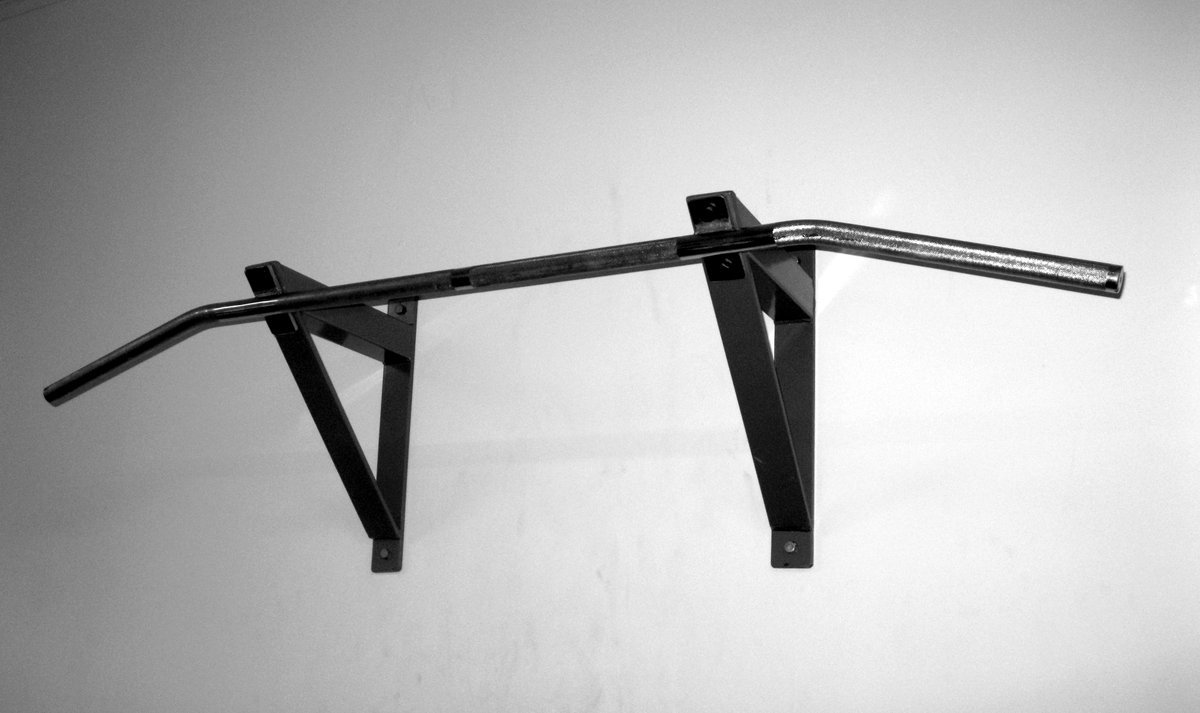
Photo: Santeri Viinamäki / Wikimedia Commons
Thickness is assistance: a half-inch band helps roughly 10–35 pounds, a 1-inch band roughly 25–80 pounds, and a 1.75-inch band roughly 50–120 pounds. The numbers are estimates — your stretch, your weight, and your hang position all move them.
The help is not even: a band pulls hardest at the dead hang, where you are weakest, and barely helps near the top, where you are strongest. That unevenness is a feature, not a flaw — it trains the top of the rep honestly while making the bottom possible.
As a rough guide: if you cannot yet hang from the bar for ten seconds, start with the thickest band you can find; if you can do two or three shaky reps, a medium band is right; if you can do five clean reps, a light band finishes the job.
Combining bands and progressing

Photo: Tokumeigakarinoaoshima / Wikimedia Commons
Two bands give three levels: the thick band alone, the thin band alone, and both together. That is why a set beats a single for progression — you step down one band at a time instead of jumping from help to none.
Progress when you can do three sets of eight clean reps with full range — chin over the bar, dead hang at the bottom, no swing. Then drop to the next thinner band, even if reps fall back to three or four. That fall is the training working.
Do not combine bands of wildly different thickness on one bar: the thin band stretches past its limit while the thick band does the work, and the thin one wears out first. Pair bands close in thickness, or use one band and a foot-rest system instead.
Bar compatibility and anchor safety

Photo: Calistemon / Wikimedia Commons
Every 41-inch loop here fits any standard pull-up bar — doorway bars, wall-mounted bars, rack bars, and park bars alike. What matters is not the band’s fit but the bar’s rating: a band adds no weight, but your full bodyweight plus the band’s pull still lands on the bar and its mounts.
Anchor the band by looping it over the bar and pulling one end through the other, then tugging it tight before you step in. A band draped loosely over a bar slides mid-rep, and a sliding band drops you without warning.
Doorway bars deserve a second check: the band pulls down and sideways as well as straight, so a bar that holds a static hang may still shift under a banded rep. Test it with your weight in the band before your first full set.
Durability and wear checks
Photo: PTPioneer / Wikimedia Commons
Latex bands age: sunlight, heat, chalk dust, and sharp bar knurling all wear them, and a band that looks fine can still be thin in one spot. Layered construction — like Serious Steel’s 15 layers — lasts longer than a single pour, but no band lasts forever.
Check before every session: run the band through your hands and look for nicks, cuts, thinning, or a sticky or powdery surface. Any nick deeper than the surface, any tear at the loop’s join, or any band that has gone stiff or gummy is done — retire it, do not tape it.
Store bands out of sunlight, away from heaters, and unlooped rather than stretched over a bar. A band left stretched on a bar for months loses tension exactly where it hangs, and that is where it will fail.
What no band makes safe
Photo: Lance Cpl. Lisa M. Tourtelot / Wikimedia Commons
A band does not make a pull-up safe by itself, does not fix a bar that is loose or overloaded, and does not protect a shoulder that is already injured. The band helps the rep; it does not judge whether the rep is wise.
Keep your face clear of the band’s snap-back path when you step in and out — a band that slips off a foot snaps upward fast, and it aims at whatever is above it. Step out slowly, facing the bar, with one hand on the bar.
Never train through sharp pain, and never use a damaged band hoping it holds one more session. If you have an injury, or a condition that affects how safely you can train, talk to a clinician or qualified coach before starting band-assisted pull-ups. This guide is general information only, not medical advice.
Frequently Asked Questions
Photo: Tokumeigakarinoaoshima / Wikimedia Commons
How do I pick my first band thickness?
By your current strength, not your weight alone: if you cannot hang for ten seconds, start thick; if you can do a few shaky reps, go medium; if you can do five clean reps, go light. When in doubt, buy the thicker band — too much help beats a band you cannot use.
Can I combine two bands for more help?
Yes — two bands give three levels (each alone, and both together). Pair bands close in thickness, and retire the thinner one first if it shows wear, since it stretches furthest.
Do bands work for chin-ups and dips too?
Yes — the same loop assists chin-ups, dips, and muscle-up progressions, and a foot-rest system like INNSTAR’s is built for all three. The assistance physics is identical: most help at the bottom, least at the top.
How long does a band last?
With regular use and good storage — out of sunlight, unlooped, away from heat — a layered latex band lasts a year or more of weekly training. A band left stretched on a bar, or stored in sun, can fail in months. Inspect before every session, whatever its age.
Will a band alone get me to an unassisted pull-up?
Only with progression: the band makes reps possible, but strength comes from stepping down to thinner bands and adding reps over weeks. A band you never step down from is a crutch, not a coach.
When should I replace a band?
When you find any nick or cut, thinning at one spot, a tear at the loop’s join, stiffness, or a gummy or powdery surface — or when its help has faded noticeably at the same stretch. Worn bands fail without warning — replace them before they do.
Our Pick in One Line

Photo: Kambai Akau / Wikimedia Commons
If you want one answer: the Serious Steel 3-band set is the best all-round buy because its three steps carry you from first assisted rep to near-unassisted in one purchase — but if you are a heavier lifter starting from zero, buy the Iron Core Green band first, because a thin set will barely move you.
For the rest of your home-gym setup, see our weight benches guide and our pull-up bars guide, and for the wider world of bands beyond pull-up assistance, see our resistance bands guide.
As an Amazon Associate, we earn from qualifying purchases made through links on this page, at no extra cost to you.
This guide is research-based: we compared verified buyer reviews and manufacturer specifications, and we did not buy or hands-on test these products. Prices and availability change, so check the listing before ordering. The training information here is general information only, not medical advice — if you have an injury or a condition that affects how safely you can train, talk to a clinician first.