

🧶 A massage ball is one of the smallest tools in a home gym — and one of the most useful. It lets you press into tight calves, glutes, shoulders and feet using your own body weight, no appointment needed.
This guide compares six genuinely sold massage balls, from a firm lacrosse-style pair to a vibrating ball. Every pick is research-based: we did not test these balls hands-on, and we say so plainly.
It follows our home gym systems guide, and it sits next to our foam rollers guide and our massage guns guide — a ball is the smaller, quieter cousin of both.
How We Picked
We picked balls that cover every shape people actually buy: a firm pair, two foam sizes, a textured split ball, a peanut tool and a vibrating ball. Each one had to be a genuinely sold product with a findable listing and stated specs.
We checked sizes, materials, weights and warranties against maker pages and independent roundups, including Dr Body Gadget, Garage Gym Reviews, The Feed and RAD Roller’s own site. Where sources disagreed, we say so instead of picking the tidier number.
Listing records used here are dated, roughly 179 to 335 days old at the time of writing. Availability changes, so every pick carries a listing check — please confirm the current offer before ordering.
Quick Comparison
| Ball | Best for | Size | Material | Standout |
|---|---|---|---|---|
| Kieba Lacrosse Balls (Set of 2) | Whole-body trigger points | 2.5 in each | Solid rubber | Two-ball pair |
| TriggerPoint MB1 | Small muscles: feet, calves, pecs | 2.6 in | Multi-density EVA foam | Small-area specialist |
| TriggerPoint MB5 | Broad areas: shoulders, hips | 5 in | Multi-density EVA foam | Largest single ball |
| RAD Neuro Ball | Feet and hands | 2.6 in | Textured silicone | Splits into two domes |
| 5BILLION Peanut | Muscles alongside the spine | 5 × 2.5 in | Natural rubber | Channel avoids the spine |
| Hyperice Hypersphere Go | Powered recovery on the go | About 3 in | Textured silicone, vibrating | Only vibrating pick |
Sizes and materials above are the makers’ stated figures. Where a figure varies between sources, the pick section below says so.
What a Massage Ball Actually Does
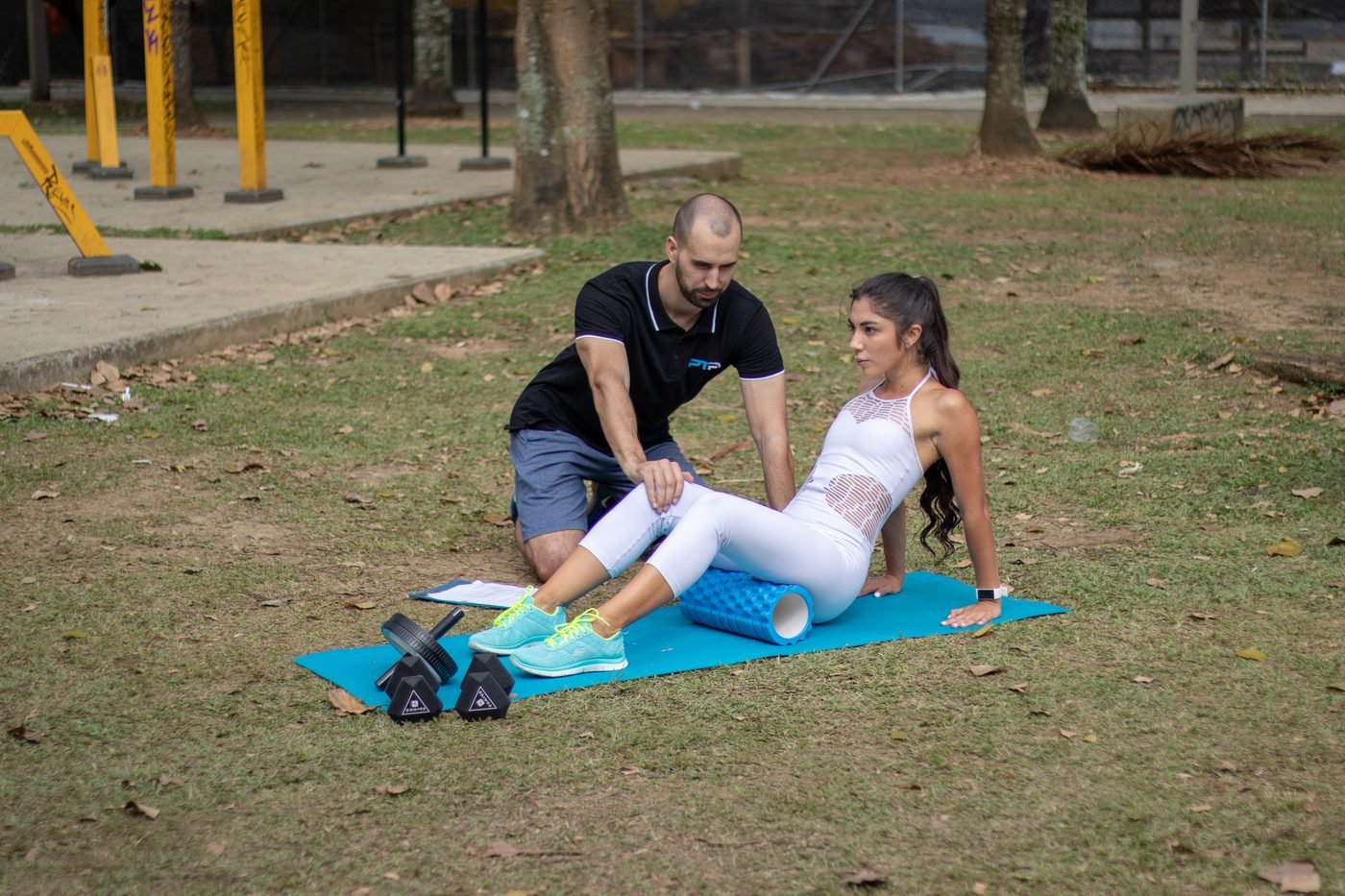
A massage ball works by concentrating your body weight into a small area. That focused pressure is the whole point — a foam roller spreads pressure wide, while a ball targets one tight spot.
People use balls for the feeling of loosened, less tight muscles after training, and for reaching spots a roller cannot isolate, like the arch of a foot or the muscles beside a shoulder blade.
The evidence here is limited and mostly about perceived soreness and comfort, not repair. A ball is general fitness equipment, not a medical device — it does not cure pain, and it never replaces a clinician’s advice.
Kieba Massage Lacrosse Balls (Set of 2)
🏒 The Kieba set is the classic starter pick: two 2.5-inch solid-rubber balls for whole-body trigger-point work. One ball works a calf or shoulder; two together can bracket a larger muscle.
At 2.5 inches each, these are the smallest-diameter balls in this guide — smaller than the 2.6-inch MB1 and Neuro Ball. Firm rubber gives deep, focused pressure, and the pair format means you always have a spare in your gym bag.
Colour variants are sold as separate listings and were not merged here. A 1-year guarantee is noted in one independent roundup. Set weight figures conflict between sources, so we state no set weight.
✅ Pros
- Two balls — work one spot or bracket a muscle
- Firm rubber gives deep, focused pressure
- Small size reaches calves, glutes and shoulders
- Light and portable for a gym bag
⚠️ Cons
- Firmness can feel intense for beginners
- Smooth surface can slip on hard floors
- No carry bag stated in the listing
- Most recent record showed no featured offers
👉 Check the Kieba Massage Lacrosse Balls (Set of 2) on Amazon
⚠️ Listing check: the most recent record we checked for this listing showed no featured offers available, so confirm the current offer before ordering.
Best for: lifters and runners who want one firm pair for everywhere.
May not fit: anyone who wants gentle pressure or a single large ball.
TriggerPoint MB1 Massage Ball
🎯 The MB1 is TriggerPoint’s small ball: 2.6 inches of multi-density EVA foam, weighing about 1.2 ounces. It is made for small muscles — feet, calves, pecs and the piriformis — where a big ball cannot isolate anything.
Foam is gentler than solid rubber, which makes the MB1 a friendlier first ball for sensitive spots. TriggerPoint states a 1-year manufacturer’s warranty, and the 2.6-inch size and weight are agreed by Garage Gym Reviews, The Feed and one further roundup.
Its size is also its limit: for broad back work you will want the MB5 below, not this one.
✅ Pros
- Small size isolates feet, hands and pecs
- Foam is gentler than solid rubber
- Very light at about 1.2 ounces
- 1-year manufacturer’s warranty
⚠️ Cons
- Too small for broad back work
- May feel too gentle for deep-pressure fans
- No carry bag stated in the listing
- No current offer details in records checked
👉 Check the TriggerPoint MB1 Massage Ball on Amazon
⚠️ Listing check: no current offer details appeared in the records we checked, so confirm the current offer before ordering.
Best for: feet, calves and small tight spots, and first-time ball users.
May not fit: anyone who wants deep pressure or broad back coverage.
TriggerPoint MB5 Massage Ball
🎳 The MB5 is the MB1’s big sibling: a 5-inch multi-density EVA foam ball for broad areas — shoulders, hips and the groin region — rather than feet or small targets. At 5 inches it is the largest single ball in this guide.
The same foam construction keeps it gentler than a lacrosse ball, which suits people who find solid rubber too intense. It is a simple one-piece tool with nothing to charge and nothing to assemble.
Note the naming trap: one search result tied the MB5 name to the MB1’s listing in its details block. The MB5’s own listing is the one linked below, and we did not use the MB1 link for it.
✅ Pros
- 5-inch size covers shoulders, hips and broad areas
- Foam is gentler than solid rubber
- Simple one-piece tool, nothing to charge
- Pairs naturally with the smaller MB1
⚠️ Cons
- Too big for feet and small targets
- Foam feel is softer than a lacrosse ball
- Bulkier to pack than a 2.5-inch ball
- Most recent record showed no featured offers
👉 Check the TriggerPoint MB5 Massage Ball on Amazon
⚠️ Listing check: the most recent record we checked showed no featured offers available, so confirm the current offer before ordering.
Best for: broad-area work on shoulders, hips and upper legs.
May not fit: feet, hands and anyone who wants pinpoint pressure.
RAD Neuro Ball
🧠 The RAD Neuro Ball is the clever one: a 2.6-inch textured silicone ball for feet and hands that splits into two domes, so both feet can be worked at once. Inside sits a removable firm Micro Round for focused trigger-point work.
The maker’s own page confirms the split design, the Micro Round and the sensory-stimulation idea, and the ball is stated as medical-grade silicone, BPA- and latex-free, at about 6 ounces. The textured surface also grips better than a smooth ball on hard floors.
Two honest limits: this listing comes from a single Amazon search-result source, and no warranty statement was found in the sources checked — neither gap is papered over here.
✅ Pros
- Splits into two domes for both feet at once
- Removable firm Micro Round for focused work
- Textured surface grips better than smooth balls
- Medical-grade silicone, BPA- and latex-free
⚠️ Cons
- Listing from a single Amazon source
- 2.6-inch size too small for broad back work
- Textured feel is not for everyone
- No warranty statement found in sources checked
👉 Check the RAD Neuro Ball on Amazon
⚠️ Listing check: this listing comes from a single Amazon search-result source, and no current offer details appeared in the records we checked — confirm the listing and the current offer before ordering.
Best for: feet and hands, and anyone who likes a textured, two-in-one tool.
May not fit: broad back work, or buyers who want a smooth ball.
5BILLION FITNESS Peanut Massage Ball

🥜 The peanut is the back specialist: two 2.5-inch natural-rubber contacts joined into a 5-inch tool, with a channel between them. That channel is the point — it lets you work the muscles alongside the spine without pressing directly on the vertebrae.
A carry bag is included, and the tool weighs 12 ounces per the listing (one roundup states 12.64 ounces — we use the listing figure and note the variation). Colour variants are separate listings and were not merged here.
No warranty statement was found in the sources checked, and the fixed 5-inch length will not suit every body — taller users with broad backs may find it short.
✅ Pros
- Channel keeps pressure off the spine
- Two contacts work both sides at once
- Natural rubber, firm and durable
- Carry bag included
⚠️ Cons
- Fixed 5-inch length will not fit every body
- Firm rubber can feel intense for beginners
- Most recent record showed no featured offers
- No warranty statement found in sources checked
👉 Check the 5BILLION FITNESS Peanut Massage Ball on Amazon
⚠️ Listing check: the most recent record we checked showed no featured offers available, so confirm the current offer before ordering.
Best for: back work where you want pressure beside, never on, the spine.
May not fit: feet and small targets, or very broad backs.
Hyperice Hypersphere Go
🔋 The Hypersphere Go is the only vibrating pick in this guide: a compact ball with 3 speeds, a textured silicone exterior and a rechargeable battery giving 2-plus hours per charge, with a USB-A to USB-C cable included.
At about 3 inches per the listing and about 1 pound, it is a genuine travel tool — it is stated as TSA-approved for carry-on. One roundup states 3.5 inches instead; we use the listing’s 3-inch figure and note the variation. It was formerly sold as the Hypersphere Mini, part number HISPHEREMINI.
Vibration divides opinion: some people find it helps them relax into pressure, others just want a silent ball. It also needs charging, and no warranty statement was found in the sources checked.
✅ Pros
- 3 vibration speeds for different comfort levels
- 2-plus hours per charge
- Compact and TSA-approved for carry-on
- Textured silicone exterior for grip
⚠️ Cons
- Needs charging — a manual ball needs nothing
- Heavier than manual balls at about 1 pound
- Vibration is not for everyone
- No warranty statement found in sources checked
👉 Check the Hyperice Hypersphere Go on Amazon
⚠️ Listing check: no current offer details appeared in the records we checked, so confirm the current offer before ordering.
Best for: travellers and anyone who wants powered vibration in a pocket-size tool.
May not fit: anyone who wants a silent, zero-maintenance ball.
How to Choose a Massage Ball
Start from the body part, not the ball. Feet and hands want a small ball, backs want a bigger one or a peanut, and broad areas want the largest ball you can control.
Then match firmness to your tolerance. Firm rubber gives the deepest pressure; foam gives a gentler start. Either way, pressure should feel like strong discomfort at most — never sharp pain.
A ball also pairs well with the rest of a small home gym: see our balance boards guide, gym towels guide, weight vests guide and weight benches guide for the kit that surrounds a recovery corner.
Size and Firmness

Size decides what you can reach. A 2.5-inch ball isolates a calf or a foot arch; a 5-inch ball covers a shoulder or a hip. The 2.6-inch balls in this guide sit in between, for small-to-medium areas.
Firmness decides how it feels. Solid rubber is the firmest option here, foam the gentlest, silicone in the middle with extra grip. Beginners usually do better starting softer and moving firmer.
💡 A tennis ball is the classic stand-in: cheap, soft and everywhere. It works for a first try, but it is lighter and squashes more than a lacrosse ball, so it cannot match the focused pressure of a firm ball.
Shapes: Round, Peanut and Textured
Round balls are the all-rounders: one contact point, easy to roll, simple to place against a wall or the floor. Smooth rounds roll freely; textured rounds grip and add sensation.
Peanut tools are the specialists: two contacts with a gap, made for the muscles on either side of the spine. They are less useful anywhere else, so buy one only if back work is your main job.
Split balls like the Neuro Ball are the newest shape: two domes that work as one ball or two. They suit feet best, where two matching tools beat one.
Powered or Manual?
Manual balls are silent, light in a bag and impossible to run flat. They are also the simplest way to start, and for most people they are all that is needed.
Powered balls add vibration, which some people find helps them relax into pressure. The trade-offs are real: charging, extra weight, noise and a higher chance of a dead battery mid-trip.
Our honest take: start manual, and only go powered if you already use a ball regularly and want the extra sensation. A vibrating ball is a luxury version of a simple tool, not a different tool.
Care, Storage and Travel
Care is simple: wipe the ball clean after use, keep it out of direct heat and harsh sun, and let it dry before bagging it. Rubber and silicone both pick up dust, so a quick wipe keeps the grip.
Storage is the ball’s secret advantage: every pick here fits in a gym bag pocket or a drawer. The peanut is the bulkiest shape, and even it is smaller than a foam roller.
For travel, a manual ball is unbeatable — no battery, no liquids, no fuss. The Hypersphere Go adds a charger to the bag, but its carry-on approval keeps it a genuine travel option.
Safety: Using a Massage Ball Safely
Balls are safe for most healthy adults when used gently — but pressure is powerful, so follow these steps every session:
- Start with light pressure and build up slowly — never drop your full weight onto a ball on day one.
- Roll soft muscle tissue only — never press directly on joints, bones or the spine itself.
- With a peanut ball, keep the channel over the spine and the contacts on the muscles beside it.
- Stop at once for sharp pain, numbness, tingling or weakness — discomfort is fine, those signals are not.
- Skip injured, bruised or swollen areas, open wounds and any area with altered sensation.
- Check with a clinician first if you have neuropathy, circulation problems, are pregnant, or have a recent injury.
- For a vibrating ball, keep it dry and follow the maker’s charging instructions.
This guide is general information only, not medical advice. If pain persists or worsens, see a clinician rather than pressing harder.
Frequently Asked Questions
Are massage balls better than foam rollers? Neither is better — they do different jobs. A roller covers broad areas quickly; a ball targets one small spot. Most home gyms end up owning both.
Can I use a tennis ball instead? Yes, for a first try. A tennis ball is softer and lighter than a firm massage ball, so it suits gentle work but cannot match deep, focused pressure.
How hard should I press? Aim for strong discomfort at most — about the level where you can still breathe and talk normally. Sharp pain means you are pressing too hard or on the wrong spot.
Can I use a massage ball every day? Many people do, for a few minutes per area. Keep sessions short, skip sore or injured spots, and rest a day if an area feels worse afterwards.
Are vibrating balls worth it? They add sensation and convenience for regular users, but they are not necessary. A manual ball gives the same basic pressure without the charging and the extra weight.
What should I never roll over? Joints, bones, the spine itself, injured or swollen tissue, open wounds and any area with numbness. When in doubt, leave it out and ask a clinician.
Our Pick: Start Here
🏆 Start with the Kieba Massage Lacrosse Balls (Set of 2): two firm balls cover more body parts than any single ball, and the pair format is the most versatile starting point in this guide.
If your main job is feet and small spots, start with the TriggerPoint MB1 instead — its foam is gentler and its size is made for small areas. For back work, add the 5BILLION Peanut; for powered recovery, the Hyperice Hypersphere Go is the only vibrating option here.
Whichever you choose, start light, stay on soft tissue, and confirm the listing before ordering — several records in this guide showed no featured offers at check time.
As an Amazon Associate, we earn from qualifying purchases made through links on this page, at no extra cost to you.
This guide is research-based: we did not test these products hands-on, and specifications, availability and offers can change — please check the listing before ordering. Photos in this guide are generic training scenes from Wikimedia Commons, not photos of the named products.