

A gym clock is the cheapest way to give a home gym a sense of time — a big face on the wall that tells you when the session started, when the rest is over, and when it is time to stop. No phone in a sweaty hand, no squinting at a tiny watch, no guessing. Just a glance at the wall, then back to the set. 🕐
Pick it right and the whole session runs smoother: warm-ups start on time, rests stay honest, and the cool-down does not eat the evening. Pick it wrong and you get a clock too small to read from the rack, or one that dies mid-week because nobody checked the battery.
One important distinction before we start: this guide is about clocks that show the time of day on your gym wall. Our gym timers guide covers a different job — interval and countdown timers that run your HIIT, Tabata, and rest periods. If you need a timer that counts your work and rest intervals, read that guide instead. If you need to know what time it is from across the room, you are in the right place.
But let us be plain from the start: clocks help pacing and session structure, but they do NOT build strength by themselves, they do NOT prevent injury by themselves, they do NOT replace progressive training or coaching, and they do NOT make a hot, crowded, or unsafe area safe.
Used the right way — the right size for the room, the clock secured where it cannot fall, cables kept out of walkways, and rests kept honest — a good wall clock is one of the cheapest upgrades a home gym can get.
How We Picked These Home Gym Clocks
Photo: Taco fleur / Wikimedia Commons
This guide is research-based. We did not buy or hands-on test these clocks, and we do not claim otherwise.
We compared verified buyer reviews and manufacturer specifications, and we checked each clock’s Amazon listing status through search results and listing trackers.
We picked 6 clocks that are genuinely sold and cover different needs: a best-overall large digital clock, a big analog clock for large rooms, a battery clock for rooms with no outlet nearby, a large-display clock with timer extras, an atomic analog clock that sets itself, and a budget digital clock for a shelf or small room.
Prices are not quoted in this guide because they change often. The check-price links take you to the current listing, where you can see the latest price and availability.
Availability varies, so if your option shows as unavailable, check the listing’s other options before switching clocks.
One note before we start: readability is the least forgiving figure in this guide. A clock you cannot read from the rack is decoration, no matter how good it looks up close — read the size section before you trust any single inch number.
Quick Comparison
Photo: GymNation / Wikimedia Commons
| Clock | Type | Display / power | Best for |
|---|---|---|---|
| JALL 16.15″ Large Digital Wall Clock | Digital wall clock | 16.15 in, RGB, remote, plug-in | Best overall digital |
| La Crosse 23″ Maxwell Quartz Wall Clock | Analog wall clock | 23 in, quartz, battery | Best big analog |
| WallarGe 14.5″ Backlight Digital Wall Clock | Digital wall clock | 14.5 in, backlight, battery | Best battery clock |
| REACHER 16.5″ Large Digital Wall Timer Clock | Digital wall clock with timer | 16.5 in, jumbo digits, plug-in | Best large display with timer extras |
| La Crosse WT-3102S 10″ Atomic Analog Wall Clock | Atomic analog wall clock | 10 in, atomic, battery | Best atomic analog |
| XUANZIT LED Digital Wall Clock | Digital wall clock | 9.3 in display, plug-in USB | Best budget digital |
1. JALL 16.15″ Large Digital Wall Clock — Best Overall Digital Clock

Photo: Tyler Read / Wikimedia Commons
Who it suits: home gym owners who want one clock that does everything — a large digital display readable from the rack, with a remote, alarms, and temperature, for a garage or spare room.
The JALL 16.15″ Large Digital Wall Clock is a plug-in LED wall clock with a 16.15-inch display, RGB lighting, a remote control, dual alarms, automatic daylight saving time, and indoor temperature in Celsius or Fahrenheit. It measures about 15.35 by 5.1 inches, shows 12- or 24-hour time, and carries an Amazon’s Choice highlight in listing crawls.
The size is the honest advantage here: a 16-inch-wide display with big LED digits reads clearly from across a garage — which matters when the clock must be read mid-set, not walked up to. The remote is the other half of the story: brightness, colour, and alarms change from the bench, not from a ladder.
Pros: 16.15-inch display with big LED digits; RGB lighting with remote control; dual alarms; automatic daylight saving time; indoor temperature display; 12- or 24-hour format; Amazon’s Choice in listing crawls.
Cons: several JALL wall clocks share the name in different sizes, including a 12-inch version, so confirm the listing matches the 16.15-inch clock before ordering; it is plug-in, so it needs an outlet near the wall; the RGB colours are a look, not a training feature — pick it for readability, not for lights.
👉 Check price on Amazon (please confirm the listing matches the 16.15-inch JALL clock, not the 12-inch version).
2. La Crosse 23″ Maxwell Quartz Wall Clock — Best Big Analog Clock
Photo: Rodhullandemu / Wikimedia Commons
Who it suits: garage and workshop gym owners who want the biggest honest face in this guide — a classic analog clock that fills a large wall and reads from anywhere in the room.
The La Crosse 23″ Maxwell Quartz Wall Clock (model 404-2658) is a 23-inch analog wall clock with a quartz movement, an antique-styled dial with Roman numerals, and a dark brown plastic frame. It runs on battery power, hangs on a single wall fixing, and is made by a maker known for clocks and weather instruments.
The sheer size is the honest advantage here: a 23-inch face is readable from the far end of a garage in a way no 10-inch clock can match — which matters when one clock must serve a whole training area. The analog dial is the other half of the story: a glance at hand positions tells you how long a rest has run without reading any digits at all.
Pros: 23-inch face — the largest display here; quartz movement for accurate timekeeping; classic Roman-numeral dial reads at a glance; battery powered, so no outlet needed; dark frame suits a garage or workshop wall.
Cons: it is a time-of-day clock only — no alarms, no temperature, no timer functions, so buyers who want extras should pick a digital instead; a 23-inch clock needs a big empty wall and a solid fixing; quartz clocks need a battery change on schedule, or the time quietly drifts.
👉 Check price on Amazon (please confirm the listing matches the 23-inch Maxwell model 404-2658).
3. WallarGe 14.5″ Backlight Digital Wall Clock — Best Battery Clock
Photo: Akhlispurnomo / Wikimedia Commons
Who it suits: gym owners whose wall has no outlet nearby — a battery clock for a driveway gym, a rented room, or any wall where a cable would cross the training area.
The WallarGe Backlight Digital Wall Clock (model CL5003) is a battery-powered digital wall clock with a 14.5-inch display, a backlight, indoor temperature, date and day-of-week display, and automatic daylight saving time. It runs on 4 AA batteries (not included), mounts on the wall or stands on a tabletop with a fold-out stand, and is sold by WallarGe Direct in listing crawls.
The battery power is the honest advantage here: no outlet, no cable across the lifting area, no tripping hazard — which matters for rooms where the only outlet sits behind the rack. The backlight is the other half of the story: the display stays readable in a dim garage in a way an unlit LCD cannot match.
Pros: battery powered — no outlet or cable needed; 14.5-inch display with backlight; indoor temperature, date, and day of week; automatic daylight saving time; wall mount or tabletop stand; low-battery indicator on screen.
Cons: several near-identical WallarGe 14.5-inch clocks exist, including a non-backlight version, so confirm the listing matches the backlight CL5003 model before ordering; batteries are not included, so budget for 4 AA cells; a backlight left on full will eat batteries faster than an unlit display.
👉 Check price on Amazon (please confirm the listing matches the backlight CL5003 model, not the non-backlight version).
4. REACHER 16.5″ Large Digital Wall Timer Clock — Best Large Display with Timer Extras
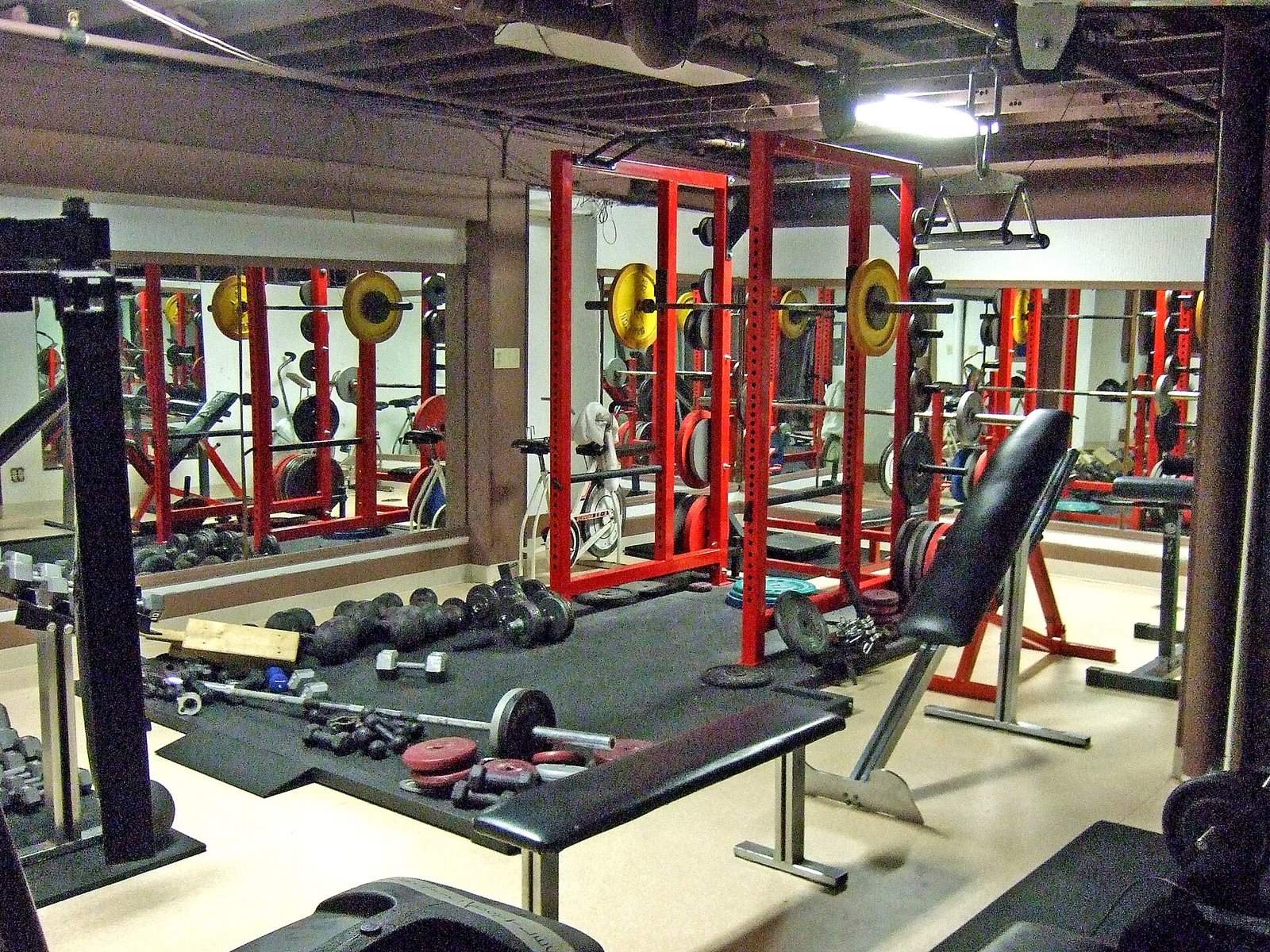
Photo: Jdsteakley / Wikimedia Commons
Who it suits: lifters who want the biggest digits in this guide plus simple rest timing — a wall clock that shows the time of day first, with a short countdown for rests as a bonus.
The REACHER 16.5″ Large Digital Wall Timer Clock (model GQ01) is a plug-in LED wall clock with a 16.5-inch screen, jumbo 9.4-by-4.3-inch digits, 12 colour options including gradients, an auto-dimmer, indoor temperature, and a remote control. It also carries a countdown and count-up timer with 7 remote shortcuts (30 seconds to 30 minutes) and a maximum timer duration of 99 minutes and 59 seconds.
The digit size is the honest advantage here: 9.4-inch-tall digits are the biggest numbers in this guide — which matters when the clock must be read from the far side of a garage mid-set. The timer extras are the other half of the story: short rest countdowns without opening the interval-timer guide’s dedicated timers.
Pros: jumbo 9.4-by-4.3-inch digits — the biggest numbers here; 16.5-inch screen with auto-dimmer; 12 colour options; remote control with 7 countdown shortcuts; indoor temperature; countdown and count-up to 99 minutes 59 seconds.
Cons: it needs continuous power from its 5V adapter — the backup battery only saves settings during an outage, and the screen goes blank on battery alone; its timer tops out under 100 minutes and is not a full interval programmer, so buyers who need Tabata and EMOM programming should read our gym timers guide instead; confirm a current new offer before ordering, as one older crawl showed limited availability.
👉 Check price on Amazon (please confirm a current new offer, and note the screen needs continuous adapter power).
5. La Crosse WT-3102S 10″ Atomic Analog Wall Clock — Best Atomic Analog Clock

Photo: Wikimedia Commons
Who it suits: small-room trainers who never want to set a clock again — an analog clock that sets itself from the atomic radio signal and adjusts for daylight saving on its own.
The La Crosse WT-3102S Atomic Analog Wall Clock is a 10-inch analog wall clock with radio-controlled atomic time, automatic daylight saving updates (with an on/off option), four time zone settings, and a silver frame. It runs on a single AA battery (not included) and sets itself to the exact time, accurate to the second, once it receives the signal.
The self-setting time is the honest advantage here: no manual setting, no drift, no twice-yearly clock change to forget — which matters in a gym where the clock is high on the wall and a pain to reach. The single battery is the other half of the story: one cell, changed rarely, keeps the whole clock running.
Pros: atomic time sets itself and stays accurate to the second; automatic daylight saving updates; four time zone settings; single AA battery; classic analog dial.
Cons: 10 inches is the smallest face here, so it suits a small spare room, not a big garage — never expect it to read from the far wall; atomic reception is strongest in the evening and can take several nights to lock on first setup, so hang it facing the signal and be patient; it is a time-of-day clock only, with no alarms or temperature.
👉 Check price on Amazon (please confirm the listing matches the 10-inch WT-3102S model, and note it suits a small room, not a garage).
6. XUANZIT LED Digital Wall Clock — Best Budget Digital Clock
Photo: Wikimedia Commons
Who it suits: solo lifters and budget buyers who want time on the wall beside the bench — a small plug-in digital clock for a shelf, a desk, or a small room.
The XUANZIT LED Digital Wall Clock is a plug-in LED wall clock with a 9.3-inch display and 2.8-inch digits, three-level auto-brightness from a built-in light sensor, a 10-foot USB power cable, and 12- or 24-hour time format. It is wall-mountable, silent, and built for living rooms, bedrooms, classrooms, and small gyms.
The digit size for the price is the honest advantage here: 2.8-inch digits are bigger than the 1.8-inch digits on many 16-inch atomic clocks — which matters when the clock sits on a shelf a few feet from the bench. The 10-foot cable is the other half of the story: the clock reaches an outlet that is not right behind it.
Pros: 2.8-inch digits on a 9.3-inch display; three-level auto-brightness; 10-foot USB cable; 12- or 24-hour format; silent operation; budget price point.
Cons: plug-in only — the backup battery only preserves time during an outage, so it needs an outlet; the display suits a shelf or small room, not a garage wall; confirm a current new offer before ordering, as the listing crawl is older than the others here.
👉 Check price on Amazon (please confirm a current new offer, and note it is plug-in, not battery powered).
How to Choose the Right Home Gym Clock

Photo: Shixart1985 / Wikimedia Commons
Start with your viewing distance, then your outlet, then your extras. A clock that cannot be read from the rack is decoration, and a clock that needs an outlet you do not have is a shelf ornament.
Then buy in this order: a large digital or big analog clock first if the room is big, a battery clock first if the wall has no outlet nearby, and a budget digital clock first if the gym is a shelf, a desk, or a single small room.
Clock type: large analog wall clock vs digital wall clock vs interval/countdown clock vs smart clock — what each actually does

Photo: Tokumeigakarinoaoshima / Wikimedia Commons
Large analog wall clocks (La Crosse 23-inch, La Crosse atomic 10-inch) show hands on a dial: they suit garages and classic gym walls — but they show time of day only, so they suit owners who want a glance, not a gadget.
Digital wall clocks (JALL, WallarGe, XUANZIT) show digits, date, and temperature: they suit spare rooms and garages alike — but they need power, battery or plug-in, so check the power type before ordering.
Interval and countdown clocks (the timers guide’s job, with the REACHER as a halfway house) count work and rest: they suit HIIT and Tabata — but they are timers first and clocks second, so read our gym timers guide if intervals are the main job.
Smart clocks (not picked here — see the note below) show time plus weather, calendars, and voice control: they suit finished rooms that already live on Wi-Fi — but they need mains power, an app, and a subscription-free account, and this guide picks wall clocks instead, so no smart setup is required for any pick.
Display size and readability: what each size actually suits

Photo: Wikimedia Commons
Big-room displays (La Crosse 23-inch face, REACHER jumbo digits, JALL 16.15-inch) suit garages and workshops: the display covers a whole training area with room to spare. This is where most real garage-gym clock buying starts.
Mid-room displays (WallarGe 14.5-inch) suit spare rooms and single lifting areas: one clock covers a bench, a rack, or a cardio corner well. This is where most real home-gym clock buying happens.
Personal displays (XUANZIT 9.3-inch, La Crosse atomic 10-inch) suit one lifter or one small room: the time follows the person, not the room. Never expect these to read from a garage wall — the size is the limit, not a suggestion.
Material and durability: plastic, metal, and glass — what lasts
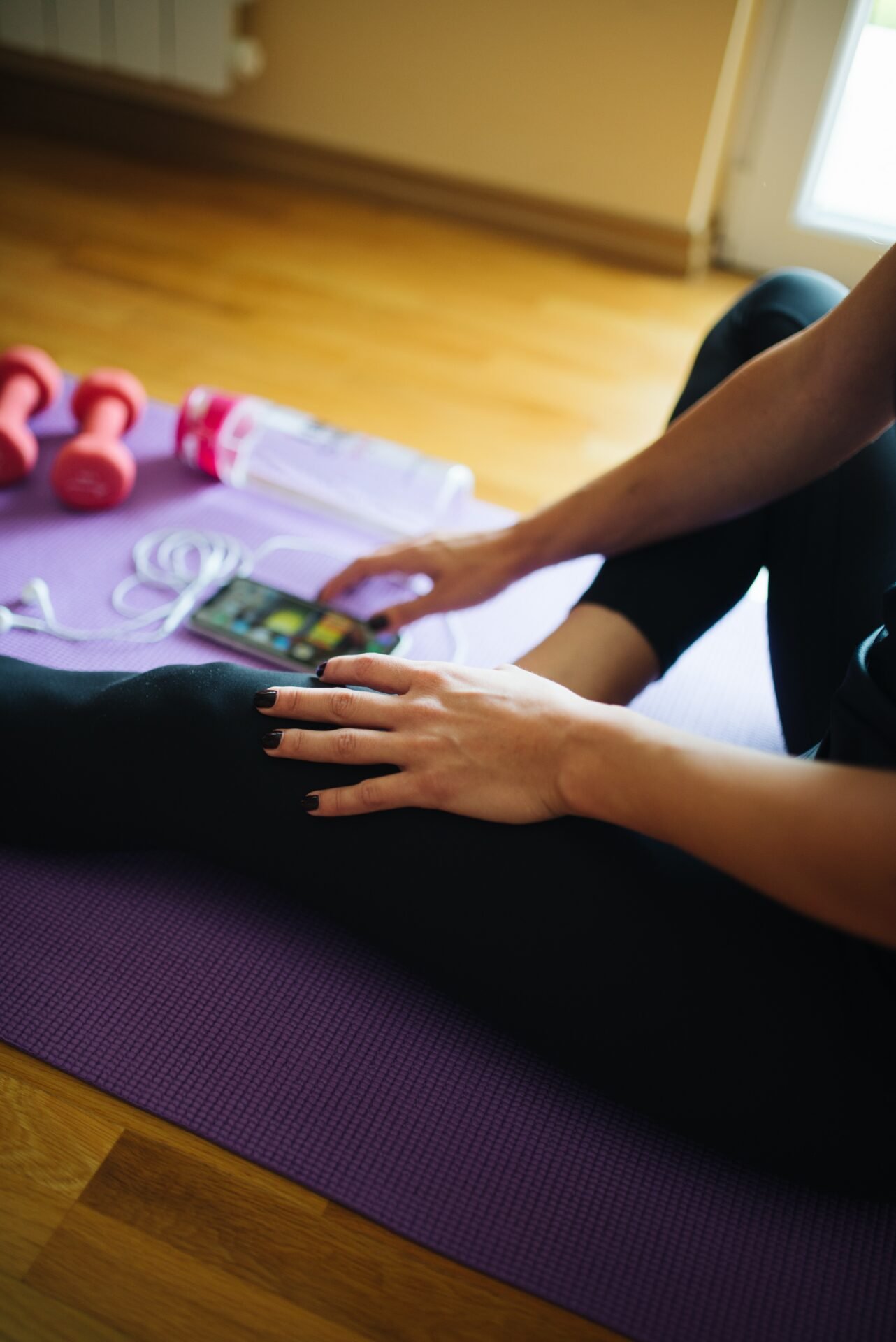
Photo: Wikimedia Commons
Plastic is the gym standard: it keeps wall clocks light enough to hang on one fixing and cheap enough to replace, but it scuffs under heavy knocks and hates heat. A clock stored in a cool cupboard lasts far longer than one left in a hot garage all summer.
Glass and metal are the classic standard: they look better on a finished wall and resist scratches, but they are heavier and need a stronger fixing — which matters when the clock hangs above plates and bars. Check the fixing before every season — a loose clock is a fall waiting to happen.
Movements are a care signal in disguise: a quartz movement keeps time quietly for years on one battery, while an atomic movement sets itself but needs signal — and a clock that ticks loudly, stops, or drifts is a stop signal, not a quirk. Change the battery and check it before the next session.
Surface and storage suitability: wall, shelf, and table
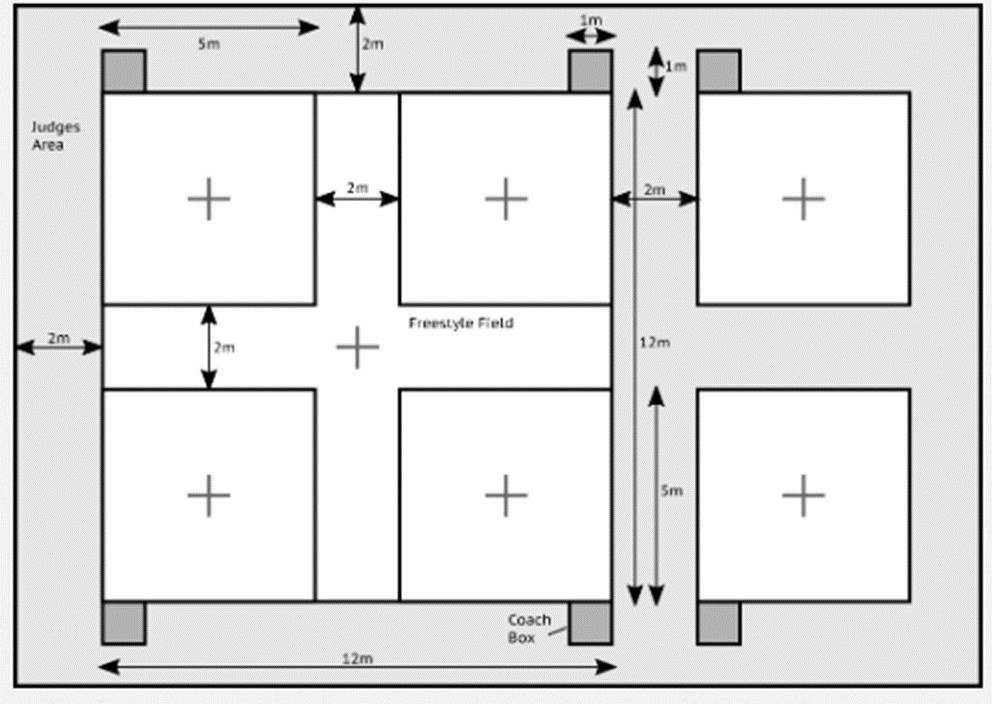
Photo: Wikimedia Commons
A wall is the kindest surface for a gym clock: every wall clock here performs best hung high on a flat wall, with the face aimed at the lifting area. This is where every gym clock performs best, and where the big analog earns its keep.
A shelf needs a small clock: shelf clocks in this guide need a flat, dry shelf, with the cable routed out of the walkway. A clock that wobbles on its stand is a fall waiting to happen.
A table wears portable clocks slowest: it keeps battery clocks dry and dust-free between sessions. If the table is your only surface, buy a small digital clock and accept that a 23-inch analog needs wall space, not a table.
Storage decides whether clocks survive the season: upright, dry, and out of the walkway keeps clocks working and used, while clocks loose on the floor get kicked, tripped over, and forgotten. Park every clock before every session ends.
What no clock makes safe

Photo: Tyler Read / Wikimedia Commons
A clock does not make training safe by itself, does not fix a room that is dangerously hot, humid, or crowded, and does not protect anyone from overtraining, dehydration, or an existing heart or breathing condition. The clock shows time; it does not judge whether the session is wise for you.
Check the mount and the area before every session: no loose fixings, no overloaded outlets, no clocks hanging into head height, no cables within reach of children or pets, and a training area clear of cables, plates, and other people. A session that starts under a wobbling clock ends abruptly.
Pace honestly: rest as long as the plan says, not as short as pride says, drink water before, during, and after training, and stop at dizziness, nausea, or a racing heart. Keep clocks and their batteries dry, secure wall mounts so they cannot fall into the training area, and keep cables out of walkways. If you have a heart, breathing, or timing-related training concern, talk to a clinician first. This guide is general information only, not medical advice.
Frequently Asked Questions
Photo: Tokumeigakarinoaoshima / Wikimedia Commons
Which gym clock should a home gym beginner buy first?
The JALL 16.15-inch clock: real large-display readability at a mid-range size, with a remote and no mounting puzzle. Beginners should start with one large digital clock aimed at the lifting area, and add a timer only when interval training starts.
How big a clock does a garage gym need?
Big enough to read from the rack — a 16-inch or larger display for a two-car garage, and a 23-inch analog face or jumbo-digit display for a three-car or workshop space. A clock rated for a bedroom will whisper in a garage, not fill it.
What is the difference between a wall clock and a gym timer?
A wall clock shows the time of day; a gym timer counts work and rest intervals. Time of day paces the session, intervals program it — and our gym timers guide covers the interval job in full.
Can I use a gym clock outdoors or in a damp garage?
Only if the clock is rated for it: most clocks here are indoor units, and none is a waterproof outdoor clock. Check the maker’s rating before hanging anywhere damp, and keep batteries and adapters dry.
Do I need an electrician to install a gym clock?
Not for battery or plug-in wall clocks — those need only a safe outlet and a solid fixing. Hardwired clocks and new circuits do need an electrician, so check the installation type before ordering.
When should I replace a gym clock?
When it stops, drifts, ticks loudly, wobbles on its mount, or its face cracks. Worn clocks mislead pacing — replace them before they do, and check mounts, fixings, and batteries before every season.
Our Pick in One Line

Photo: Staff Sgt. Clinton Firstbrook / Wikimedia Commons
If you want one answer: the JALL 16.15-inch digital clock is the best all-round buy because its large display, remote, and alarms cover almost any home gym in one plug-in unit — but if you want the biggest face without a single cable, buy the La Crosse 23-inch Maxwell first, because a 23-inch analog dial on a garage wall is the biggest time a gym can own without giving up an outlet.
For the rest of your home-gym setup, see our gym timers guide and our home gym sound systems guide, and for the airflow those paced sessions need, see our gym fans guide.
As an Amazon Associate, we earn from qualifying purchases made through links on this page, at no extra cost to you.
This guide is research-based: we compared verified buyer reviews and manufacturer specifications, and we did not buy or hands-on test these products. Prices and availability change, so check the listing before ordering. The training information here is general information only, not medical advice — if you have a heart, breathing, or timing-related training concern, talk to a clinician first.