

Vitamin D helps your body absorb calcium, supports normal muscle function, and keeps bones strong. Lifters who train indoors, live in winter climates, or cover up outdoors often run low. A supplement can fill the gap when sun and food fall short. This guide compares six of them on verified facts.
Every dose, form, and certification below comes from the maker’s label, a retailer listing, or Amazon — never from another roundup. Prices are dated, and conflicts between sources are printed with a †, not settled quietly. Nothing here was tested by us; we compared verified specifications.
If you take other supplements for training, read this alongside our best magnesium supplements for sleep and recovery — the same method, and the same honesty about prices and labels.
The short version: five of our six picks are 5,000 IU a serving — above the NIH’s 4,000 IU daily upper limit — so the dose decision belongs to your bloodwork, not the label. Our top pick pairs D3 with K2. The full comparison — and the catches — is below.
Why Vitamin D Matters for Strength Athletes

Photo: MakeUseOf
Your skin makes vitamin D from sunlight — UVB rays turn a cholesterol compound in the skin into vitamin D3. That is the body’s own supply, and it costs nothing. The catch is the conditions: you need direct sun on bare skin, and indoor training, winter, cloud, and sunscreen all reduce it.
Food helps, but not much. Oily fish, egg yolks, and fortified milk carry some vitamin D, and few lifters eat enough of them daily to cover a shortfall. That is why a supplement is the practical fix for most athletes — a measured dose, every day, whatever the weather.
Low vitamin D shows up where lifters notice it: weaker muscles, more frequent illness, and slower recovery from hard sessions. The NIH lists muscle weakness among the signs of deficiency. It is not a performance drug — it is a shortfall to correct, and correcting it restores normal function.
The numbers that matter come from a blood test, not a bottle. The NIH calls 20 ng/mL of 25-hydroxyvitamin D adequate for most people, under 12 too low, and over 50 possibly too high. The Endocrine Society prefers 30 or above — a stricter line we note, not the NIH’s.
Dose follows the test. A lifter at 14 ng/mL needs a different plan from one at 35. That is the whole method of this guide: pick a verified product, take it with a fat-containing meal, and retest in 8 to 12 weeks.
For the food side of recovery, see our Nick Walker diet plan and workout routine — a real day of eating from a lifter at the top of the sport, not a template.
How We Picked These 6
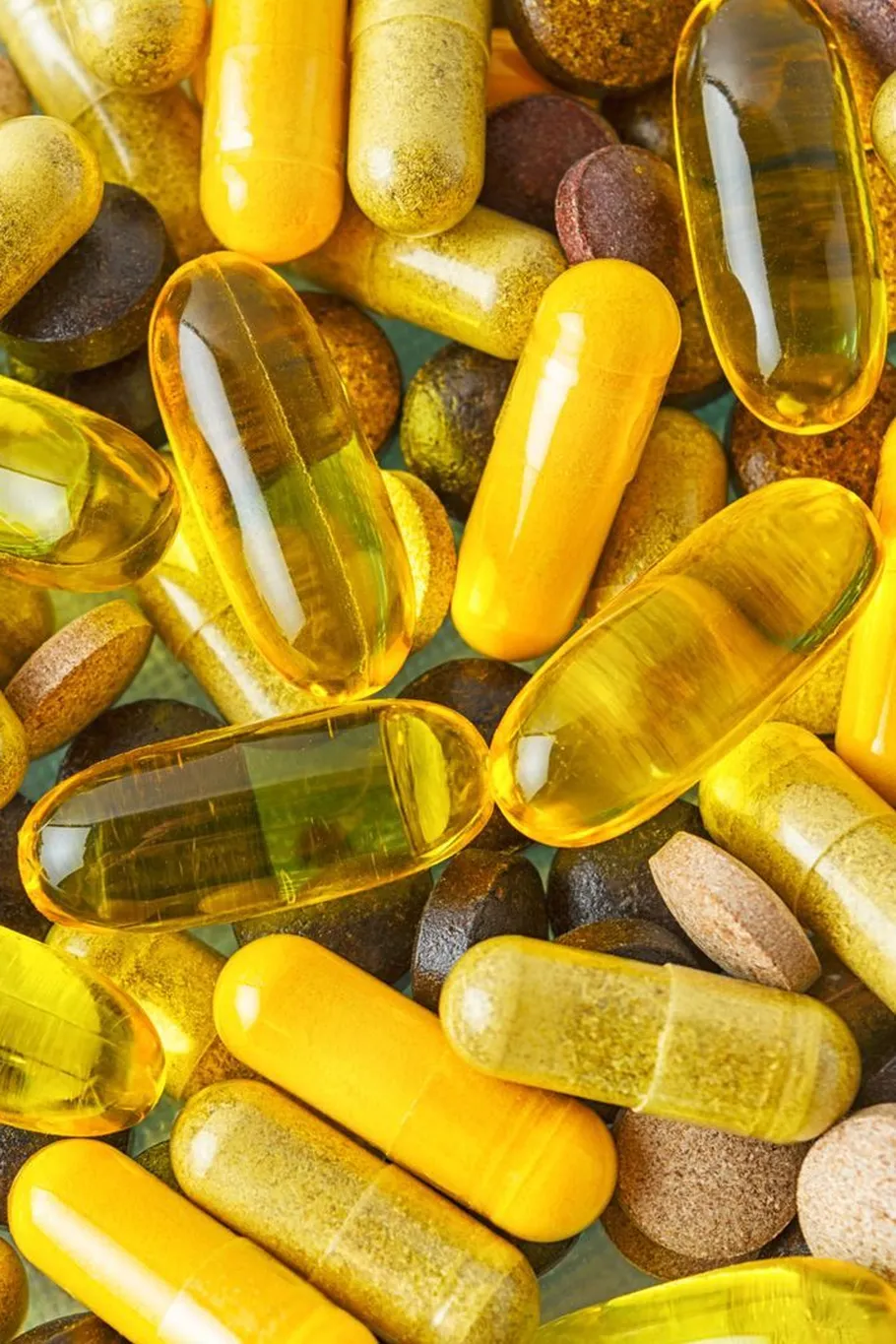
Photo: Webflow
We started with the form: D3, not D2. All six picks are cholecalciferol (D3), the form your skin makes and the form that raises blood levels best. D2 (ergocalciferol) is cheaper and plant-based, but it is less effective — so no D2 made this list.
Then we checked the dose against the NIH’s lines. The recommended intake is 600 IU a day for adults under 71, and the upper limit is 4,000 IU a day from all sources.
Five of our six picks are 5,000 IU a serving — above that limit — and this guide says so plainly on every one of them.
Third-party testing came next. NSF Certified for Sport and USP Verified are the two marks we trust, because an independent lab checks what is actually in the bottle. Two of our six carry NSF, one carries USP, and the rest are judged on label transparency instead.
Price was compared per 1,000 IU, not per bottle — the only fair way to compare a 1,000 IU spray with a 5,000 IU tablet. The table below shows the maths. The cheapest per 1,000 IU is NOW at about a cent; the dearest is the Garden of Life spray at about 16 cents.
We also checked recalls. No pick in this guide has been recalled. The recent vitamin D recalls we found were other products from other makers — a baby’s liquid, a multivitamin, and a D2 syringe — and the Safety section names them.
What we did not do: we did not run lab tests, and we did not run a blood trial. No guide that claims to have tried six supplements in a week is telling the truth. What follows is verified specifications, honest prices, and the catches we found.
The 6 Best Vitamin D Supplements at a Glance
The table below is the whole guide on one screen. Read the ‘D3 per serving’ column first — five picks are 5,000 IU and one is 1,000 IU — then the testing column, then the price per 1,000 IU.
Prices are what we saw, dated in the research notes — Amazon prices move, so check the listing before you buy. The ‘per 1,000 IU’ column is our own maths from the price and the dose, so you can compare a spray with a tablet fairly.
A † next to a number means two sources disagree, and the article says so instead of picking one quietly. Sports Research’s price is the clearest example — a tracker saw $23.95 while the brand’s own store charges $25.97.
| Pick | Form | D3 / Serving | Servings | Price Seen | Per 1,000 IU |
|---|---|---|---|---|---|
| Sports Research Vitamin D3 + K2 | D3 + K2 softgel | 5,000 IU | 60 | ~$24 † | $0.08 |
| Thorne Vitamin D-5,000 | D3 capsule | 5,000 IU | 60 | $20 direct | $0.07 |
| Nature Made Vitamin D3 5,000 IU | D3 softgel | 5,000 IU | 90 | $15.99 | $0.04 |
| NOW Foods Vitamin D-3 5,000 IU | D3 softgel | 5,000 IU | 120 | ~$6.81 | $0.01 |
| Garden of Life mykind Vegan D3 Spray | D3 spray | 1,000 IU | 125 | ~$17–$20 | $0.13–$0.16 |
| Klean Athlete Klean-D 5000 | D3 tablet | 5,000 IU | 100 | $17.50 | $0.04 |
1. Sports Research Vitamin D3 + K2 — Best Overall
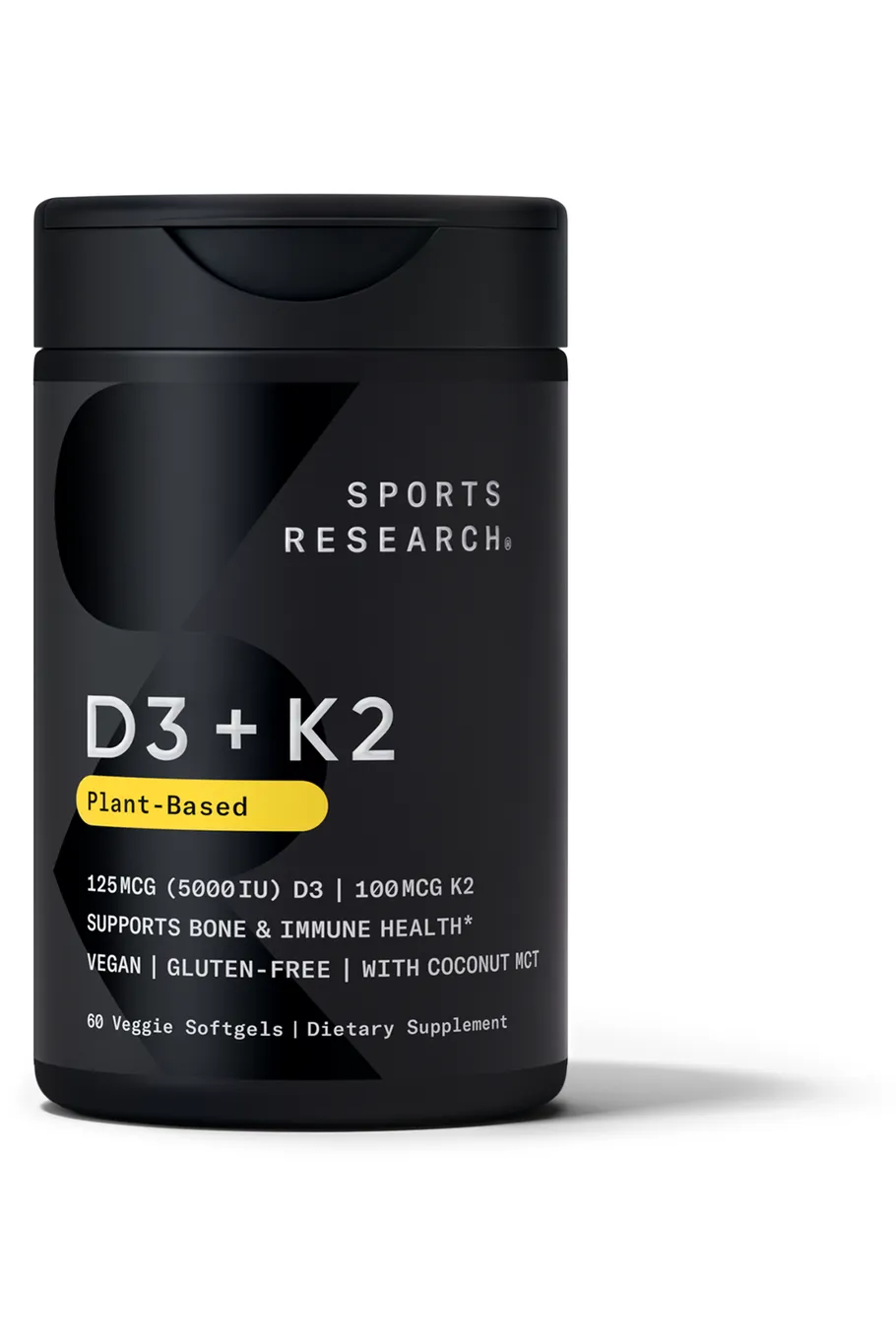
Photo: Sports Research
Sports Research leads this guide because it is the only pick that pairs D3 with K2: 5,000 IU of lichen-based D3 plus 100 mcg of K2 as MK-7 in one veggie softgel. It is the only vegan softgel here, and the only one for lifters who want the pair in one capsule.
One softgel is the serving: 125 mcg (5,000 IU) of vitamin D3 from lichen, and 100 mcg of vitamin K2 as MK-7 from chickpea, in coconut MCT oil. The bottle holds 60 softgels — two months. The label reads ‘Vegan | Gluten-Free | With Coconut MCT’, and the D3 source matters: lichen, not lanolin.
The K2 pairing is popular for a reason, and the reason needs honesty. Vitamin K helps direct calcium toward bone, which is why makers pair it with D3. But no trial in lifters has shown the pair beats D3 alone for strength — buy it for the convenience of one capsule, not a proven edge.
✅ Pros
- only D3+K2 pick here
- plant-based D3 (lichen) and vegan
- 5,000 IU + 100 mcg K2 in one softgel
- third-party tested (brand claim).
❌ Cons
- $0.40 a serving — the dearest per day here
- 5,000 IU is above the 4,000 IU upper limit
- no NSF or USP mark
- price disagrees between sources †.
Best for: lifters who want D3 and K2 in one vegan capsule and are happy paying for the pairing.
May not fit: anyone buying on price, or anyone whose bloodwork says a lower dose is enough.
Price: about $24 — a tracker saw $23.95 while the brand’s own store charges $25.97. † A serving costs about $0.40, and 1,000 IU costs about $0.08. The bottle lasts two months.
What to watch: the price gap. At the brand’s own $25.97, a serving costs $0.43. Buy at the tracker price if you can find it — and check the bottle is the 60-count, not the 120- or 160-count.
Check Price on Amazon: Sports Research Vitamin D3 + K2, 60 veggie softgels
2. Thorne Vitamin D-5,000 — Best Tested
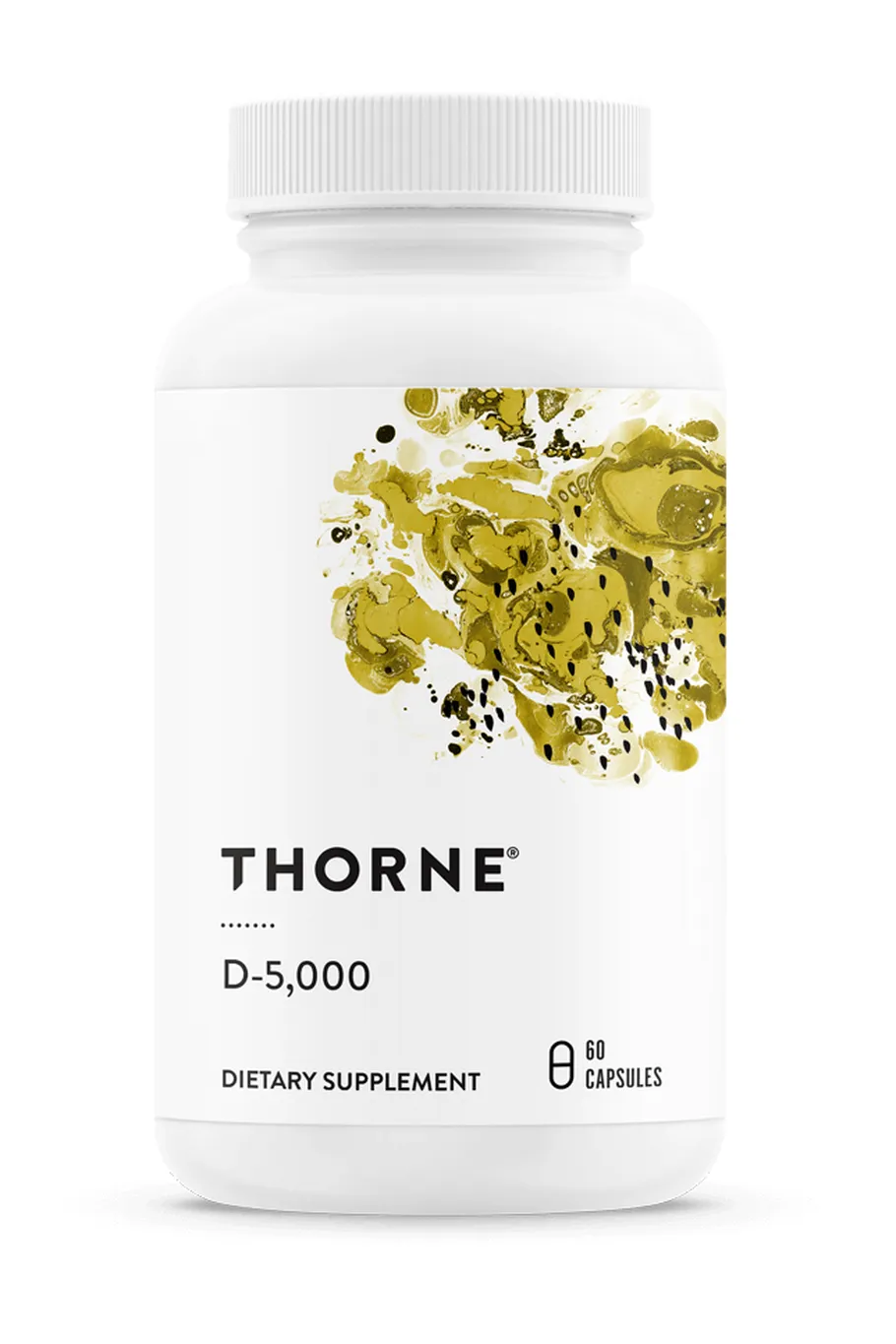
Photo: Thorne
Thorne is the best-tested pick in this guide — the only one with NSF Certified for Sport on a capsule, and the testing mark drug-tested athletes trust most. If your sport tests, this is the bottle to buy first.
One capsule is the serving: 125 mcg (5,000 IU) of vitamin D3, and nothing else. The bottle holds 60 capsules — two months. The label is short on purpose: no K2, no blend, no extra ingredients to argue about.
NSF Certified for Sport means an independent lab checks the product for banned substances and label accuracy — the standard pro sports teams use. Thorne is also the brand behind the magnesium guide’s top pick, and its testing story is the same here.
✅ Pros
- NSF Certified for Sport
- one-ingredient label — D3 and nothing else
- $0.33 a serving
- a brand athletes already trust.
❌ Cons
- 5,000 IU is above the 4,000 IU upper limit
- no K2 in the capsule
- Amazon showed no featured offers when we checked
- no vegan claim on the label.
Best for: drug-tested athletes and anyone who wants the strongest testing mark in this guide.
May not fit: anyone who wants K2 in the same capsule, or a dose under the upper limit.
Price: $20 direct from Thorne (seen November 2026). A serving costs $0.33, and 1,000 IU costs about $0.07 — the dearest tested pick here, and the price of the NSF mark.
What to watch: Amazon had no featured offers when we checked, so the price above comes from Thorne’s own store. Buy there, or check the listing again — do not pay a third-party markup.
Check Price on Amazon: Thorne Vitamin D-5,000, 60 capsules
3. Nature Made Vitamin D3 5,000 IU — Best USP Verified
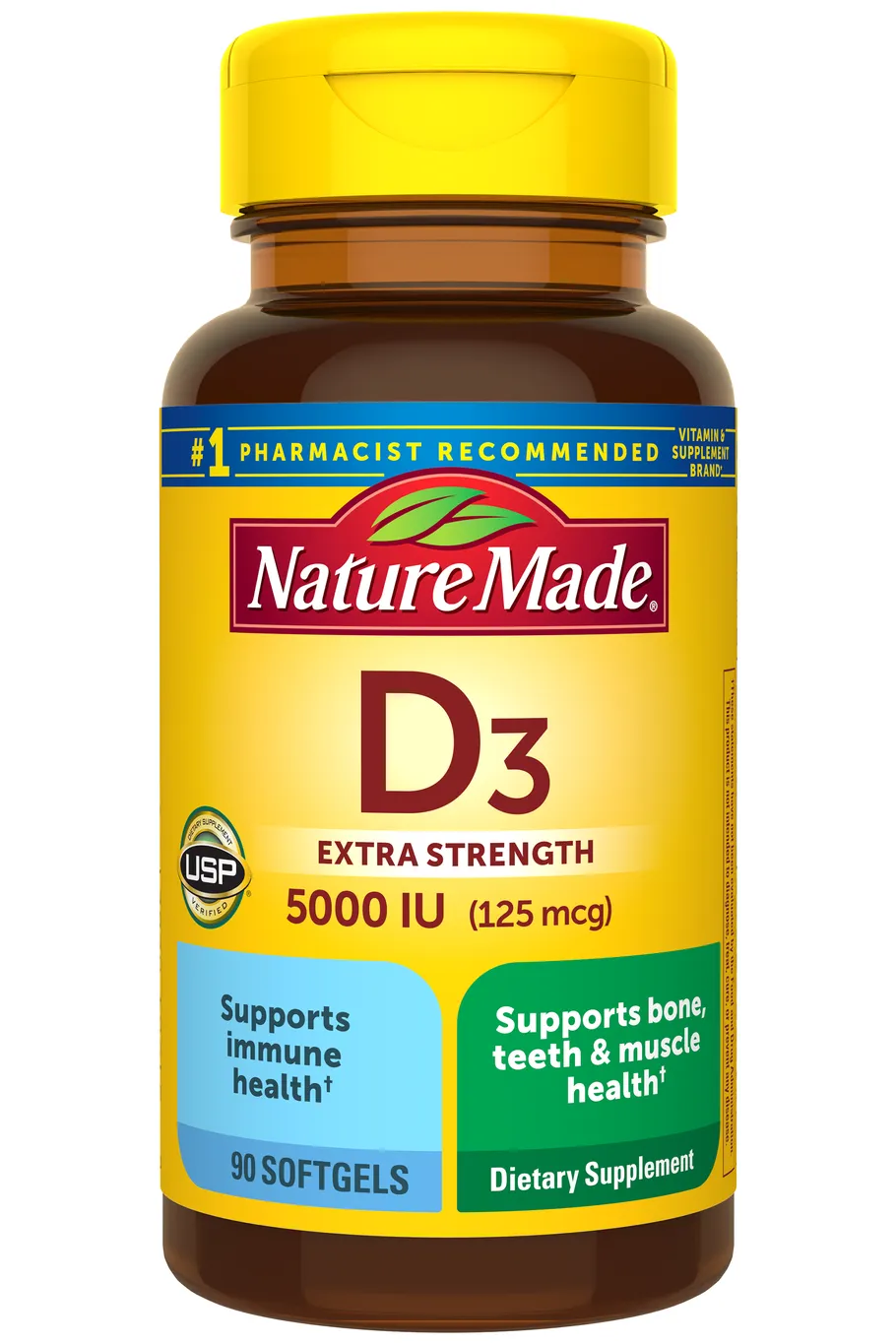
Photo: Nature Made
Nature Made is the best USP Verified pick here — the only bottle in this guide with the USP mark, from the brand pharmacists recommend most. It is the pick for anyone who wants a verified product from a drugstore shelf.
One softgel is the serving: 125 mcg (5,000 IU) of vitamin D3 in soybean oil. The bottle holds 90 softgels — three months. The label calls it ‘Extra Strength’, and the USP seal sits on the front our photo shows.
USP Verified is the second of the two testing marks we trust. The USP checks the product’s identity, strength, and purity against its label — an independent check, not the maker’s own word. At $0.18 a serving, it is the cheapest USP Verified pick here.
✅ Pros
- USP Verified
- three months per bottle
- about $0.18 a serving
- widely available in drugstores.
❌ Cons
- 5,000 IU is above the 4,000 IU upper limit
- gelatin softgel — not vegan
- Amazon showed no featured offers when we checked
- no K2.
Best for: anyone who wants a verified product at a low price, and who is happy with a three-month bottle.
May not fit: vegans, or anyone whose bloodwork says a lower dose is enough.
Price: $15.99 at Target (seen November 2026). A serving costs about $0.18, and 1,000 IU costs about $0.04 — the joint-cheapest verified price here.
What to watch: Amazon had no featured offers when we checked, so the price above comes from Target. The 180-count bottle exists too — the buy link below is the 90-count.
Check Price on Amazon: Nature Made Vitamin D3 5,000 IU, 90 softgels
4. NOW Foods Vitamin D-3 5,000 IU — Best Value
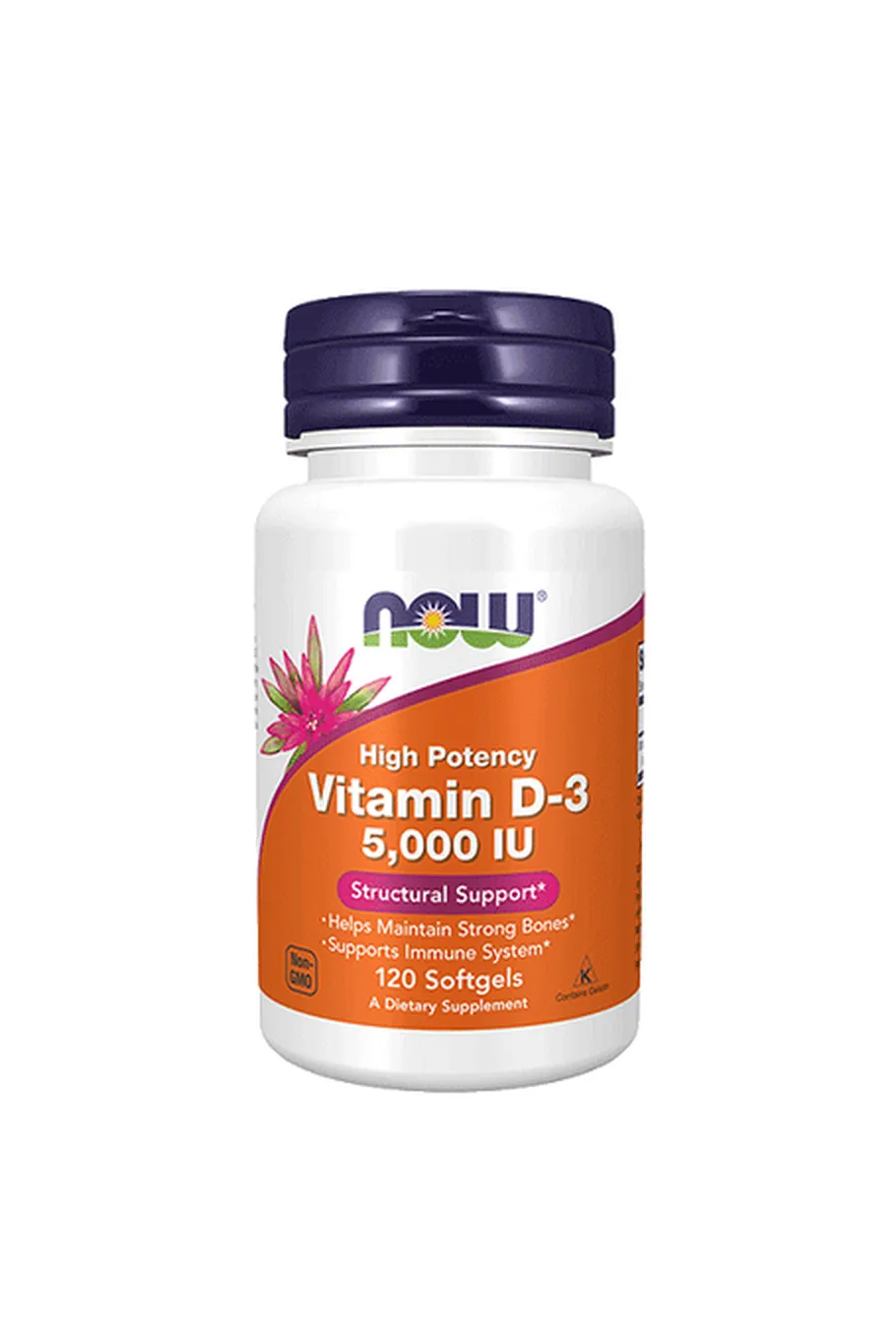
Photo: NOW Foods
NOW is the cheapest vitamin D in this guide by a wide margin — about six cents a serving, and about a cent per 1,000 IU. No other pick comes close on price, and the bottle holds 120 softgels.
One softgel holds 125 mcg (5,000 IU) of vitamin D3 from lanolin, in olive oil. The bottle holds 120 softgels. The label says ‘High Potency’ and ‘Structural Support’, and the softgel is the standard form most lifters already know.
The catch is on the label: NOW directs one softgel daily with a fat-containing meal — and at 5,000 IU a day, that is above the 4,000 IU upper limit, like the other four 5,000 IU picks. A bottle lasts 120 days. Take it only if bloodwork and a clinician say you need that dose.
✅ Pros
- about $0.01 per 1,000 IU — the cheapest here by far
- 120 softgels per bottle
- simple one-ingredient label
- a bottle lasts four months at the label dose.
❌ Cons
- no NSF or USP mark
- lanolin D3 in a gelatin softgel — not vegan
- Amazon showed no featured offers when we checked
- 5,000 IU a day is above the 4,000 IU upper limit.
Best for: lifters who want the cheapest honest D3 and are happy taking 5,000 IU a day.
May not fit: anyone who wants a tested mark on the label, or a vegan product.
Price: about $6.81 on Amazon (tracker, October 2026). A serving costs about $0.06. A 240-count bottle was $11.96 at DPS Nutrition — even cheaper per softgel.
What to watch: the dose. The label directs one softgel daily, and 5,000 IU a day is above the 4,000 IU upper limit — take it only if bloodwork says you need it.
Check Price on Amazon: NOW Foods Vitamin D-3 5,000 IU, 120 softgels
5. Garden of Life mykind Organics Vegan D3 Spray — Best Vegan
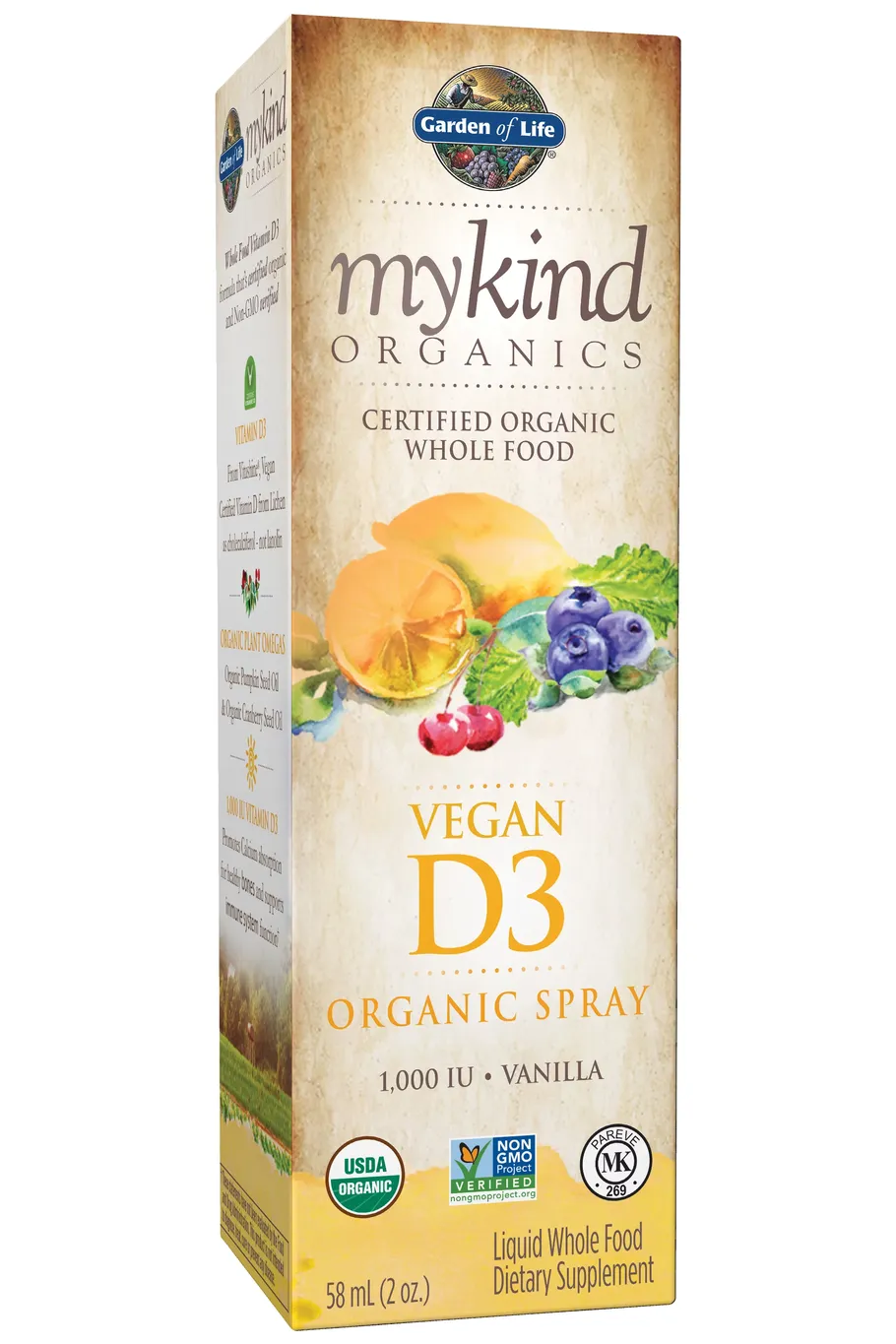
Photo: H-E-B
Garden of Life is the only spray in this guide — and the only pick under the upper limit. One spray is 1,000 IU of lichen-based D3, vanilla flavoured, in a 2 fl oz bottle. It is the pick for anyone who hates swallowing pills.
One spray is the serving: 25 mcg (1,000 IU) of vitamin D3 from lichen, in organic pumpkin seed and cranberry seed oils. The bottle holds 125 sprays — four months. The carton reads ‘USDA Organic’ and ‘Non-GMO Project Verified’.
The low dose is the point. At 1,000 IU a day, you sit well under the 4,000 IU upper limit, and you can add a second spray if bloodwork says so. It is also the only pick here that is both vegan and certified organic.
✅ Pros
- the only pick under the upper limit
- spray — no pills to swallow
- USDA Organic and Non-GMO Project Verified
- vegan lichen D3
- 125 servings per bottle.
❌ Cons
- about $0.16 per 1,000 IU — the dearest here
- Amazon showed no featured offers when we checked
- a spray is easy to over- or under-dose
- no NSF or USP mark.
Best for: vegans, anyone who dislikes pills, and anyone who wants a low dose they can raise one spray at a time.
May not fit: anyone buying on price, or anyone who needs 5,000 IU a day on a clinician’s advice.
Price: about $17–$20 — the brand’s store listed $19.99 in July 2026, and other sellers showed $16.62–$18.20. A spray costs about $0.16 at the brand price.
What to watch: the price range. At $19.99 this is the dearest pick per 1,000 IU in the guide — you pay for the spray and the organic certification, not the dose.
Check Price on Amazon: Garden of Life mykind Organics Vegan D3 Spray, 2 fl oz
6. Klean Athlete Klean-D 5000 — Best NSF Value
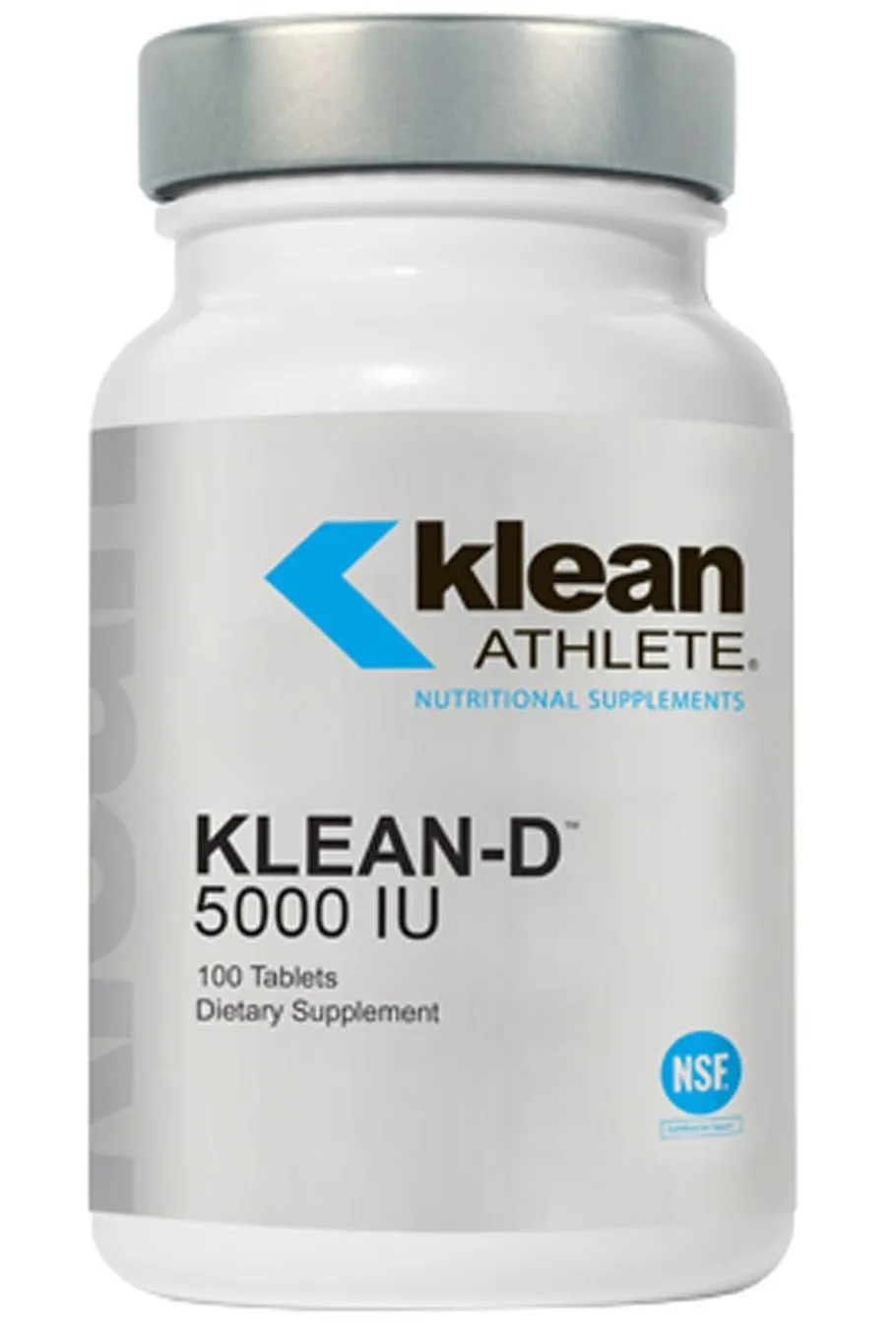
Photo: Earth Turns
Klean-D is the cheapest NSF Certified for Sport pick in this guide — about $0.18 a serving, half the price of Thorne’s NSF capsule. It is a tablet, not a capsule, and it is built for athletes who get tested.
One tablet is the serving: 125 mcg (5,000 IU) of vitamin D3. The bottle holds 100 tablets — over three months. The NSF Certified for Sport badge sits on the front of the label, and the brand sells mainly through practitioners and sports retailers.
NSF Certified for Sport means an independent lab checks the product for banned substances and label accuracy — the same mark as Thorne’s pick, at half the price per serving. The trade-off is availability: this is the hardest bottle in the guide to find.
✅ Pros
- NSF Certified for Sport
- about $0.18 a serving — the cheapest NSF pick
- 100 tablets per bottle
- a simple one-ingredient tablet.
❌ Cons
- 5,000 IU is above the 4,000 IU upper limit
- no Amazon listing could be verified — the link below is a search
- no K2
- a tablet, not a capsule.
Best for: drug-tested athletes who want NSF certification at the lowest price and do not mind hunting for the bottle.
May not fit: anyone who wants a one-click Amazon buy, or a dose under the upper limit.
Price: $17.50 — the brand’s 2026 list and The Feed agree on that figure. A tablet costs $0.18, and 1,000 IU costs about $0.04.
What to watch: the buy link. We could not verify a Klean-D listing on Amazon, so the link below is an honest search, not a product page. Check the bottle is the 100-tablet Klean-D 5000 before you buy — and note the label’s warning about doses over 2,000 IU a day.
Check Price on Amazon: Klean Athlete Klean-D 5000, 100 tablets — search Amazon
How to Choose the Right Vitamin D

Photo: Pexels
Start with your bloodwork, not the bottle. A 25-hydroxyvitamin D test tells you where you stand — under 12 ng/mL is too low, 20 or above is adequate by the NIH’s line. Pick the dose from that number, with a clinician if you are far below it.
Then read the Supplement Facts panel — the back of the bottle, not the front. The front says ‘5,000 IU’; the panel says how much that is in mcg (125), what form it is (D3), and how many servings the bottle holds. If the panel does not name the form, put it back.
Look for a third-party mark: NSF Certified for Sport or USP Verified. These are independent checks that the bottle holds what the label claims. Two picks here carry NSF, one carries USP. For the other three, a short, transparent ingredient list is the next best sign.
Compare the price per 1,000 IU, not per bottle — the table does the maths for you. A cheap bottle with a small dose can cost more per day than a dear bottle with a full dose. The same rule works for any supplement, including our 6 best joint supplements for inflammation.
Match the dose to the upper limit. The NIH’s limit is 4,000 IU a day from all sources, and five picks here are 5,000 IU a serving. That does not make them unsafe — it makes the blood test the decision-maker. Take a 5,000 IU pick only if your level says you need it.
Take it with food that has some fat — vitamin D dissolves in fat, and a meal helps your body absorb it. A spray works the same way. Give it 8 to 12 weeks, then retest before you change the dose.
Finally, give it time. Vitamin D is not a pre-workout — it will not change how you feel on day one. Most lifters who correct a shortfall notice the difference over weeks, not days. If your level does not move in three months, the dose or the product is probably wrong for you.
Safety and Side Effects
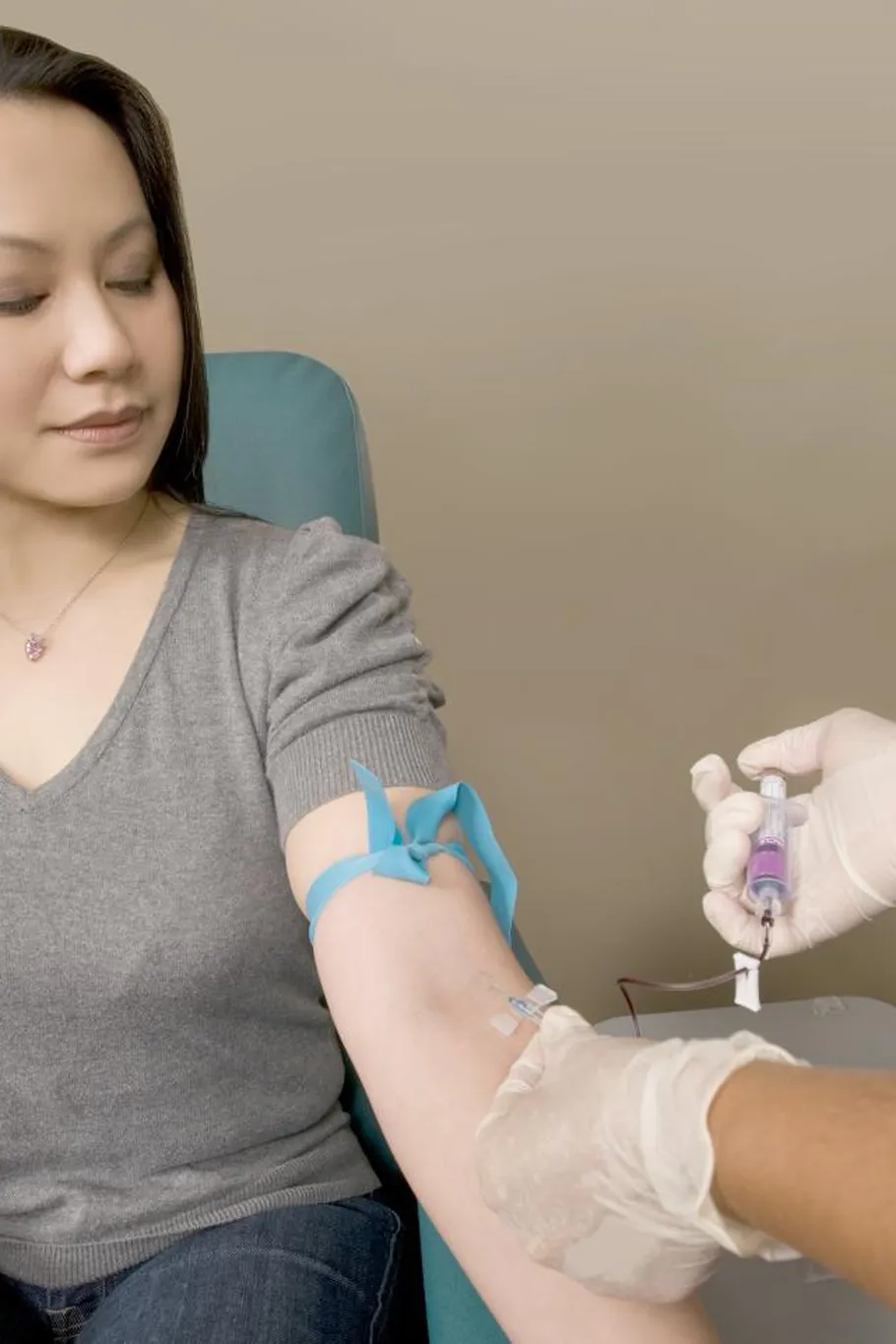
Photo: CDC / Amanda Mills
The NIH sets the upper limit for vitamin D at 4,000 IU a day for adults, from food and supplements together. Five picks in this guide are 5,000 IU a serving — above that limit. Take one only if a blood test and a clinician say you need it.
Too much vitamin D over time can raise blood calcium, which can damage the kidneys and the heart. The NIH puts possible harm above 50 ng/mL, and toxic symptoms above 150 ng/mL. That is why the test matters more than the bottle.
Two labels in this guide need a warning. Klean-D’s label carries a note for anyone taking more than 2,000 IU a day. And every 5,000 IU pick is above the limit at its label serving.
The rule is simple: test first, pick the dose from the result, and retest in 8 to 12 weeks. One normal serving of the spray is 1,000 IU — well inside the limit. It is the 5,000 IU serving, or a second vitamin D product, that pushes you over.
Vitamin D can interact with some medicines, including certain steroids and weight-loss drugs, and with thiazide diuretics. If you take prescription medicine, ask a clinician or pharmacist before adding a supplement. Bring the bottle — the dose and the form are what they need to see.
People with kidney disease, sarcoidosis, or a history of kidney stones should be careful — vitamin D affects calcium, and calcium affects the kidneys. Anyone who is pregnant or breastfeeding should ask a clinician first. This guide is general information, not medical advice.
One last note on recalls: no pick in this guide has been recalled. The recent vitamin D recalls we found were a baby’s liquid with too much D3, a multivitamin with too little, and a D2 syringe with a faulty delivery system — none of them a pick here.
Frequently Asked Questions

Photo: Webfervor
How much vitamin D should I take each day?
The NIH recommends 600 IU a day for adults under 71, and 800 IU from 71 onward, from food and supplements together. The upper limit is 4,000 IU a day. Your blood level decides the dose — test first, then pick.
Is 5,000 IU of vitamin D too much?
It is above the NIH’s 4,000 IU upper limit, so it is a dose for a measured shortfall — not a default. If your level is under 12 ng/mL, a clinician may still advise it for a time. Retest in 8 to 12 weeks.
Should I take vitamin D3 or D2?
D3. It is the form your skin makes, and it raises blood levels better than D2. All six picks here are D3. D2 is cheaper and plant-based, but the evidence favours D3 for keeping your level up.
Do I need K2 with my vitamin D?
Not necessarily. K2 helps direct calcium toward bone, which is why makers pair it with D3. No trial in lifters has shown the pair beats D3 alone for strength — the Sports Research pick buys you convenience, not a proven edge.
When should I take vitamin D?
With a meal that has some fat — vitamin D dissolves in fat, and food helps absorption. Morning or evening makes no difference. What matters is taking it every day, and retesting after 8 to 12 weeks.
Can I take vitamin D with creatine and protein?
Yes. Vitamin D, creatine, and protein work through different pathways, and there is no known conflict between them. Take creatine and protein around training, and vitamin D with a meal — that is the simplest routine, and the one most lifters follow.
As an Amazon Associate, we earn from qualifying purchases made through the links in this guide, at no extra cost to you. Prices were seen on the dates noted in each section and change often — check the listing before you buy.
This guide is general information, not medical advice. It does not diagnose, treat, or prevent any disease. If you take prescription medicine, are pregnant or breastfeeding, or have kidney disease, ask a clinician before taking a vitamin D supplement.
The bottom line: Sports Research leads on the D3+K2 pairing, Thorne wins on testing, Nature Made and Klean share the verified-value win, and NOW is the cheapest per 1,000 IU by far. Any of the six is an honest pick — the wrong choice is a bottle that does not name its form or dose.
Vitamin D supports muscle and bone, but it does not replace training, sleep, or food. Keep lifting, keep the routine simple, and let the supplement do the small job it is good at. For the training side, see our best competition kettlebells for home gyms.