

A folding rack, a folding bench, or a folding cable machine is the smallest gym a small home can own — steel that disappears into a wall, under a bed, or upright in a corner, then comes back for the next session. No spare room, no garage takeover, no subscription. Just a fold, a lock, and the floor back when you are done. 🏠
Fold it, lock it, lift it, fold it again. The fold’s type decides how much floor you get back, its weight decides whether you move it by hand, and its wall decides whether it holds heavy loads at all.
But let us be plain from the start: foldable gear saves space, but it does NOT build strength by itself, it does NOT prevent injury by itself, it does NOT replace progressive training or coaching, and it does NOT make a crowded or uneven area safe.
Used the right way — the right fold for your room, hinges and pins checked before every session, the wall anchored into solid studs — foldable equipment is one of the cheapest ways to add real barbell and cable training to a small home.
How We Picked This Foldable Home Gym Equipment
Photo: Taco fleur / Wikimedia Commons
This guide is research-based. We did not buy or hands-on test this equipment, and we do not claim otherwise.
We compared verified buyer reviews and manufacturer specifications, and we checked each item’s Amazon listing status through search results and listing trackers.
We picked 6 pieces that are genuinely sold and cover different needs: a best-overall folding rack, an all-in-one folding machine, a folding cable rack, a folding flat bench, a folding adjustable bench, and a folding cable machine.
Prices are not quoted in this guide because they change often. The check-price links take you to the current listing, where you can see the latest price and availability.
Availability varies, so if your option shows as unavailable, check the listing’s other options before switching equipment.
One note before we start: wall anchoring is the least forgiving figure in this guide. A folding rack bolted only into plasterboard is a hazard, not a gym — read the safety section before you trust any single number.
Quick Comparison
Photo: GymNation / Wikimedia Commons
| Equipment | Fold type | Folded size / capacity | Best for |
|---|---|---|---|
| Titan T-3 Series Folding Power Rack | Fold-back wall rack | Flat to wall, 1,000 lb | Best overall folding rack |
| Mikolo Folding Squat Rack Functional Trainer | Fold-in wall machine | 9.5 to 3 sq ft, 1,000 lb | Best all-in-one folding machine |
| GOIMU WM3-V4 Folding Squat Rack | Fold-in wall rack + cables | 4.3 sq ft folded, 2,000 lb claim | Best folding cable rack |
| Finer Form Foldable Flat Bench | Folding flat bench | Under bed / closet, 1,000 lb claim | Best folding flat bench |
| PASYOU PA300 Adjustable Foldable Bench | Folding adjustable bench | 35.4 × 15.75 × 10 in folded, 500 lb | Best folding adjustable bench |
| YOLEO 2-in-1 Cable Machine | Fold-upright cable machine | Folds upright, 450 lb plate capacity | Best folding cable machine |
1. Titan T-3 Series Folding Power Rack — Best Overall Folding Rack
Photo: Tyler Read / Wikimedia Commons
Who it suits: home lifters who want a real barbell rack that disappears — squats, presses, and pull-ups in a garage, with the car parked back inside after.
The Titan T-3 Series Folding Power Rack is the wall-mounted fold-back rack: 2 × 3-inch 11-gauge steel uprights with Westside spacing through the bench zone, a listed capacity of 1,000 pounds, lined J-hooks, and a 1.25-inch pull-up bar that pins on in seconds. It comes in 82- or 91-inch heights and 21.5- or 41.5-inch depths, folds flat against the wall, and takes the full T-3 attachment line — safety straps, dip bars, landmines, and spotter arms. The rack weighs about 140 pounds, so plan a two-person install.
The fold-back design is the honest advantage here: the whole rack swings flat to the wall, so a garage keeps its parking space and a spare room keeps its floor — the cleanest space save in this guide. The attachment line is the other half of the story: a rack that grows with dip bars, safeties, and landmines stays useful as lifting grows.
Pros: 1,000-pound listed capacity with 2 × 3-inch 11-gauge steel; folds flat against the wall; two heights and two depths to fit ceilings and rooms; full T-3 attachment line; Westside spacing through the bench zone.
Cons: the Amazon link below is a search link — no confident US product page was pinned down — so confirm the listing matches the folding T-3 rack before ordering; no steel stringer is included, so you will need a wooden stringer from a hardware store; safety spotter arms are not standard, so buy them before lifting heavy; one roundup notes it is not Prime eligible, so check delivery terms.
👉 Check price on Amazon (search link — no confident US product page was found, so confirm the listing matches the folding T-3 rack, and buy safety spotter arms separately).
2. Mikolo Folding Squat Rack Functional Trainer — Best All-in-One Folding Machine
Photo: Rodhullandemu / Wikimedia Commons
Who it suits: small-home lifters who want one machine for everything — rack, cables, lat pulldown, and pull-ups — that folds to a fraction of its open size.
The Mikolo Folding Squat Rack Functional Trainer (model WR00) is a wall-mounted machine that combines a power rack, cable crossover, lat pulldown, and pull-up bar in one unit, with five adjustable settings — folded, semi-open, power rack, functional trainer, and cable crossover. It opens to 9.5 square feet and folds down to just 3 square feet, with a dual independent pulley system, 15 pulley height options, a detachable pull-up bar, and J-hooks. It is built from 2 × 2-inch 14-gauge steel with reinforced screw-in wall mounts and four adjustable ground support feet, rated for up to 1,000 pounds, with a 2-year manufacturer warranty.
The five modes are the honest advantage here: one machine covers rack work, cable crossovers, and lat pulldowns, so a small home needs no second station — the broadest coverage in this guide. The fold is the other half of the story: 9.5 square feet open down to 3 square feet folded is the biggest space reclaim of any machine here.
Pros: 5 modes in one machine — rack, functional trainer, cable crossover, lat pulldown, pull-up bar; folds from 9.5 to 3 square feet; dual independent pulleys with 15 height options; 1,000-pound rating with ground support feet; 2-year manufacturer warranty.
Cons: one crawl of a Mikolo folding rack showed no featured offers, so check the listing before ordering; a 150-pound machine needs a solid wall and a careful install — this is not a freestanding rack; cable machines need plates for loading, so budget for plates if you do not own them.
👉 Check price on Amazon (please confirm the listing matches the WR00 functional trainer, and confirm a current offer before ordering).
3. GOIMU WM3-V4 Folding Squat Rack — Best Folding Cable Rack
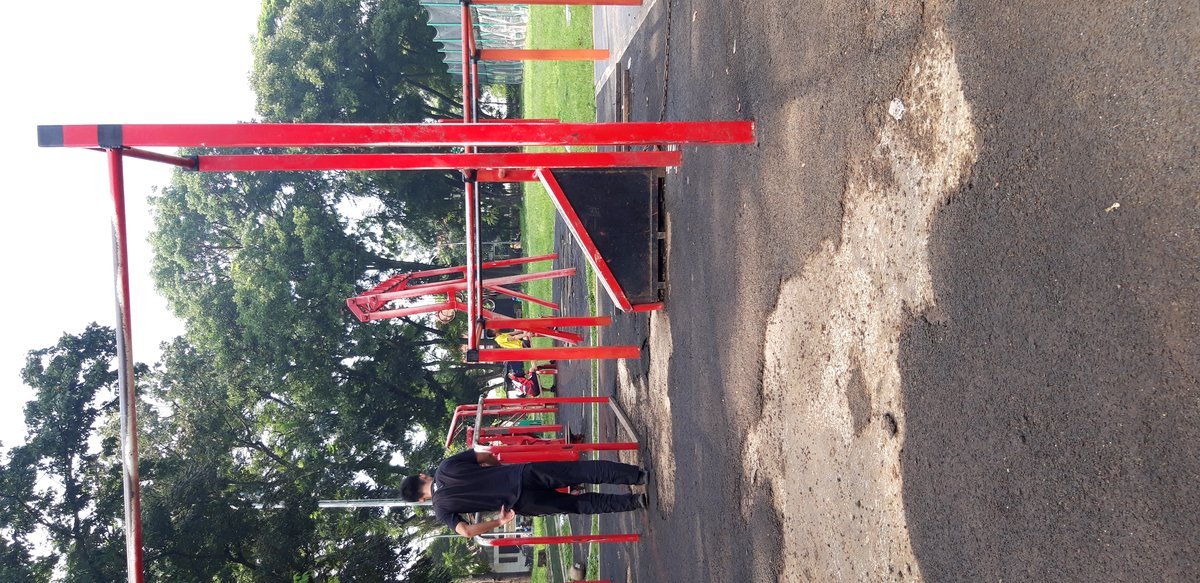
Photo: Akhlispurnomo / Wikimedia Commons
Who it suits: lifters who want rack and cable training from one folding wall unit — dual pulleys, five modes, and a small folded footprint.
The GOIMU WM3-V4 Folding Squat Rack is a wall-mounted power rack with a dual independent pulley system and five adjustable function modes, folding to about 4.3 square feet when stored. It carries a 2,000-pound maximum weight recommendation from the maker, 15 pulley heights, and a 1-year warranty, shipped and sold by GOIMU. Roundups rate it among the best folding cable racks for small garages, and one listing carried an Amazon’s Choice highlight for a well-priced, immediately shippable option.
The dual 1:1 pulleys are the honest advantage here: independent cables give true cable-crossover and functional training from a rack that folds away — a combination most folding racks do not offer. The folded size is the other half of the story: about 4.3 square feet folded keeps the wall nearly clear between sessions.
Pros: dual independent pulleys with 15 height options; 5 function modes in one wall unit; folds to about 4.3 square feet; 2,000-pound maker weight recommendation; 1-year warranty.
Cons: the Amazon link below rests on a single Amazon-sourced listing, and a second listing code surfaced for the same WM3-V4 title, so confirm the listing matches the WM3-V4 folding rack before ordering; the 2,000-pound figure is the maker’s recommendation, not a tested load — treat heavy claims with care; like every wall rack here, it needs solid studs and a careful install.
👉 Check price on Amazon (please confirm the listing matches the WM3-V4 folding rack, since a second listing code exists for the same title).
4. Finer Form Foldable Flat Bench — Best Folding Flat Bench

Photo: Wikimedia Commons
Who it suits: lifters who want one flat bench for pressing, dumbbell work, and hip thrusts — stable under load, then folded under a bed or into a closet.
The Finer Form Foldable Flat Bench is a gym-quality flat bench in high-grade steel with a uniquely designed 4-way frame structure, a 45 × 12-inch pad, and a claimed 1,000-pound capacity, weighing about 27.7 pounds. It folds for under-bed or closet storage, needs almost no assembly, and carries a 1-year limited warranty. Note the capacity wording carefully: one retailer spec sheet lists a 1,000-pound static capacity but a 500-pound dynamic capacity — so treat the headline figure as a static rating, not a moving-load rating.
The flat-only simplicity is the honest advantage here: no adjustments to slip, no moving parts to wear — which matters when the bench must feel rock-solid under a heavy press. The fold is the other half of the story: under a bed or into a closet is the smallest storage footprint of any bench in this guide.
Pros: 4-way steel frame with a 1,000-pound static capacity claim; folds for under-bed or closet storage; 45 × 12-inch pad; about 27.7 pounds, easy to move; almost no assembly; 1-year limited warranty.
Cons: flat only — no incline, decline, or upright positions, so pressing variety needs dumbbells and positioning, not bench angles; the 1,000-pound figure is a static rating, with a 500-pound dynamic rating on one spec sheet — do not treat the headline as a moving-load limit; this is a different bench from the Finer Form FID adjustable bench in our weight-benches guide, so confirm the listing matches the flat foldable model before ordering.
👉 Check price on Amazon (please confirm the listing matches the flat foldable bench, not the FID adjustable bench).
5. PASYOU PA300 Adjustable Foldable Bench — Best Folding Adjustable Bench
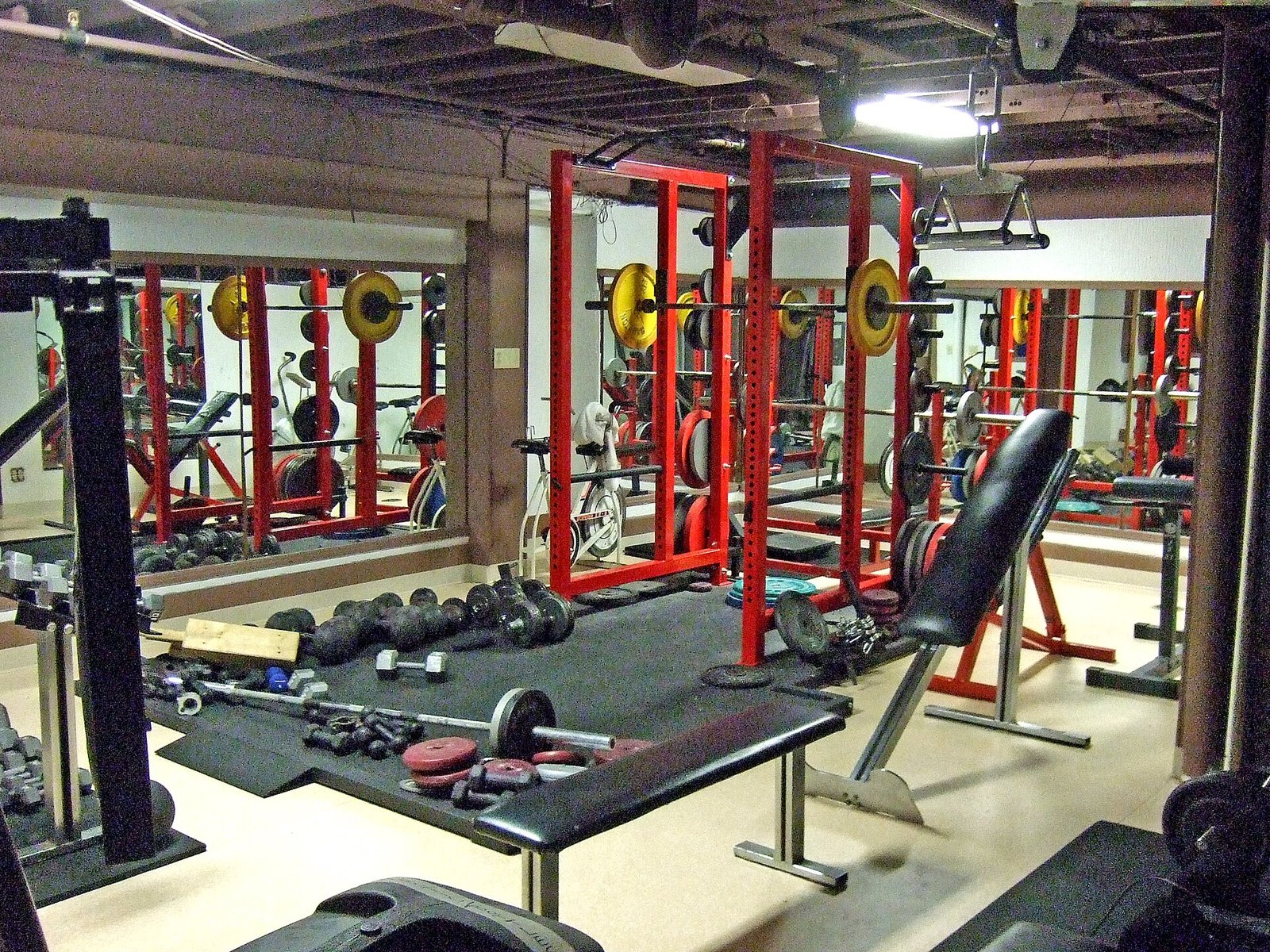
Photo: Jdsteakley / Wikimedia Commons
Who it suits: small-space lifters who want incline, decline, and flat from one bench that still folds away — full-body dumbbell work without a fixed station.
The PASYOU PA300 Adjustable Foldable Bench is an alloy-steel bench with 7 backrest positions — flat, incline, decline, and upright — a triangle frame structure, and a 500-pound weight capacity, weighing about 24 pounds. It folds to 35.4 × 15.75 × 10 inches, stands against a wall or slides under a bed, and assembles in about 2 minutes with only the support tubes and foam rollers to fit. Buyer signals were strong — one listing showed over 100 bought in the past month — but another crawl showed no featured offers, so availability should be confirmed at ordering time.
The seven positions are the honest advantage here: incline, decline, flat, and upright from one folding bench covers presses, rows, and core work that a flat bench cannot — the most versatile bench in this guide. The fold is the other half of the story: 35.4 × 15.75 × 10 inches folded is small enough for a wall lean or an under-bed slide.
Pros: 7 backrest positions — flat, incline, decline, upright; triangle steel frame with a 500-pound capacity; folds to 35.4 × 15.75 × 10 inches; about 2-minute assembly; stands against a wall or slides under a bed.
Cons: availability signals conflict across crawls — one showed recent purchase activity, another showed no featured offers — so check the listing before ordering; a newer PASYOU bench version exists, so confirm the listing matches the PA300 before ordering; 500 pounds is well below the flat bench’s static claim, so heavier lifters should pick the flat bench or a rack first.
👉 Check price on Amazon (availability signals conflicted across listing crawls — please confirm the listing shows a current offer and matches the PA300).
6. YOLEO 2-in-1 Cable Machine — Best Folding Cable Machine
Photo: Wikimedia Commons
Who it suits: home lifters who want cable training and rowing cardio from one station that folds upright — lat pulldowns, low rows, and a sliding-seat row without a full cable tower.
The YOLEO 2-in-1 Cable Machine combines a lat pulldown station, a low row station, and a cable crossover role with a sliding-seat rowing machine in one frame: a 49.6-inch rowing rail, 13 tower positions, 9 seat adjustment points, 7 precision pulleys with a roller-guided trolley, a wide H-shaped base, and a 6-piece attachment kit. The tower folds upright to reclaim floor space, and the plate-loaded design carries a 450-pound plate capacity. The sliding seat unlocks for full-range rowing cardio and locks for stable seated rows, switching with a quick-release knob.
The fold-upright design is the honest advantage here: a cable station that stands vertical when done takes far less floor than a fixed tower — the only upright-folding machine in this guide. The rowing rail is the other half of the story: a 49.6-inch track gives taller users a full stroke that short rails cut off.
Pros: lat pulldown, low row, cable crossover, and rowing in one station; folds upright to reclaim floor space; 49.6-inch rowing rail for a full stroke; 13 tower positions and 9 seat points; 6-piece attachment kit included; wide H-shaped base resists tipping.
Cons: the Amazon link below is a search link — two listing codes surfaced for YOLEO 2-in-1 cable machines and no single confident product page was pinned down — so confirm the listing matches the folding lat pulldown and rowing machine before ordering; plate-loaded, so plates are not included — budget for plates if you do not own them; a folding cable frame still needs floor room to row, so measure the rail length against your room before ordering. This is a different product from the YOLEO adjustable bench in our weight-benches guide.
👉 Check price on Amazon (search link — no confident US product page was found, so confirm the listing matches the folding lat pulldown and rowing machine, and note plates are not included).
How to Choose the Right Foldable Home Gym Equipment
Photo: Shixart1985 / Wikimedia Commons
Start with your room, then your wall, then your lifting. Equipment that cannot be anchored where you train is decoration, and equipment whose fold never gets used is floor weight you paid for.
Then buy in this order: a folding bench first if you train with dumbbells, a folding rack first if you barbell train, and a folding cable machine first if you want cable and rowing work without a second station.
Fold type: folding bench vs folding rack vs folding machine — what each actually does

Photo: Tokumeigakarinoaoshima / Wikimedia Commons
Folding benches (Finer Form, PASYOU) fold flat or collapse for under-bed, closet, or wall-lean storage: they suit dumbbell and bodyweight training in any room — but they carry no barbell safeties, so they suit rack or dumbbell work, not heavy barbell pressing alone.
Folding racks (Titan T-3) swing flat to the wall on hinges: they suit barbell training in a garage or spare room — but they need solid studs and a permanent wall commitment, so renters should check permission before drilling.
Folding machines (Mikolo, GOIMU, YOLEO) fold a whole station — rack plus cables, or cables plus rowing — into a wall or upright footprint: they suit lifters who want the most exercises per square foot — but they are the heaviest installs here, so assembly and anchoring take the most care.
Folded footprint and weight: what each size actually suits
Photo: Wikimedia Commons
Under-bed and closet folds (Finer Form flat bench, PASYOU at 35.4 × 15.75 × 10 inches) suit flats and shared rooms: the gear vanishes completely between sessions. This is where most real small-space equipment buying starts.
Flat-to-wall folds (Titan T-3, Mikolo at 3 square feet, GOIMU at 4.3 square feet) suit garages and spare rooms: the wall keeps the gear, the floor stays free. This is where most real home-gym folding buying happens.
Weight follows the same rule as every install: a 24-pound bench moves by hand, while a 140- to 150-pound wall machine needs two people, solid studs, and a level check before the first set.
Material and durability: steel, hinges, and pins — what lasts
Photo: Wikimedia Commons
Steel is the gym standard: 11-gauge 2 × 3-inch uprights on the Titan and 14-gauge 2 × 2-inch steel on the Mikolo survive daily barbell use, which is why the racks here are steel first. Check welds and bolts before every session — a loose bolt is a wobble waiting to happen.
Hinges and pins are the fold standard: they carry every fold and unfold, so they wear before the frame does. A hinge that sticks or a pin that will not seat is a stop signal — do not train on a fold that will not lock.
Plates and cables are a care signal in disguise: plate-loaded machines need plates you already own, and cables need inspection for fraying before every session. A cable that frays mid-pull ends the session abruptly — check it before you load it.
Surface and storage suitability: wall, floor, and cupboard
Photo: Wikimedia Commons
A solid wall is the kindest anchor: every wall rack here performs best bolted into studs or concrete, with room to fold and unfold without hitting doors or cars. This is where every folding rack performs best, and where the Titan earns its keep.
A flat floor needs a level rack: folding racks with ground support feet (Mikolo) cope better with uneven garage floors than fixed feet do, but no rack fixes a badly sloped floor — level the feet before the first set. Bare feet or flat shoes grip better than socks on a bench or platform.
A cupboard wears folding benches slowest: it keeps steel dry, pads out of sunlight, and hinges out of dust. If the cupboard is your only storage, buy a folding bench and accept that a wall machine needs a wall, not a cupboard.
Storage decides whether foldable gear survives the season: folded, locked, and visible keeps gear together and used, while gear loose in a corner gets forgotten, bent, and stepped on. Fold and lock the gear before every session ends.
What no foldable equipment makes safe
Photo: Tyler Read / Wikimedia Commons
Foldable gear does not make lifting safe by itself, does not fix a wall that is plasterboard without studs, a floor that is wet, uneven, or crowded, and does not protect backs, shoulders, or knees that are already injured. The fold saves space; it does not judge whether the lift is wise for you.
Check the hinges, pins, and locks before every session: no cracks, no worn cables, no loose bolts, and a lifting area clear of obstacles, holes, and other people. A session that starts at full load before the fold is locked ends abruptly.
Start slow: learn each fold at low load, near a clear area, then add load in small steps over sessions, never at maximum effort on the first rep. Keep the area clear of the rack’s swing and of anything you could land on. Never train through sharp pain, and never use gear hoping it holds one more session. If you have an injury, or a condition that affects how safely you can train, talk to a clinician or qualified coach before starting foldable-equipment training. This guide is general information only, not medical advice.
Frequently Asked Questions
Photo: Tokumeigakarinoaoshima / Wikimedia Commons
Which foldable equipment should a small-home beginner buy first?
A folding bench — the Finer Form flat bench for pressing and dumbbell work, or the PASYOU adjustable bench if you want incline and decline too. Beginners should start with a bench and dumbbells, and add a folding rack only when barbell training becomes regular.
Do folding racks hold as much as fixed racks?
Well-anchored ones do: the Titan T-3 folding rack is rated to 1,000 pounds and the Mikolo to 1,000 pounds, matching many fixed home racks. The difference is the wall — a folding rack is only as strong as its studs, so anchoring matters more than the steel.
What is the difference between a folding bench, a folding rack, and a folding machine?
A folding bench folds for storage and carries dumbbell and bodyweight work; a folding rack swings flat to the wall and carries barbell work; a folding machine folds a whole station — rack plus cables, or cables plus rowing — into a wall or upright footprint. Space saved rises in that order — bench smallest, machine biggest.
Can I install a folding rack in a rented home?
Only with permission: folding racks bolt into studs or concrete, leaving holes when removed. Renters should ask the landlord first, or start with a folding bench and freestanding gear that needs no drilling.
Do I need safety spotter arms with a folding rack?
Yes, for heavy barbell work: the Titan T-3 folding rack does not include safeties as standard, so buy spotter arms or safety straps before lifting heavy alone. Never squat or bench heavy without safeties in place.
When should I replace foldable equipment?
When its hinges stick, its pins will not seat, its cables fray, its pads crack, or its steel bends. Worn folds mislead lifting — replace them before they do, and check hinges, pins, and locks before every session.
Our Pick in One Line
Photo: Staff Sgt. Clinton Firstbrook / Wikimedia Commons
If you want one answer: the Titan T-3 Series Folding Power Rack is the best all-round buy because its 1,000-pound rating, flat-to-wall fold, and full attachment line cover almost any small-home barbell lifter — but if you want the most exercises per square foot, buy the Mikolo Folding Squat Rack Functional Trainer first, because five modes folding from 9.5 to 3 square feet is the biggest space reclaim a small home can buy.
For the rest of your home-gym setup, see our balance boards guide and our weight benches guide, and for the stands those folding racks complement, see our squat stands guide.
As an Amazon Associate, we earn from qualifying purchases made through links on this page, at no extra cost to you.
This guide is research-based: we compared verified buyer reviews and manufacturer specifications, and we did not buy or hands-on test these products. Prices and availability change, so check the listing before ordering. The training information here is general information only, not medical advice — if you have an injury or a condition that affects how safely you can train, talk to a clinician first.