

A battle rope is the simplest conditioning tool in the home gym — a heavy rope, an anchor, and floor space. No motor, no screen, no subscription. Just waves, slams, and pulls, for as long as your grip and lungs hold out. 💪
Anchor one end, hold the other, and move. The rope’s weight does the work: every wave has to travel down the rope and back, and keeping it moving is what trains your shoulders, back, core, and legs all at once.
But let us be plain from the start: a rope gives you high-intensity conditioning and grip work, but it does not build strength or burn fat by itself, it does not replace a training programme, and it does not make a frayed rope or a weak anchor safe.
Used the right way — the right length for your floor, the right thickness for your grip, the anchor checked before every session — a battle rope is one of the cheapest ways to add real conditioning to a home gym.
How We Picked These Battle Ropes
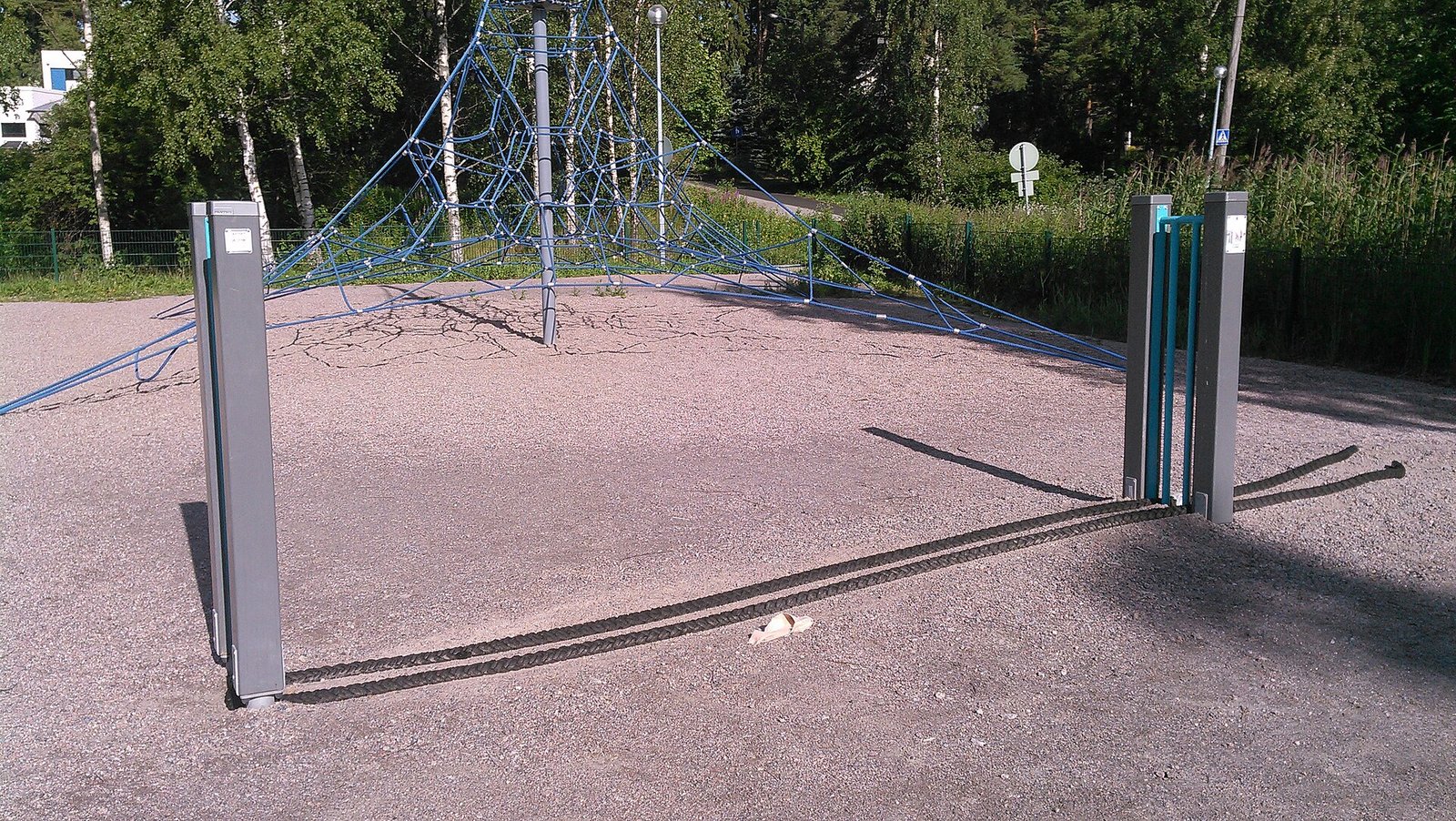
Photo: Tpikonen / Wikimedia Commons
This guide is research-based. We did not buy or hands-on test these ropes, and we do not claim otherwise.
We compared verified buyer reviews and manufacturer specifications, and we checked each product’s Amazon listing status through search results and listing trackers.
We picked 6 ropes that are genuinely sold and cover different needs: a best-overall rope, an anchor-included kit, a sleeved rope, a beginner-friendly rope, a short-space rope, and a budget anchor-included rope.
Prices are not quoted in this guide because they change often. The check-price links take you to the current listing, where you can see the latest price and availability.
Availability and size options vary, so if your option shows as unavailable, check the listing’s other options before switching products.
One note before we start: a 30-foot rope gives you 15 feet per arm, and a 50-foot rope gives you 25 feet per arm — length is halved the moment you anchor it. Measure your floor from the anchor point outward, not the rope’s full length.
Quick Comparison
Photo: GymNation / Wikimedia Commons
| Rope | Size | Material | Best for |
|---|---|---|---|
| Amazon Basics Battle Rope | 1.5 in × 30 ft | Poly Dacron | Best overall |
| POWER GUIDANCE Battle Rope | 1.5 in × 30 ft | Poly Dacron* | Best anchor-included kit |
| Yes4All Battle Rope with Cover | 1.5 in × 30 ft | Poly Dacron | Best sleeved rope |
| Brobantle Battle Rope | 1.5 in × 30 ft | Polyester, nylon cover | Best beginner variety |
| Fitness Solutions Training Rope | 1.5 in × 25 ft | Poly Dacron | Best short-space rope |
| XMSound Battle Rope | 1.5 in × 30 ft | Polyester | Best budget anchor-included |
*POWER GUIDANCE’s listing title describes its rope as poly dacron, while one listing field lists nylon instead — see its section, and check the listing if material matters to you.
1. Amazon Basics Battle Rope, 1.5 Inch × 30 Feet — Best Overall

Photo: Wikimedia Commons
Who it suits: lifters who want one honest, no-fuss rope for waves, slams, and conditioning, at the lowest honest cost.
Amazon Basics’ battle rope is a 1.5-inch, 30-foot rope made from 100% Poly Dacron in a three-strand construction, with a 600D Oxford waterproof sleeve and heat-shrink end caps. It also comes in 40-foot and 50-foot lengths and a 2-inch diameter, so the same rope scales up when your space and grip do.
The sleeve is the real detail here: the middle of the rope, where it bends around the anchor, is where every battle rope frays first, and a waterproof sleeve there buys months of extra life. The heat-shrink caps keep the ends from unravelling into a frayed mess.
Pros: 100% Poly Dacron three-strand construction; protective waterproof sleeve at the wear point; heat-shrink end caps; 30, 40, and 50-foot lengths and 1.5 and 2-inch diameters in the same family; long-running budget brand with a large buyer base.
Cons: no anchor kit included — you need a rack, a pole, or a separate anchor strap; the 1.5-inch 30-foot rope is the starter size, so stronger lifters may outgrow it; Amazon Basics sells several rope variants under close names, so confirm the listing matches the 1.5-inch 30-foot rope.
2. POWER GUIDANCE Battle Rope, 1.5 Inch × 30 Feet — Best Anchor-Included Kit
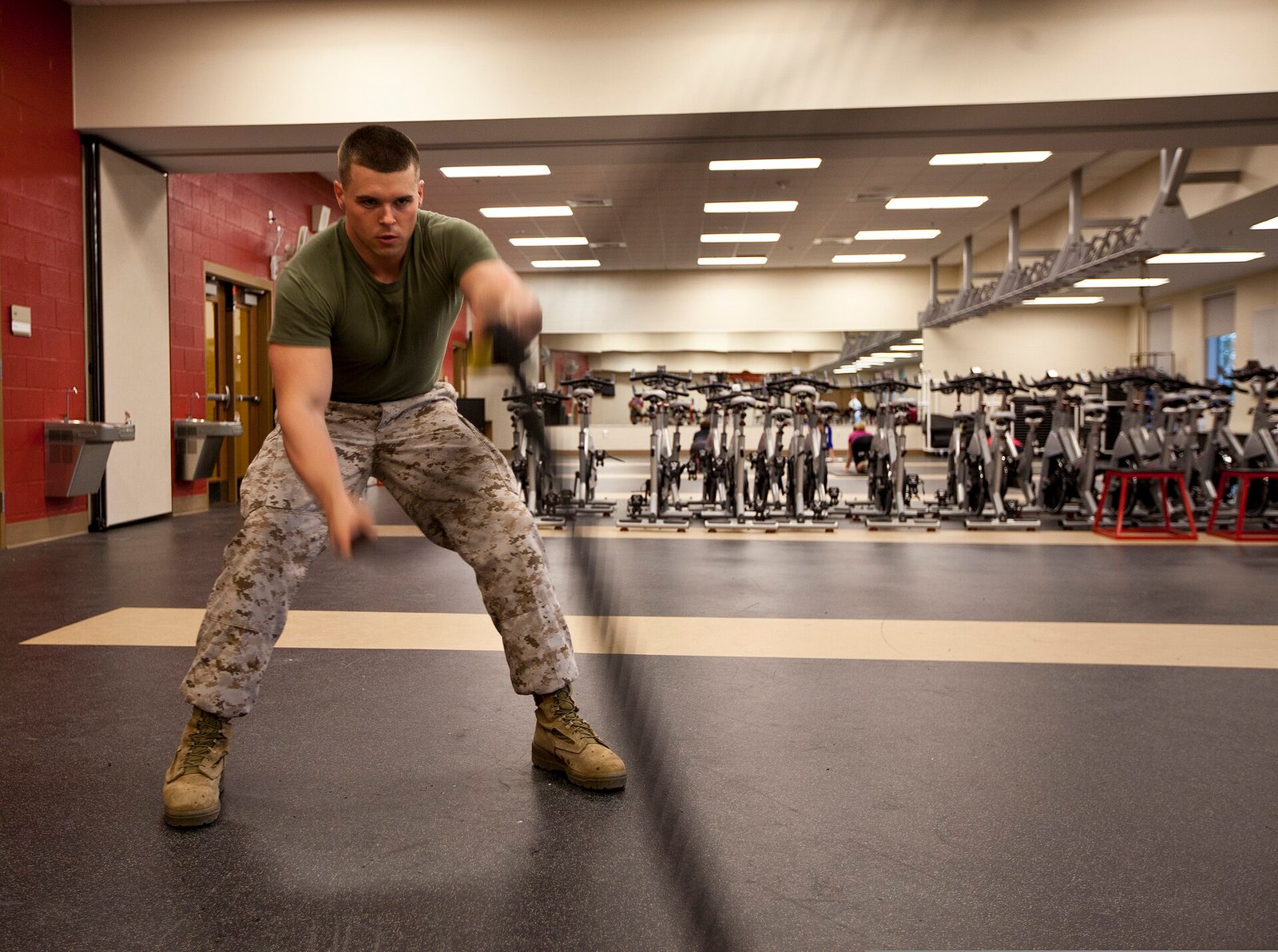
Photo: Lance Cpl. Donald Holbert / Wikimedia Commons
Who it suits: lifters who want everything in one box — rope, anchor, and grips — with nothing extra to buy.
POWER GUIDANCE’s battle rope is a 1.5-inch, 30-foot rope sold as poly dacron, with an anchor strap kit included, rubber handles, and vinyl grips. It also comes in 40-foot and 50-foot lengths and a 2-inch diameter, and roundups credit it with a two-year warranty.
The anchor kit is the honest difference here: most budget ropes leave you to improvise an anchor from a rack or a tree, and a kit with a strap and anchor means the rope works the day it arrives, indoors or outdoors.
Pros: anchor strap kit included; rubber handles and vinyl grips; 30, 40, and 50-foot lengths and 1.5 and 2-inch diameters; two-year warranty credited in roundups; long-running brand with heavy buyer feedback.
Cons: MATERIAL NOTE — the listing title describes this rope as poly dacron, while one listing material field lists nylon instead, so check the listing if material matters to you; the included anchor still needs something solid to wrap around — a kit does not create an anchor point; check the listing matches the 1.5-inch 30-foot size, since the family spans several sizes.
3. Yes4All Battle Rope with Protective Cover, 1.5 Inch × 30 Feet — Best Sleeved Rope
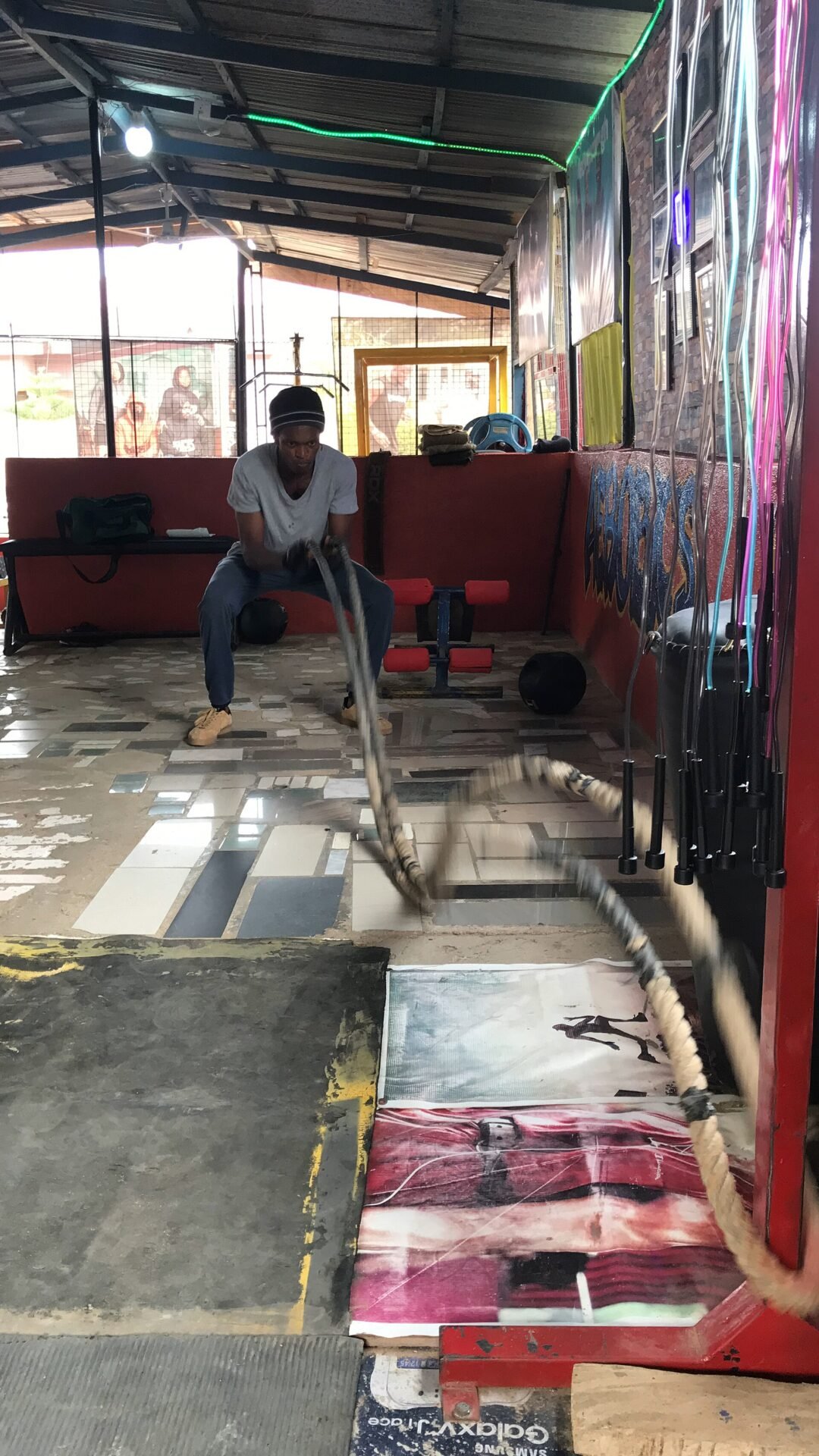
Photo: SAgbley / Wikimedia Commons
Who it suits: lifters who train outdoors or on rough surfaces, and who want the rope’s wear point protected from day one.
Yes4All’s covered battle rope is a 1.5-inch, 30-foot rope made from three-strand 100% Poly Dacron, with an extra protective sleeve, a steel anchor, and a strap included. It also comes in 40-foot and 50-foot lengths and a 2-inch diameter, and it carries a one-year warranty.
The steel anchor is what separates it from strap-only kits: a steel anchor bolted or looped to a fixed point holds steadier under hard slams than a strap alone, and the sleeve protects the rope exactly where it meets that anchor.
Pros: three-strand 100% Poly Dacron; extra protective sleeve at the anchor point; steel anchor and strap included; 30, 40, and 50-foot lengths and 1.5 and 2-inch diameters; one-year warranty; long-running brand.
Cons: one recent listing crawl showed no featured offers available for the 1.5-inch 40-foot variant, so check availability before ordering; a steel anchor needs a genuinely fixed point — a light rack or a thin post is not one; Yes4All sells covered and uncovered ropes under close names, so confirm the listing matches the covered rope with the steel anchor.
👉 Check price on Amazon (check availability — one recent crawl showed no featured offers for one variant).
4. Brobantle Battle Rope, 1.5 Inch × 30 Feet — Best Beginner Variety
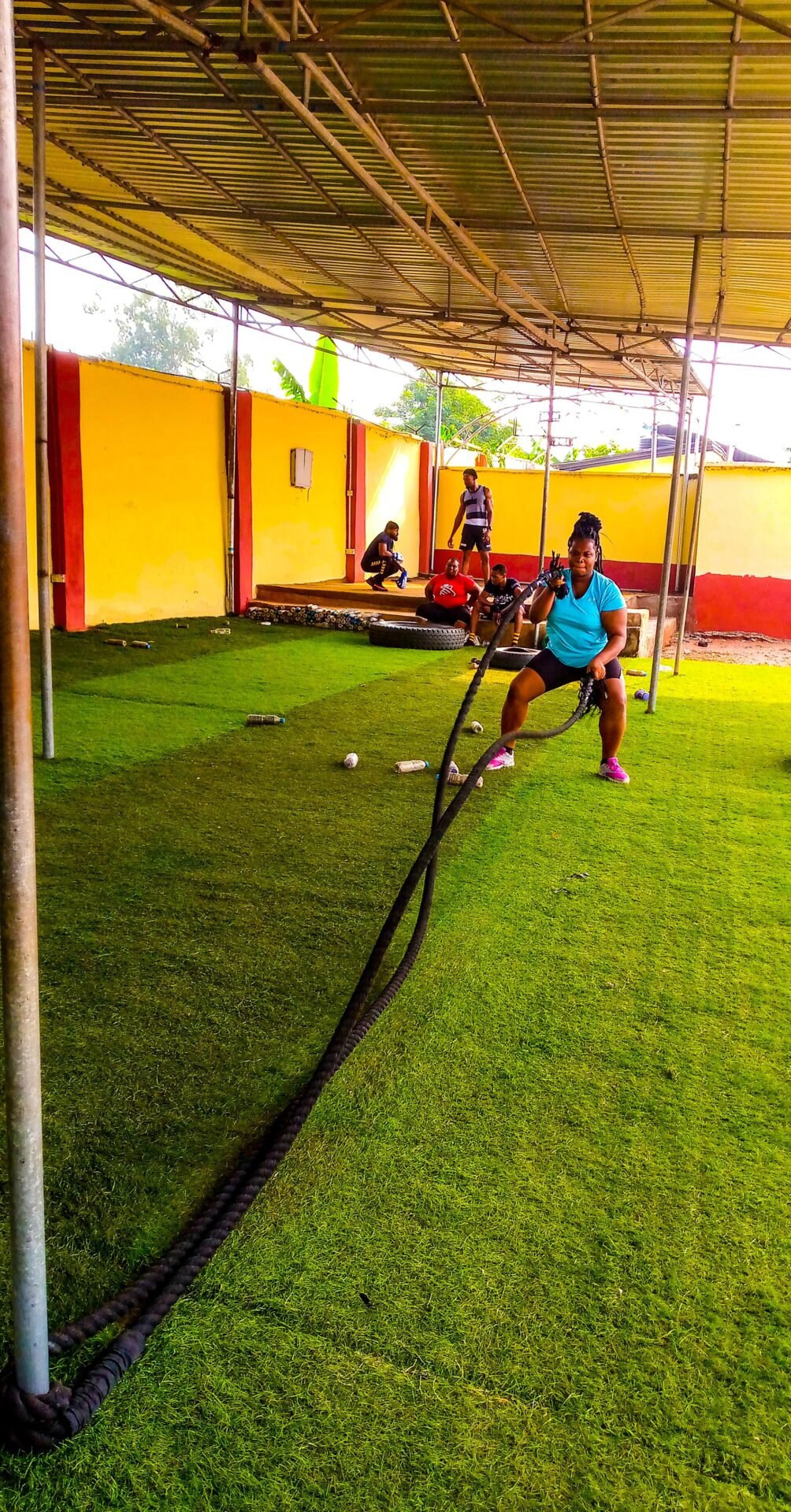
Photo: Ptinphusmia / Wikimedia Commons
Who it suits: beginners and households where several people train at different levels, and who want gloves and anchors in the box.
Brobantle’s battle rope is a 1.5-inch, 30-foot rope made from three-strand 100% polyester filament, with a nylon protective cover, heat-shrink handles, and gloves, anchors, and straps included. The family spans three thicknesses — 1.26 inches at 9.5 pounds, 1.5 inches at 14.5 pounds, and 2 inches at 23.5 pounds — so the same rope scales from beginner to advanced.
The weight ladder is the honest advantage here: a 1.26-inch rope at under 10 pounds lets a beginner learn the wave pattern without fighting the rope, while the 2-inch rope at over 23 pounds is a genuine grip workout for advanced lifters.
Pros: three thicknesses in one family, with honest weights for each; nylon protective cover; heat-shrink handles that grip even with sweaty palms; gloves, anchors, and straps included; 30-foot length suits most home gyms.
Cons: the 30-foot length is the main option — longer training needs a different rope; the included gloves suit beginners but serious lifters will want their own; Brobantle sells several rope variants under close names, so confirm the listing matches the 1.5-inch 30-foot rope.
5. Fitness Solutions Poly Dacron Training Rope, 1.5 Inch × 25 Feet — Best Short-Space Rope
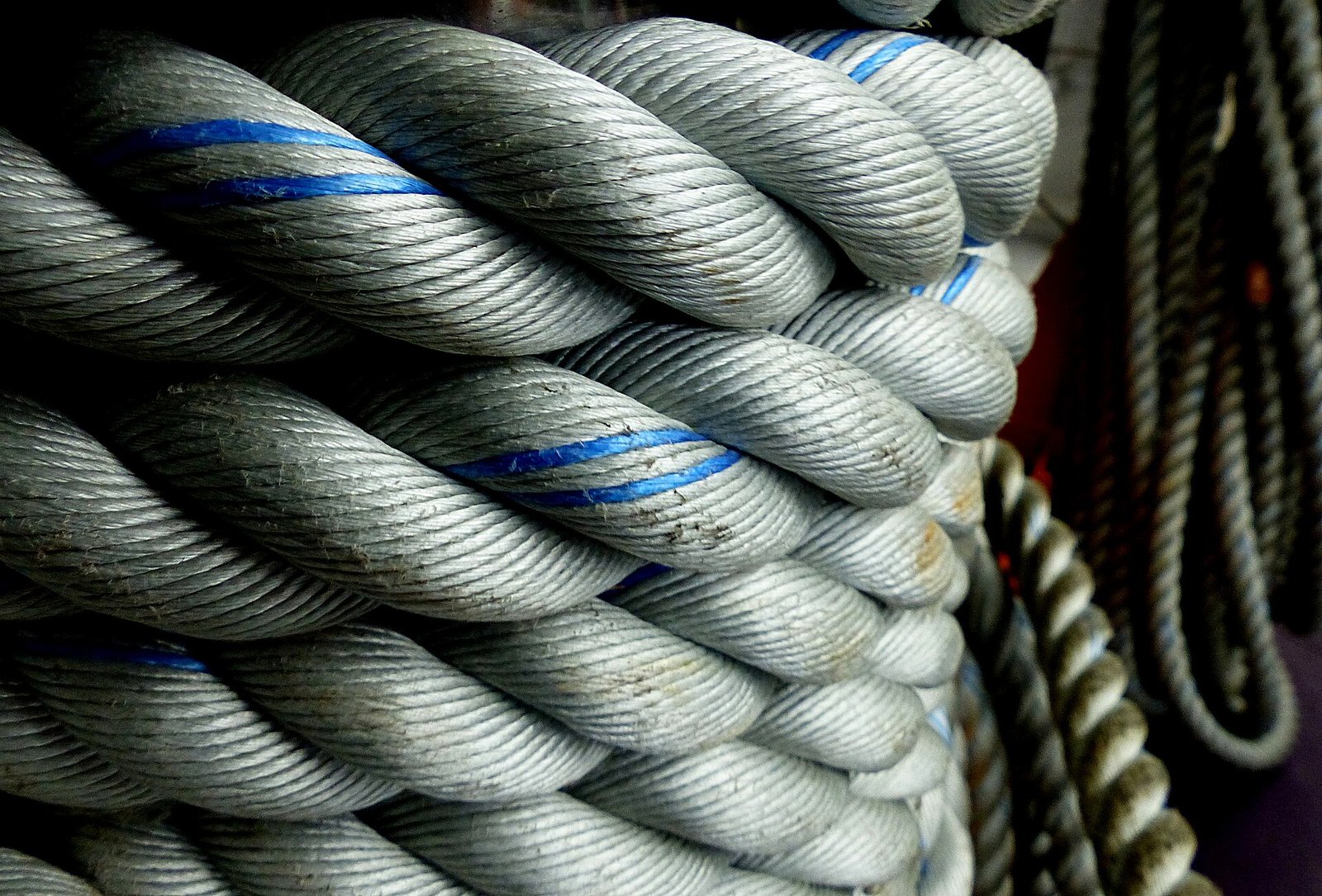
Photo: Wikimedia Commons
Who it suits: lifters with a small garage, patio, or spare room, and anyone who wants a US-made rope with an unusually wide length range.
Fitness Solutions’ training rope is a 1.5-inch, 25-foot rope made from three-strand twisted Poly Dacron, with military-grade heat-shrink caps, weather-resistant and waterproof construction, hand-crafted in the United States. The same rope runs from 16.5 feet all the way to 100 feet, in 1.5-inch and 2-inch diameters.
The short length is a feature, not a compromise, for tight spaces: 25 feet gives you 12.5 feet per arm, which fits a single-car garage or a patio, and the rope’s own guidance calls 30 feet a good beginner start and 50 feet the most common length — so a 25-foot rope is for space, not for progression.
Pros: three-strand Poly Dacron with a tight weave that will not damage hardwood floors or mats; military-grade heat-shrink caps; weather-resistant and waterproof for outdoor use; hand-crafted in the United States; lengths from 16.5 to 100 feet in the same family.
Cons: 25 feet is short for advanced wave work — stronger lifters will want 40 or 50 feet; no anchor kit included, so you need a rack, pole, or separate strap; the brand is less widely reviewed than the budget names here, so buyer feedback is thinner.
6. XMSound Battle Rope, 1.5 Inch × 30 Feet — Best Budget Anchor-Included Rope
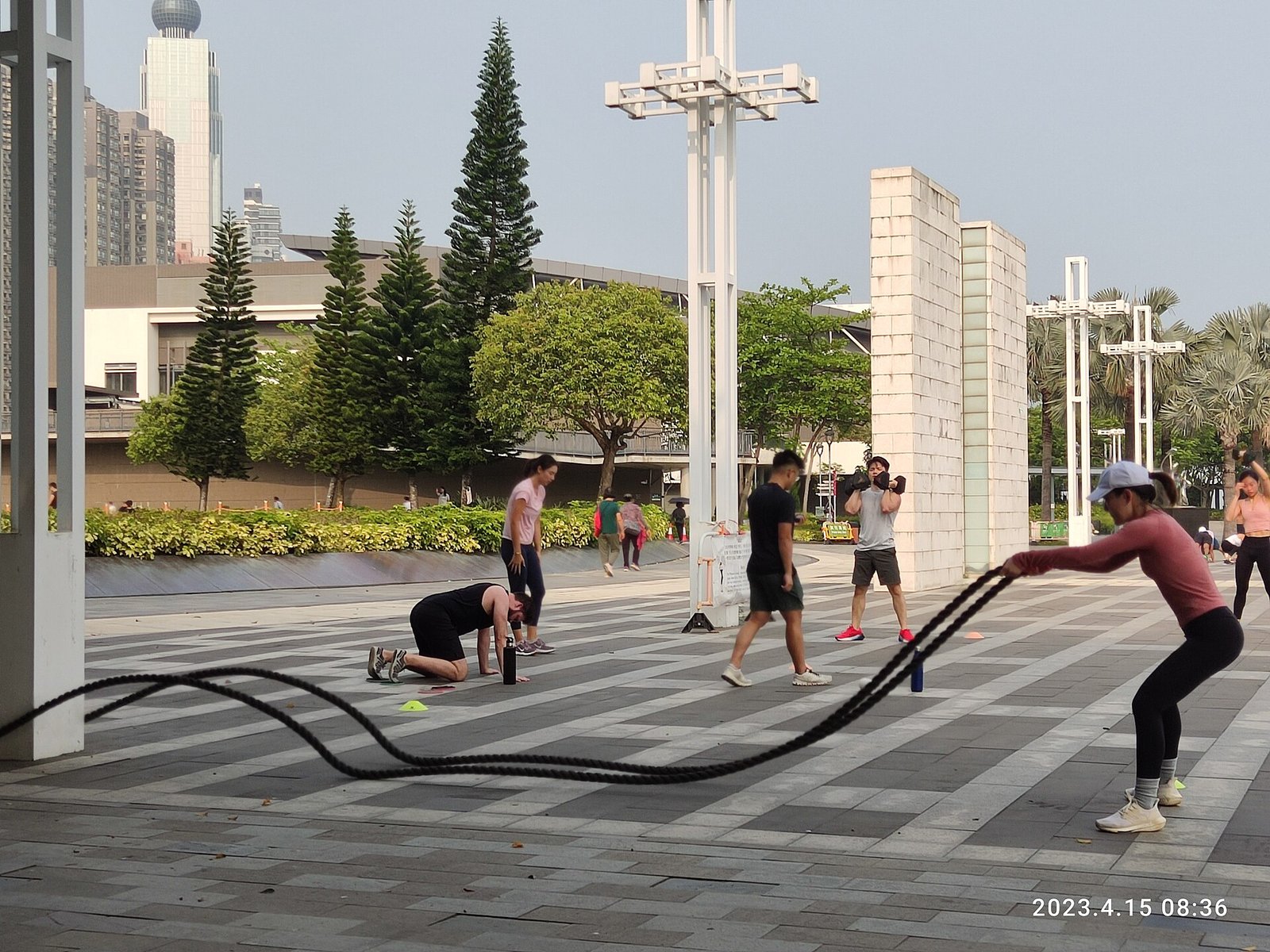
Photo: KGUWsimei Ling / Wikimedia Commons
Who it suits: lifters who want the cheapest complete setup — rope plus anchor — and who do not mind a lesser-known brand to get it.
XMSound’s battle rope (sold as Xeternity-Made) is a 1.5-inch, 30-foot rope made from polyester, with an anchor included and ABS handles. It is the budget end of the anchor-included category: rope and anchor in one box, at the lowest honest cost here.
Budget ropes live or die on their ends: heat-shrink caps and a solid anchor point matter more than the brand name, and this rope’s anchor-included setup means it works outdoors on a park post as well as it works in a garage.
Pros: cheapest anchor-included approach here; 1.5-inch 30-foot size suits most home gyms; anchor included, so nothing extra to buy; ABS handles for grip.
Cons: the Amazon link below rests on a single source — a non-US listing — so confirm the listing matches the XMSound 1.5-inch 30-foot rope before ordering; a lesser-known brand’s quality control varies more than a long-running brand’s — inspect the rope and anchor on arrival; polyester without a named sleeve means the anchor point will wear faster than a sleeved rope’s.
👉 Check price on Amazon (please confirm the listing matches the XMSound 1.5-inch 30-foot rope — its link is single-source, see the note in our research).
How to Choose the Right Battle Rope
Photo: IrishMalcolm / Wikimedia Commons
Start with your floor, then your grip, then your anchor. A rope that does not fit your room will live coiled in a corner, and a rope that does not fit your grip will live there too.
Then buy in this order: a 1.5-inch 30-foot rope first if you are new or short on space, a 2-inch or 50-foot rope second when grip and space allow, and a sleeved rope first if you train outdoors or on concrete.
Rope length: what each length actually suits

Photo: Dolphyb / Wikimedia Commons
25–30 feet suits most home gyms: 12.5 to 15 feet per arm fits a garage, a patio, or a spare room, and the rope stays light enough to wave for full intervals. The Fitness Solutions 25-foot rope and every 30-foot rope here live in this range.
40 feet suits lifters with a full garage or a garden, and lifters who want heavier waves without jumping to a 2-inch rope. The extra length adds weight and drag, which is the whole point — and the whole cost in floor space.
50 feet suits large spaces and advanced lifters: 25 feet per arm is a serious wave to keep moving, and the rope’s own guidance calls 50 feet the most common length among experienced users. Do not buy 50 feet for a small room hoping to coil the extra — a coiled rope underfoot is a trip hazard, not a spare.
Diameter and weight: what each thickness actually does
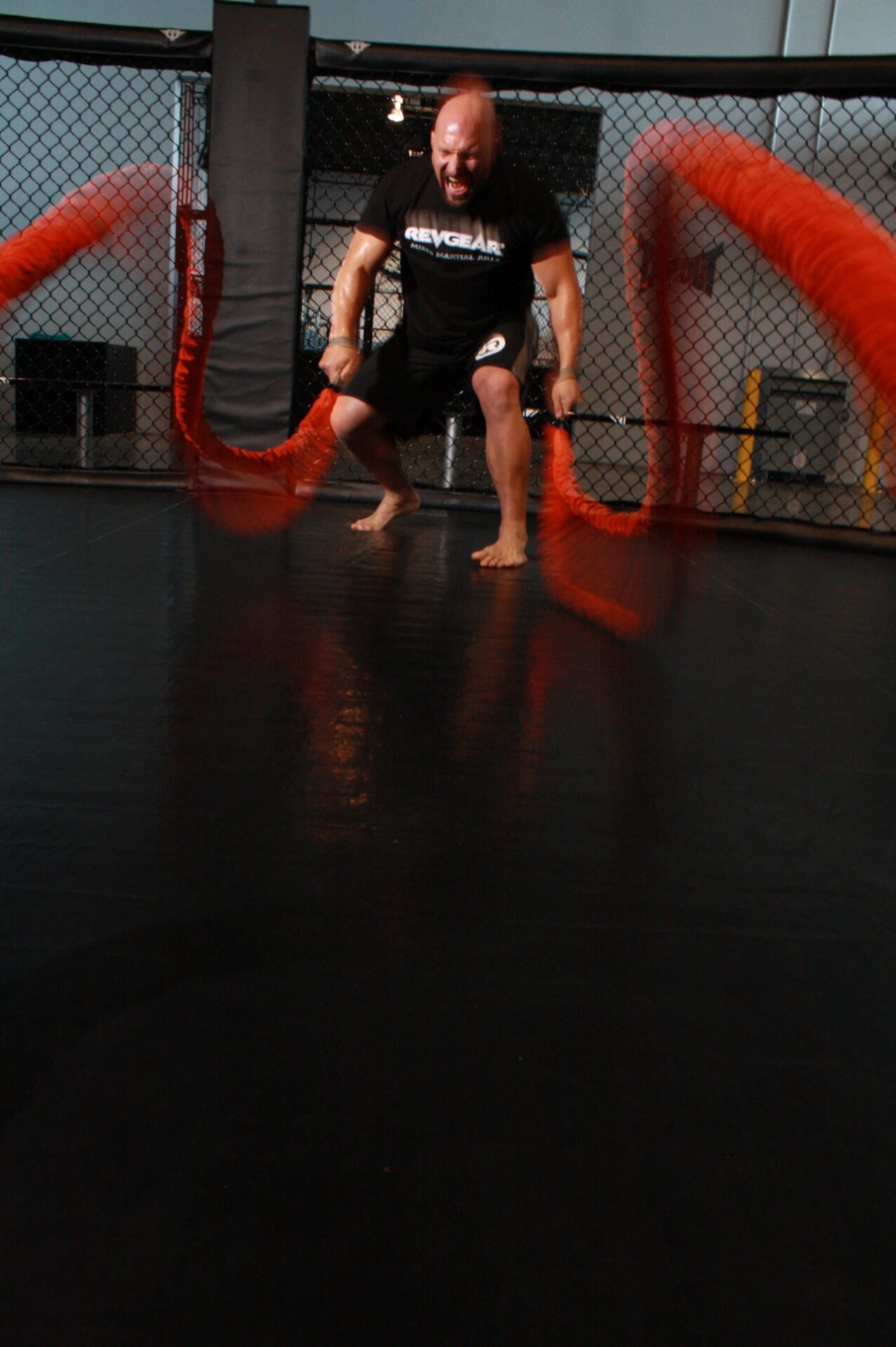
Photo: Wikimedia Commons
1.26 inches is the beginner thickness: Brobantle’s 1.26-inch 30-foot rope weighs 9.5 pounds, light enough to learn the wave pattern without fighting the rope. It suits beginners, smaller lifters, and warm-ups.
1.5 inches is the standard thickness: Brobantle’s 1.5-inch 30-foot rope weighs 14.5 pounds, and most home-gym ropes sit in this range. It suits almost every lifter, and it is the thickness to buy if you buy only one rope.
2 inches is the advanced thickness: Brobantle’s 2-inch 30-foot rope weighs 23.5 pounds, and the grip demand jumps far more than the weight suggests. It suits advanced lifters and grip-focused training, and it will humble anyone who jumps to it too early.
Weight is not a quality score: a heavier rope is not a better rope, it is a harder rope. Buy the thickness you can wave cleanly for full intervals, not the thickest rope you can lift off the floor.
Material: poly dacron vs manila vs nylon — what each actually does
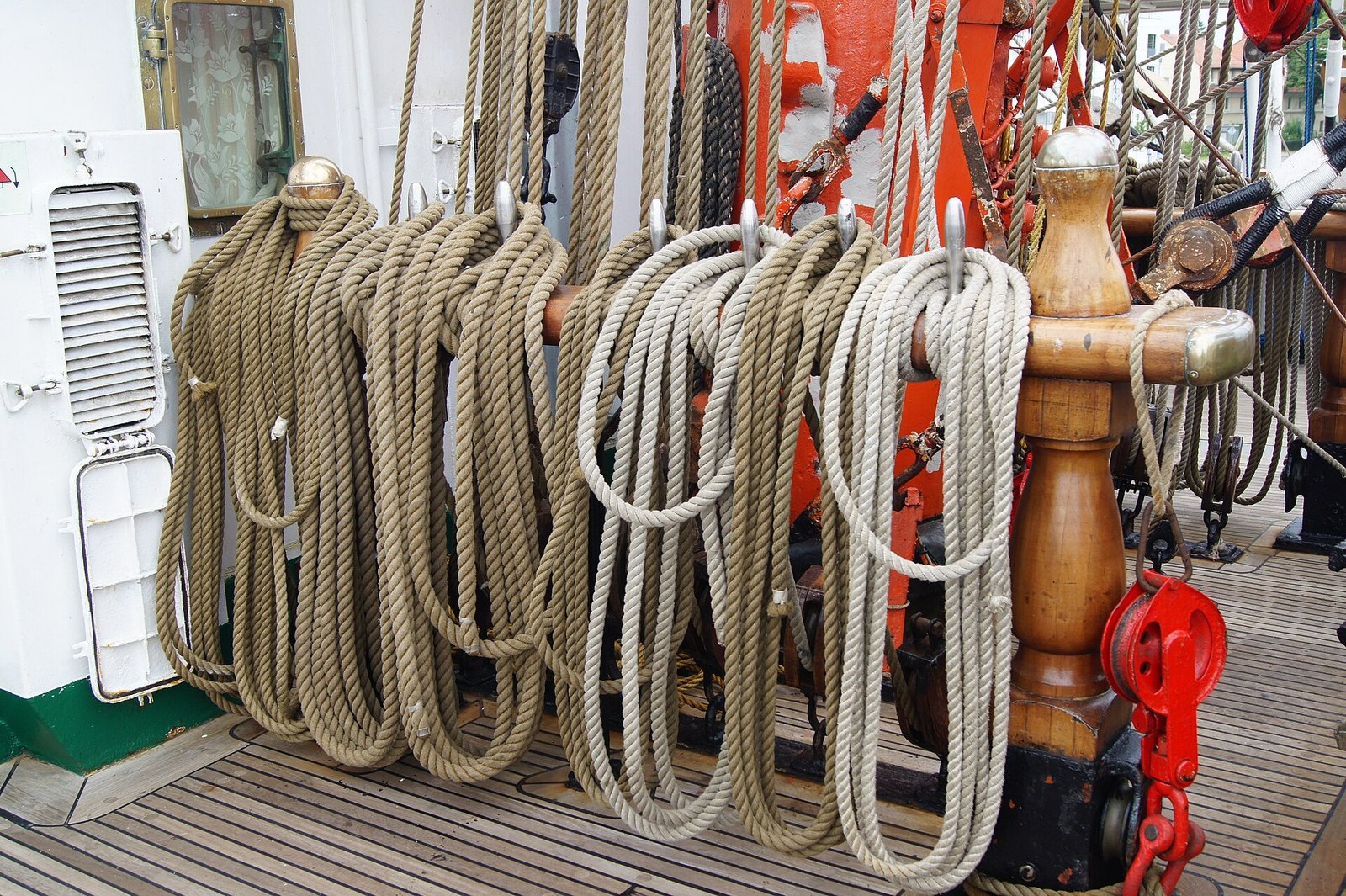
Photo: Barbara-Ingeborg / Wikimedia Commons
Poly dacron — polypropylene blended with polyester — is the standard battle rope material, and every rope here except the Brobantle and XMSound uses it. It resists weather and water, grips well even when damp, and holds up to anchor friction better than natural fibre. It is the default choice for good reason.
Manila is natural fibre: rough, grippy, and traditional, but it sheds, it absorbs water, and it rots outdoors. It suits indoor purists who like the feel, and nobody who trains in rain or on wet concrete.
Nylon is strong and smooth, with a little stretch that softens each wave — some lifters like the feel, others find it too slick when sweaty. Brobantle’s nylon cover is a sleeve, not the rope itself, which is the best of both: a polyester core with a nylon shield at the wear point.
Anchor options: rack, pole, wall mount, and anchor straps
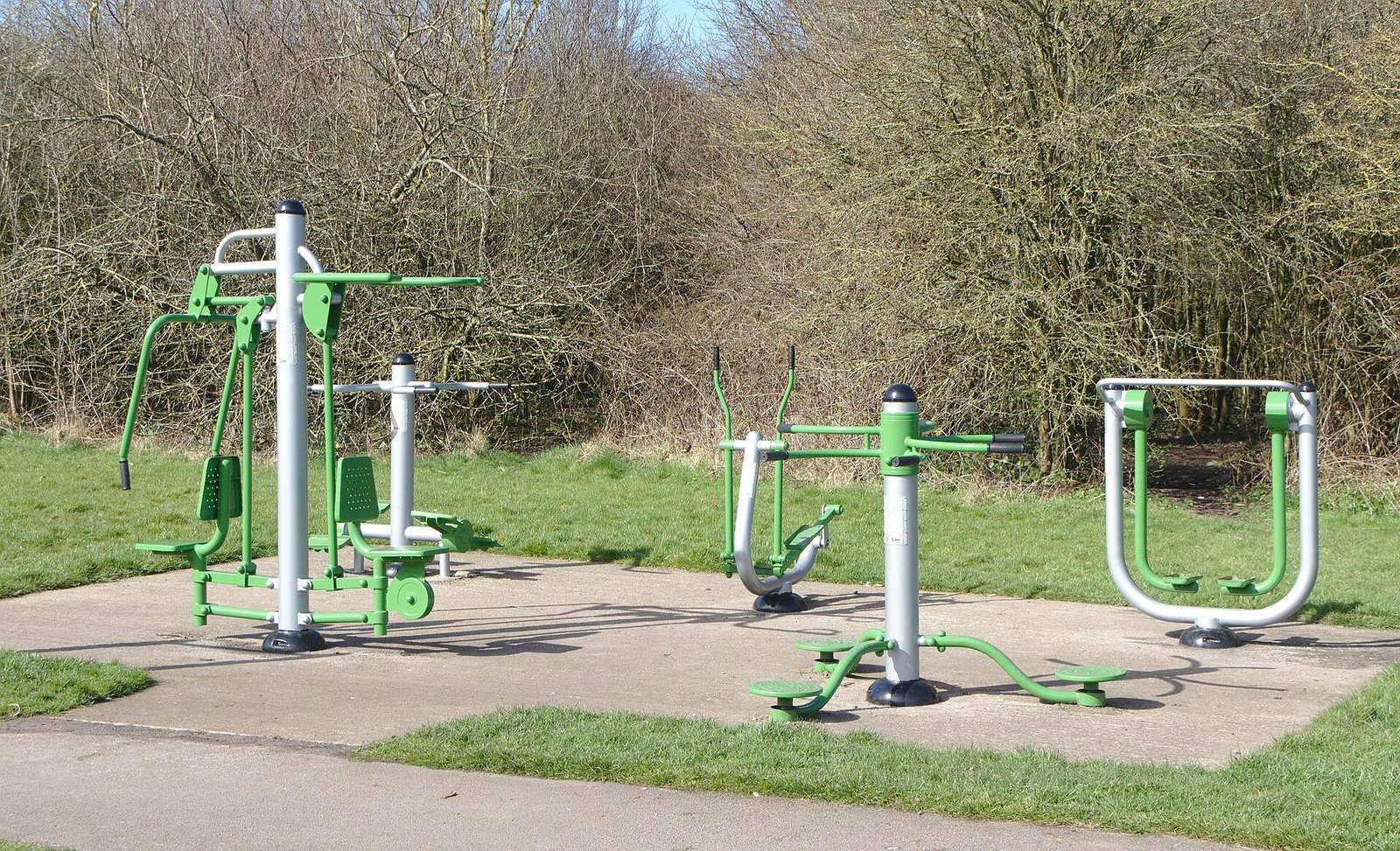
Photo: Rodhullandemu / Wikimedia Commons
Rack anchors loop the rope around a power rack’s upright or base: free, solid, and already in most home gyms. The rack must be weighted or bolted — an unweighted rack walks across the floor under hard slams.
Pole and tree anchors loop the rope around a post, a tree, or a fence post outdoors: free and simple, but check the post is genuinely fixed, and use a strap between rope and post so bark or rough metal does not shred the rope.
Wall mounts bolt a steel anchor plate to a wall or floor: the steadiest option, and the one Yes4All’s steel anchor suits best — but it means drilling, and a rented wall may not allow it.
Anchor straps — the POWER GUIDANCE and XMSound kits include them — wrap around any fixed object and clip to the rope with a carabiner. They protect the rope from metal-on-rope friction, which is exactly what frays an unsleeved rope at the anchor.
What no rope makes safe
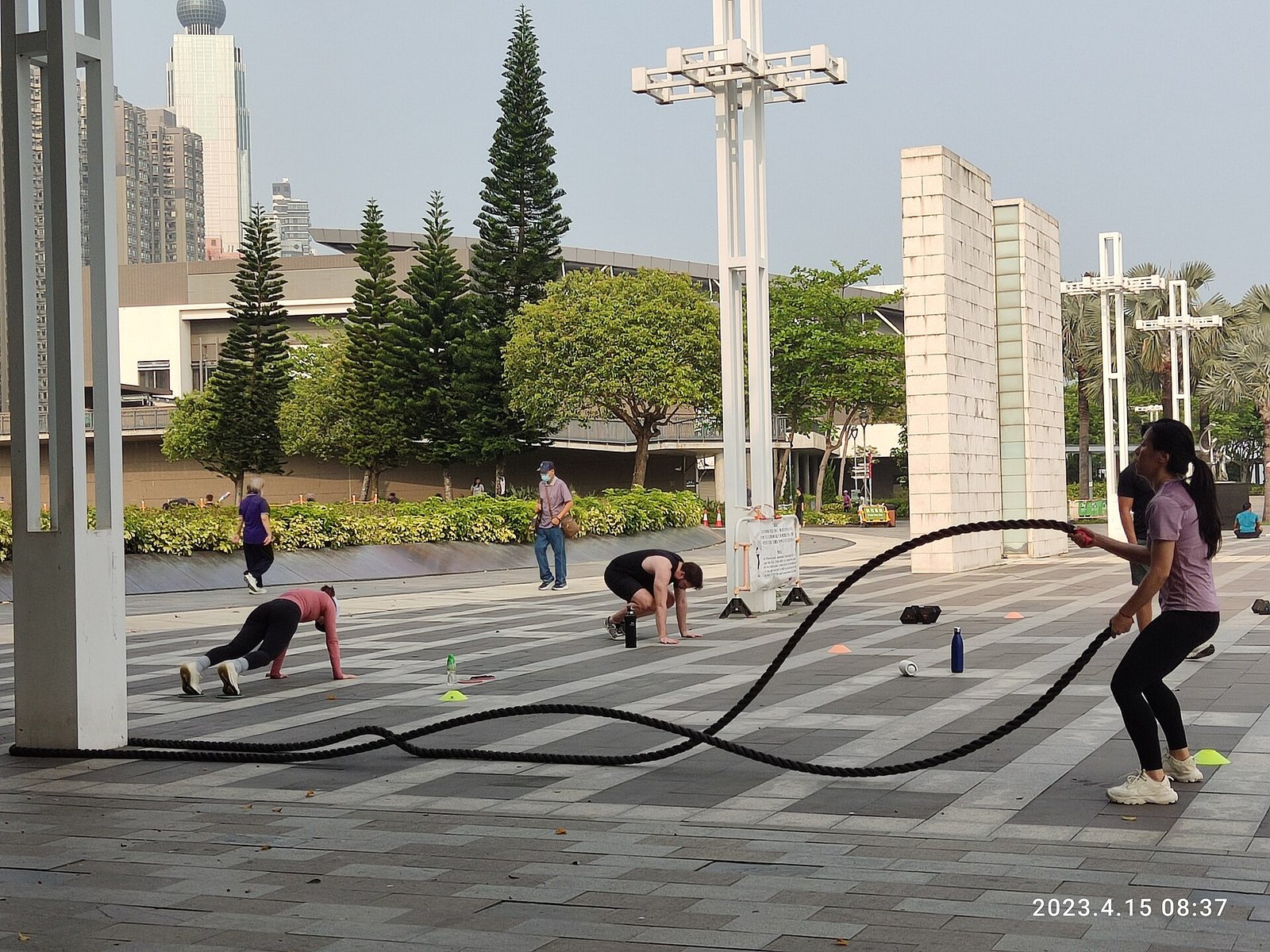
Photo: KGUWsimei Ling / Wikimedia Commons
A rope does not make a workout safe by itself, does not fix an anchor that is loose or overloaded, and does not protect a shoulder that is already injured. The rope adds load; it does not judge whether the load is wise.
Keep the area clear of the whipping rope ends — a battle rope’s ends travel fast and wide, and anything in their arc gets hit. Clear the floor before the set, not during it.
Inspect the rope and anchor before every session: fraying at the anchor point, a cracked end cap, a loose strap, or a wobbling mount means the session waits. A frayed rope fails without warning, and a failed anchor sends the rope — and you — somewhere unintended.
Never train through sharp pain, and never use a frayed rope hoping it holds one more session. If you have an injury, or a condition that affects how safely you can train, talk to a clinician or qualified coach before starting battle rope training. This guide is general information only, not medical advice.
Frequently Asked Questions

Photo: Wikimedia Commons
What length battle rope should a beginner buy?
A 1.5-inch 30-foot rope: 15 feet per arm fits most home gyms, and the weight is light enough to learn clean waves. Longer ropes add drag and floor needs you do not need yet.
Is a 1.5-inch or 2-inch rope better?
Neither is better in general — 1.5 inches suits almost every lifter, and 2 inches suits advanced lifters and grip-focused training. A 2-inch rope’s grip demand jumps far more than its weight suggests, so earn it before buying it.
Do I need an anchor, or can I just loop the rope around something?
You need something fixed either way: a rack, a pole, a wall mount, or an anchor strap kit. A rope looped around something that moves — a light rack, a thin post — walks across the floor under hard slams.
Can I use a battle rope indoors?
Yes, if the floor allows it: a tight-weave poly dacron rope will not damage hardwood or mats, but the rope’s ends whip wide, so you need clear floor on both sides and a ceiling high enough for overhead slams.
How long does a battle rope last?
With a sleeve at the anchor point and good storage — coiled, out of sun, away from heaters — a poly dacron rope lasts years of weekly training. An unsleeved rope on concrete, or a rope left stretched on an anchor, can fray in months. Inspect before every session, whatever its age.
When should I replace a battle rope?
When you find fraying at the anchor point, a cracked or missing end cap, thinning at one spot, or a handle that slips on the rope. Worn ropes fail without warning — replace them before they do.
Our Pick in One Line

Photo: Staff Sgt. Clinton Firstbrook / Wikimedia Commons
If you want one answer: the Amazon Basics 1.5-inch 30-foot rope is the best all-round buy because its poly dacron build, protective sleeve, and honest starter size cover almost any home gym — but if you have nothing to anchor to, buy the POWER GUIDANCE kit first, because a rope without an anchor is a coil on the floor.
For the rest of your home-gym setup, see our pull-up assistance bands guide and our jump ropes guide, and for the bench those ropes complement, see our weight benches guide.
As an Amazon Associate, we earn from qualifying purchases made through links on this page, at no extra cost to you.
This guide is research-based: we compared verified buyer reviews and manufacturer specifications, and we did not buy or hands-on test these products. Prices and availability change, so check the listing before ordering. The training information here is general information only, not medical advice — if you have an injury or a condition that affects how safely you can train, talk to a clinician first.