

A balance board is the smallest coach a home gym can buy — a plank, a dome, or a roller that turns standing still into training. No motor, no screen, no subscription. Just wobble, correction, and the small muscles around your ankles and core learning to fire on time. ⚖️
Step on, find your balance, hold it, repeat. The board’s type decides how hard it wobbles, its size decides whether your feet fit, and its surface decides whether it suits a gym floor or a standing desk.
But let us be plain from the start: boards add balance, coordination, and core work, but they do NOT build speed by themselves, they do NOT prevent injury by themselves, they do NOT replace progressive training or coaching, and they do NOT make a crowded or slippery area safe.
Used the right way — the right board for your level, short sessions progressed slowly, the area checked before every session — a good balance board is one of the cheapest ways to add real stability work to a home gym.
How We Picked These Balance Boards
Photo: Taco fleur / Wikimedia Commons
This guide is research-based. We did not buy or hands-on test these boards, and we do not claim otherwise.
We compared verified buyer reviews and manufacturer specifications, and we checked each board’s Amazon listing status through search results and listing trackers.
We picked 6 boards that are genuinely sold and cover different needs: a best-overall dome trainer, a classic wobble board, a roller board for athletes, a multi-mode set, a rocker board for desks, and a budget wobble board.
Prices are not quoted in this guide because they change often. The check-price links take you to the current listing, where you can see the latest price and availability.
Availability varies, so if your option shows as unavailable, check the listing’s other options before switching boards.
One note before we start: board type is the least forgiving figure in this guide. A roller board overwhelms a beginner, while a gentle rocker bores an athlete — read the board-type section before you trust any single number.
Quick Comparison
Photo: GymNation / Wikimedia Commons
| Board | Type | Size / capacity | Best for |
|---|---|---|---|
| BOSU Pro Balance Trainer | Dome / ball trainer | 26-inch dome, 350 lb | Best overall balance trainer |
| Yes4All Wooden Wobble Balance Board | Wobble board | 15.75-inch round, 300 lb | Best classic wobble board |
| Revolution Balance 101 v2 | Roller board | Roller + deck, adjustable | Best roller board for athletes |
| Sportneer 7-Mode Wobble Board | Wobble + roller + ball set | Birch deck, 450 lb | Best multi-mode set |
| StrongTek Professional Wooden Balance Board | Rocker board | 17.5 × 13.5 inches, 350 lb | Best rocker board |
| Amazon Basics Wood Wobble Balance Trainer Board | Wobble board | 15.75-inch square, 265 lb | Best budget wobble board |
1. BOSU Pro Balance Trainer — Best Overall Balance Trainer
Photo: Tyler Read / Wikimedia Commons
Who it suits: home athletes who want one trainer for everything — balance drills, core work, and strength circuits, on a dome or flipped flat.
The BOSU Pro Balance Trainer is the commercial-grade dome trainer: a 26-inch (65 cm) dome, 10 inches high when fully inflated, made from burst-resistant material with an 8-pound bladder, rated for up to 350 pounds. It includes a foot pump, a balance training manual, and a DVD, with a light grey clamp and platform. One listing signal showed strong recent demand — “700+ bought in past month” — which is the strongest sales signal in this guide.
The dome is the honest advantage here: one tool works dome-side up for balance and core, and platform-side up for strength circuits — the most versatile single trainer in this guide. The commercial rating is the other half of the story: 350 pounds and gym-grade build suit shared home gyms better than light home-only boards.
Pros: 26-inch dome with two usable sides; 350-pound capacity, commercial-grade; foot pump, manual, and DVD included; strongest recent sales signal in this guide; suits balance, core, and strength work alike.
Cons: some buyers report inflation and air-loss problems (a dome “flat by morning”), so check the valve and keep the pump handy; the Pro is a different product from the BOSU Home (65 cm, 300 lb) and BOSU Sport (50 cm) — confirm the listing matches the Pro before ordering; inflatable, so it needs more care and storage than a solid wood board.
👉 Check price on Amazon (please confirm the listing matches the Pro model, not the Home or Sport versions).
2. Yes4All Wooden Wobble Balance Board — Best Classic Wobble Board
Photo: Rodhullandemu / Wikimedia Commons
Who it suits: beginners and home athletes who want the classic wobble board — a round wooden disc that tilts in every direction, at a fair size and weight.
The Yes4All Wooden Wobble Balance Board is a 15.75-inch solid-wood disc with 360-degree rotation, a 15-degree tilt angle, and an anti-skid pad, rated for up to 300 pounds, with a 30-day return policy and a 1-year warranty. One listing signal showed strong recent demand — “100+ bought in past month” — but other crawls showed no featured offers, so availability should be re-checked at ordering time (see the warning below).
The round disc is the honest advantage here: 360-degree wobble trains balance in every direction, not just side to side — which matters when ankle stability, not just rocking, is the goal. The size is the other half of the story: 15.75 inches fits most feet and most rooms without dominating the floor.
Pros: 360-degree rotation with a 15-degree tilt; solid wood with an anti-skid pad; 300-pound capacity; 30-day return and 1-year warranty; suits beginners and general home training.
Cons: availability signals conflict across crawls — one showed recent purchase activity, others showed no featured offers — so check the listing before ordering; a round disc tilts in every direction, so beginners should start near a wall or rail; wood needs dry storage, not a damp garage floor.
👉 Check price on Amazon (availability signals conflicted across listing crawls — please confirm the listing shows a current offer before ordering).
3. Revolution Balance 101 v2 — Best Roller Board for Athletes
Photo: Akhlispurnomo / Wikimedia Commons
Who it suits: athletes and board-sport riders who want the hardest balance challenge — a deck rolling on a cylinder, with adjustable difficulty.
The Revolution Balance 101 v2 is a roller balance board sports trainer from Revolution Balance Boards: a deck that rolls on a cylinder, with an adjustable setup that lets the rider scale difficulty as balance improves. It is the board-sport pick of this guide — the motion closest to surfing, skating, and snowboarding — and roundups rate it among the best adjustable boards available.
The roller mechanism is the honest advantage here: a rolling deck moves under you in a way no fixed wobble board can match — which matters when the goal is dynamic balance, not just standing still. The adjustability is the other half of the story: difficulty that scales keeps one board useful as skill grows.
Pros: roller mechanism for dynamic, board-sport balance; adjustable difficulty that scales with skill; suits athletes and board-sport riders; rated among the best adjustable boards in roundups.
Cons: a second listing code (B00AAXD6X0) surfaced for the same title, so confirm the listing matches the 101 v2 before ordering; the hardest board in this guide — beginners should start on a wobble or rocker board first; one roundup noted durability complaints, so check the deck and roller before every session.
👉 Check price on Amazon (please confirm the listing matches the 101 v2, since a second listing code exists for the same title).
4. Sportneer 7-Mode Wobble Board — Best Multi-Mode Set
Photo: Wikimedia Commons
Who it suits: home athletes who want one set that grows with them — seven challenge modes, a roller, and a ball, for balance, core, and board-sport training.
The Sportneer Balance Board is a 7-mode wobble board set: a birch deck with a roller and a 2.8-inch solid rubber ball, four independent magnetic removable stoppers for adjusting the range, and a stated capacity of up to 450 pounds — the highest in this guide. One listing signal showed strong recent demand — “300+ bought in past month” — but other crawls showed no featured offers, so availability should be re-checked at ordering time (see the warning below).
The seven modes are the honest advantage here: stoppers, roller, and ball combine into challenges from easy to advanced — which matters when one board must serve a household at different levels. The 450-pound rating is the other half of the story: the strongest stated capacity in this guide, with a solid rubber ball that cannot leak like an inflatable.
Pros: 7 challenge modes with roller and ball included; 4 magnetic stoppers for adjusting range; 450-pound capacity, highest in this guide; birch deck with a solid rubber ball (no leaking); suits beginners through advanced users.
Cons: availability signals conflict across crawls — one showed recent purchase activity, others showed no featured offers — so check the listing before ordering; a set with more parts needs more storage than a single disc; the magnetic slots may leave slight visible marks on the deck surface (the maker says this is normal, not a defect).
👉 Check price on Amazon (availability signals conflicted across listing crawls — please confirm the listing shows a current offer before ordering).
5. StrongTek Professional Wooden Balance Board — Best Rocker Board
Photo: Jdsteakley / Wikimedia Commons
Who it suits: desk workers, beginners, and home athletes who want gentle, predictable balance work — a rocker board that moves in one plane, at a desk or in a gym.
The StrongTek Professional Wooden Balance Board is a rocker board in premium lauan hardwood plywood: 17.5 × 13.5 × 3 inches, rated for up to 350 pounds, with a slip-resistant textured surface, anti-slip pads that protect floors, and no assembly required. It is also sold in a 360-degree wobble version and an extra-large 23.5 × 15.75-inch size — confirm the listing matches the standard rocker version before ordering.
The single-plane rock is the honest advantage here: side-to-side (or front-to-back, by turning the board) is the gentlest honest start — which matters for desk use and for older users building confidence. The desk fit is the other half of the story: compact, quiet, and floor-friendly, it is the board in this guide most often used under a standing desk.
Pros: gentle single-plane rock, ideal for beginners and desk use; lauan hardwood plywood with a slip-resistant surface; 350-pound capacity; anti-slip pads protect floors; no assembly, ready to use.
Cons: a single-plane rock is the easiest challenge here — athletes will outgrow it fastest; confirm the listing matches the standard rocker version, not the 360-degree wobble version or the extra-large size; compact platform suits stationary balance work better than walking drills.
👉 Check price on Amazon (please confirm the listing matches the standard rocker version, not the 360-degree or extra-large versions).
6. Amazon Basics Wood Wobble Balance Trainer Board — Best Budget Wobble Board
Photo: Wikimedia Commons
Who it suits: budget buyers who want the simplest honest wobble board — solid wood, non-slip surface, no extras, from a brand with easy returns.
The Amazon Basics Wood Wobble Balance Trainer Board is a 15.75 × 15.75 × 3.15-inch solid-wood board with a non-slip surface, rated for up to 265 pounds and backed by an Amazon Basics 1-year limited warranty. Listing crawls showed it sold and shipped by Amazon.com, which is the cleanest availability signal in this guide — no conflicting “no featured offers” crawl for this board.
The simplicity is the honest advantage here: one board, one wobble, no parts to lose — which matters when the goal is daily balance work, not a gadget collection. The warranty is the other half of the story: a 1-year limited warranty on the cheapest board here is the best risk cover per rupee of the six.
Pros: solid wood with a non-slip surface; compact 15.75-inch square; cleanest availability signal in this guide (sold by Amazon.com in crawls); 1-year limited warranty; suits budget buyers and beginners.
Cons: 265-pound capacity is the lowest in this guide — heavier users should pick a 300-pound-plus board; no roller, ball, or adjustable settings, so it cannot grow with advanced users; a square board wobbles differently from a round disc, so try the shape before committing to a second board.
How to Choose the Right Balance Board
Photo: Shixart1985 / Wikimedia Commons
Start with your level, then your board type, then your floor. A board that cannot be used where you train is decoration, and a board whose wobble never leaves the cupboard is cupboard weight you paid for.
Then buy in this order: a wobble or rocker board first if you are a beginner, a dome trainer first if you want balance plus strength circuits, and a roller board first if you already balance well and want a board-sport challenge.
Board type: wobble vs rocker vs dome/ball vs roller — what each actually does
Photo: Tokumeigakarinoaoshima / Wikimedia Commons
Wobble boards (Yes4All, Amazon Basics, Sportneer) tilt in every direction on a rounded base: they suit general balance, ankle stability, and core work — but they challenge beginners fastest, so start near a wall or rail.
Rocker boards (StrongTek) rock in one plane on curved edges: they suit desk use, beginners, and gentle daily balance — but they are the easiest challenge here, so athletes outgrow them first.
Dome/ball trainers (BOSU Pro) give a soft, inflated dome on one side and a flat platform on the other: they suit balance plus strength circuits in one tool — but they need inflation care and more storage than a solid board.
Roller boards (Revolution 101 v2, Sportneer’s roller mode) roll a deck on a cylinder: they suit athletes and board-sport riders chasing dynamic balance — but they are the hardest boards here, so they suit experienced users, not first boards.
Board size and level: what each size actually suits
Photo: Wikimedia Commons
Compact boards (15.75 inches: Yes4All, Amazon Basics) suit most feet and most rooms: the board fits under a desk or in a cupboard, and the wobble stays predictable. This is where most real beginner board buying starts.
Mid-size boards (17.5 × 13.5 inches: StrongTek; 26-inch dome: BOSU Pro) suit dedicated training space: a bigger platform fits wider stances and strength circuits. This is where most real home-gym board buying happens.
Level follows the same rule as every progression: start with a rocker or wobble board, then add a dome or roller board over seasons, never at maximum difficulty on the first session.
Material and durability: wood, plastic, and inflatable — what lasts
Photo: Wikimedia Commons
Wood is the gym standard: solid wood and hardwood plywood survive daily use, grip well, and age gracefully, which is why four of the six boards here are wood. Check the surface before every session — a worn grip pad is a slip waiting to happen.
Plastic and composite decks are the light standard: they travel well and resist moisture, but they can feel slicker than wood and crack under heavy use. A board stored in a car boot lasts far longer than one left in a wet garage.
Inflatable domes are a care signal in disguise: the BOSU Pro’s dome gives the softest, most joint-friendly surface here — while a dome that loses air mid-session ends the session abruptly. Keep the pump handy and check inflation before every use.
Surface and storage suitability: floor, desk, and cupboard
Photo: Wikimedia Commons
A gym floor is the kindest surface: every board here performs well on a flat, dry, non-slip floor, with room to step off in any direction. This is where every board performs best, and where roller boards earn their keep.
A standing desk needs a quiet board: a rocker or low wobble board works well — a roller board does not, and a dome trainer is too tall for most desks. Anti-slip pads protect floors, and bare feet or flat shoes grip better than socks.
A cupboard wears boards slowest: it keeps wood dry, domes out of sunlight, and rollers out of dust. If the cupboard is your only storage, buy a compact board and accept that a dome trainer needs more room than a disc.
Storage decides whether a board survives the season: upright, dry, and visible keeps boards together and used, while boards loose in a corner get forgotten, warped, and stepped on. Store the board upright and dry before every session ends.
What no board makes safe
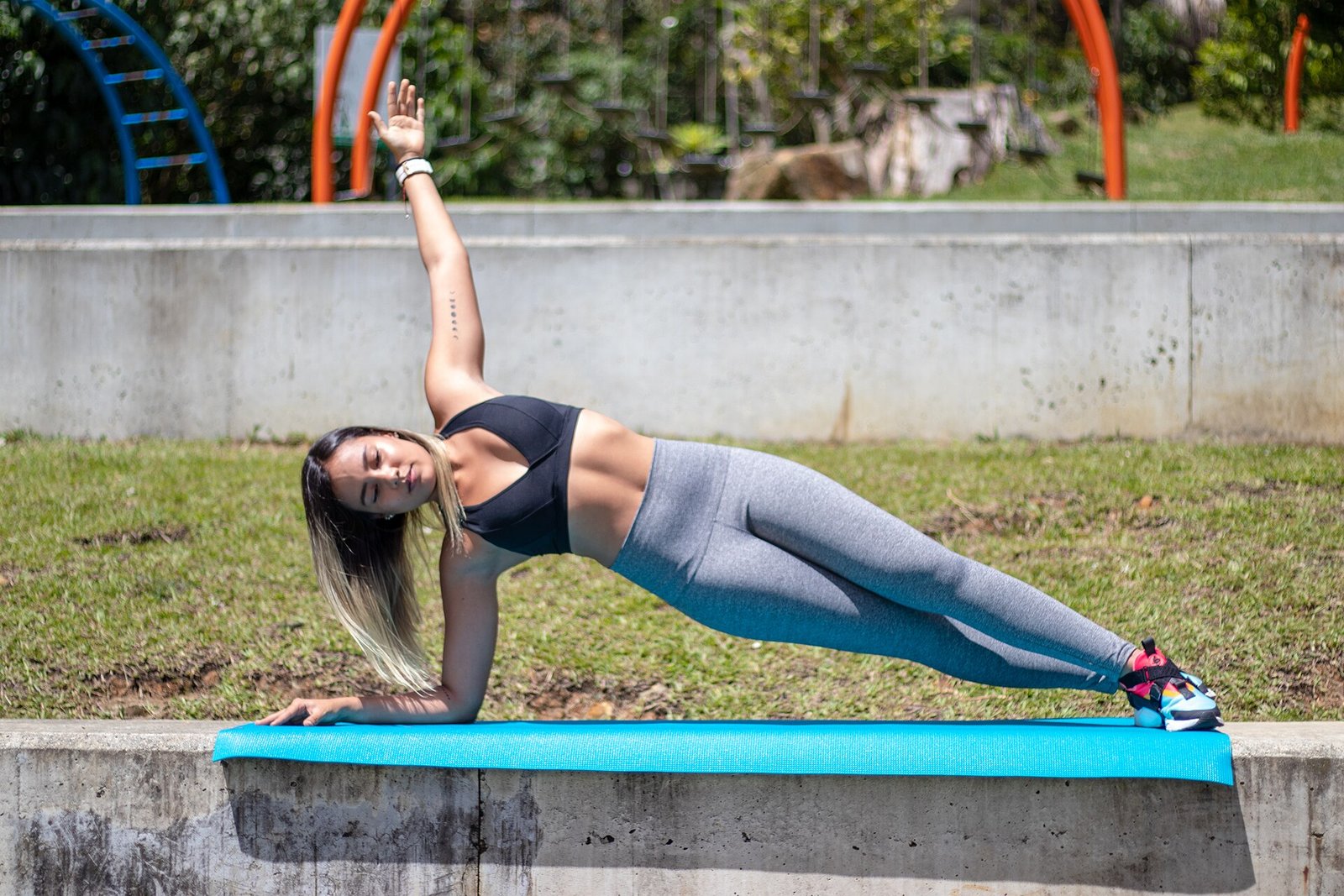
Photo: Tyler Read / Wikimedia Commons
A board does not make balance safe by itself, does not fix a floor that is wet, uneven, or crowded, and does not protect ankles, knees, or Achilles tendons that are already injured. The board creates the wobble; it does not judge whether the wobble is wise for you.
Check the board and the area before every session: no cracks, no worn grip, no loose parts, and a drill area clear of obstacles, holes, and other people. A session that starts at full difficulty before technique is clean ends abruptly.
Start slow: learn each board at low difficulty, near a wall or rail, then add difficulty in small steps over sessions, never at maximum wobble on the first rep. Keep the area clear of the board’s edges and of anything you could land on. Never train through sharp pain, and never use a board hoping it holds one more session. If you have an injury, or a condition that affects how safely you can train, talk to a clinician or qualified coach before starting board training. This guide is general information only, not medical advice.
Frequently Asked Questions
Photo: Tokumeigakarinoaoshima / Wikimedia Commons
Which balance board should a beginner buy first?
The Yes4All wobble board or the Amazon Basics wobble board: simple, low, and predictable, with no roller to chase. Beginners should start near a wall or rail and move to dome or roller boards only when the wobble feels easy.
Do balance boards build speed or prevent injury?
No — plainly: boards train balance, coordination, and core control, which support athletic training, but speed comes from sprint and strength training, and injury prevention is broader than any single tool. A board is one part of a programme, not a guarantee.
What is the difference between a wobble board, a rocker board, a dome trainer, and a roller board?
A wobble board tilts in every direction; a rocker board rocks in one plane; a dome trainer gives a soft inflated dome plus a flat platform; a roller board rolls a deck on a cylinder. Difficulty rises in that order — rocker easiest, roller hardest.
What weight capacity do I need?
Pick a board rated above your body weight plus any load you hold: the Amazon Basics board is rated 265 pounds, the Yes4All 300, the BOSU Pro and StrongTek 350, and the Sportneer 450. When in doubt, buy the higher rating.
Can I use a balance board at a standing desk?
Yes, with a rocker or low wobble board — the StrongTek rocker is the desk pick of this guide. Keep the area clear, wear flat shoes or go barefoot, start with short sessions, and stop if your form or focus slips.
When should I replace a balance board?
When its grip wears smooth, its wood cracks, its dome loses air, or its roller wobbles unevenly. Worn boards mislead balance — replace them before they do, and check the board before every session.
Our Pick in One Line

Photo: Staff Sgt. Clinton Firstbrook / Wikimedia Commons
If you want one answer: the BOSU Pro Balance Trainer is the best all-round buy because its two-sided dome, 350-pound commercial rating, and included pump, manual, and DVD cover almost any home-gym user — but if you want the simplest honest start, buy the Yes4All wobble board first, because a round wooden disc that tilts in every direction is the truest balance test a beginner can own.
For the rest of your home-gym setup, see our speed and agility books guide and our reaction lights guide, and for the ladders those balance drills complement, see our agility ladders guide.
As an Amazon Associate, we earn from qualifying purchases made through links on this page, at no extra cost to you.
This guide is research-based: we compared verified buyer reviews and manufacturer specifications, and we did not buy or hands-on test these products. Prices and availability change, so check the listing before ordering. The training information here is general information only, not medical advice — if you have an injury or a condition that affects how safely you can train, talk to a clinician first.