

You set a loaded bar down after a heavy deadlift and feel the whole garage floor shudder. That is what a home gym looks like without a platform. 🏋️
A lifting platform, a stall mat, or a set of floor tiles gives the bar somewhere safe to land, so your floor stays intact and your neighbours stay calm.
But let us be plain from the start: a platform protects the floor and dampens noise, but it does not make dropping a loaded bar safe on any floor, it does not make an unprotected concrete slab or wooden floor safe by itself, and it does not replace a proper platform or mats under heavy drops.
Used the right way — thick rubber where plates land, a solid centre to stand on, and a floor underneath that can take the load — a platform is the cheapest insurance a home gym ever buys.
How We Picked These Platforms and Mats
This guide is research-based. We did not buy or hands-on test these platforms or mats, and we do not claim otherwise.
We compared verified buyer reviews and manufacturer specifications, and we checked each product’s Amazon listing status through search results and listing trackers.
We picked 6 options that are genuinely sold and cover different needs: a complete framed deadlift platform, a shipped stall mat, a heavy-duty rubber mat, a rubber-top tile set, a budget foam tile set, and a thick foam tile set.
Prices are not quoted in this guide because they change often. The check-price links take you to the current listing, where you can see the latest price and availability.
Availability and size options vary, so if your option shows as unavailable, check the listing’s other options before switching products.
One note on thickness: it is the single most honest number in this guide. A 3/4-inch rubber mat and a 1/2-inch foam tile are not the same product class, and no foam tile, however thick, is a substitute for rubber where plates are dropped.
Quick Comparison
| Option | Type | Thickness | Best for |
|---|---|---|---|
| Titan Fitness Half Deadlift Platform | Framed platform | 1.6 in tiles | Best complete platform |
| IncStores 4’x6′ Premium Mat | Stall mat | 3/4 in | Best stall mat, shipped |
| Rubber-Cal Recycled Floor Mat | Rubber mat | 3/8 in | Best heavy-duty rubber mat |
| Yes4All Rubber Floor Tiles | Rubber-top tiles | 5/12 in | Best rubber-top tiles |
| ProsourceFit Puzzle Exercise Mat 1/2 in | EVA foam tiles | 1/2 in | Best budget foam tiles |
| BalanceFrom Puzzle Exercise Mat 3/4 in | EVA foam tiles | 3/4 in | Best thick foam tiles |
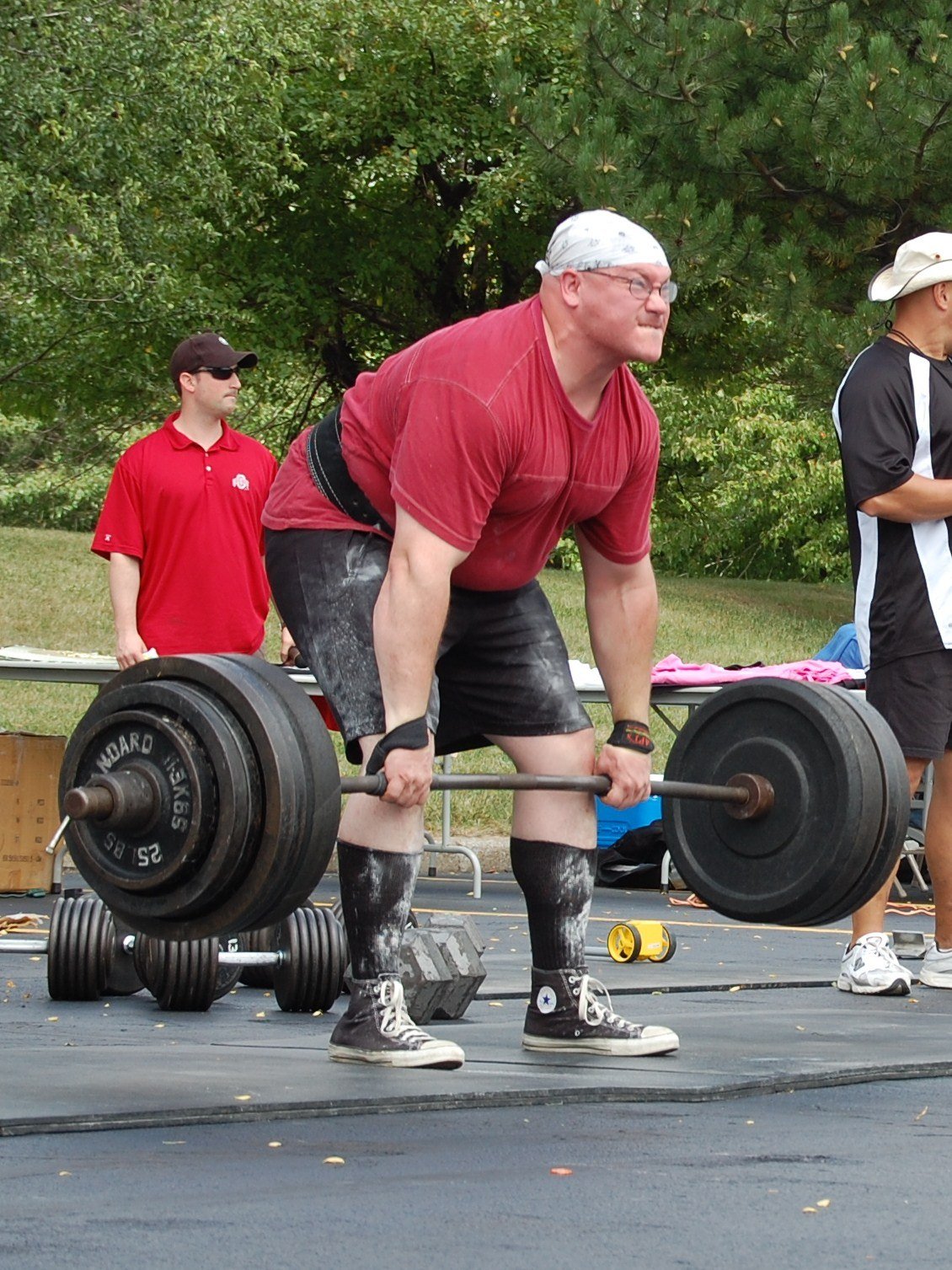
Photo: stu_spivack / Wikimedia Commons
1. Titan Fitness Half Deadlift Platform — Best Complete Platform
Who it suits: lifters who want a defined, framed lifting station for deadlifts and Olympic lifts, without building a platform from plywood themselves.
Titan’s half deadlift platform is an 8-foot by 4-foot bolt-together steel frame with four shock-absorbing rubber tiles, long band pegs, and floor clips to secure it to the ground. The frame is 2-inch, 11-gauge steel, and the tiles are 1.6 inches thick rubber, each weighing about 28 pounds.
The outside dimensions run about 99 inches long by 59.5 inches wide, with an inside lifting area of about 94.5 by 47.5 inches. The “half” in the name matters: the centre is left for plywood you fit yourself, so the platform is a frame plus rubber plate zones, not a finished wooden centre out of the box.
Pros: complete framed station with band pegs and floor clips; thick 1.6-inch rubber tiles where plates land; steel frame that defines the lifting area; from a well-known home-gym brand.
Cons: the centre needs plywood fitted by you — it is not a finished platform on arrival; one recent listing crawl showed no featured offers available, so check availability before ordering; the frame adds about 5 inches of overall height, so check ceiling clearance for overhead lifts.
👉 Check price on Amazon (check availability — one recent crawl showed no featured offers).
2. IncStores 4’x6′ Premium Mat — Best Stall Mat, Shipped
Who it suits: lifters who want the classic home-gym floor — thick vulcanized rubber — delivered, instead of hauling 100-pound mats from a farm store.
IncStores’ premium mat is a 4-foot by 6-foot vulcanized rubber sheet, 3/4 inch thick, sold for gym flooring, home gyms, and horse stalls alike. Each mat covers 24 square feet, and two mats side by side make a lifting platform; three cover a rack and bench footprint.
Stall mats are the default home-gym floor for a reason: at 3/4 inch of dense rubber they take dropped barbells on concrete, they need no glue, and they cost less per square foot than most dedicated gym flooring when bought in store. The shipped version trades the store trip for delivery weight — each mat is close to 100 pounds, so plan the delivery and the layout before ordering.
Pros: 3/4-inch dense vulcanized rubber, the proven barbell-drop floor; 24 square feet per mat, easy to tile into a platform; no glue or fixings needed; shipped to your door.
Cons: about 100 pounds per mat — heavy to move and cut; one recent listing crawl showed no featured offers available, so check availability before ordering; rubber smell on arrival is normal and fades with airing.
👉 Check price on Amazon (check availability — one recent crawl showed no featured offers).
3. Rubber-Cal Recycled Floor Mat — Best Heavy-Duty Rubber Mat
Who it suits: lifters who want a single heavy-duty rubber mat under a rack, a bench, or a machine, without covering a whole room.
Rubber-Cal’s recycled floor mat is a 4-foot by 6-foot mat in 3/8-inch recycled rubber, made from discarded tires. It is thinner than a stall mat, but it is dense, abrasion-resistant rubber — a floor-protection mat for equipment and weights, not a foam comfort tile.
The honest place for this mat is under equipment that does not get dropped: a rack, a bench, a machine, or a dumbbell area. It protects the floor from weight and scuffs and damps vibration, but at 3/8 inch it is not the mat to drop a loaded barbell on — that job belongs to the 3/4-inch mats above.
Pros: dense recycled rubber, made for heavy equipment; 4-by-6-foot size fits one rack or machine; stays down under its own weight, no glue needed; works indoors and outdoors.
Cons: the Amazon product link below rests on a single source, so confirm the listing before ordering; at 3/8 inch it is not thick enough for repeated barbell drops — use a stall mat or platform for that; check the thickness variant on the listing, since Rubber-Cal sells several.
👉 Check price on Amazon (please confirm the listing matches the Rubber-Cal recycled floor mat — its link is single-source, see the note in our research).
4. Yes4All Rubber Floor Tiles — Best Rubber-Top Tiles
Who it suits: lifters who want interlocking tiles with a real rubber top, for a home gym floor that handles equipment and moderate weights.
Yes4All’s tiles are interlocking rubber floor tiles with a rubber top layer over a high-density EVA foam base, 5/12 inch thick overall. The set covers 20 square feet with eight tiles, and the interlocking edges let you build a floor to fit the room, then take it up again if you move.
The rubber top is the point: it gives grip and durability that plain foam tiles lack, while the foam base cushions and quiets the floor. It is a genuine middle ground — tougher than foam, easier to lay and move than a stall mat — but it is still not a drop zone for heavy barbells.
Pros: rubber top for grip and durability; interlocking tiles fit any room shape; foam base cushions and reduces noise; easy to lay, move, and replace a single tile.
Cons: at 5/12 inch overall it is not a barbell-drop surface — keep heavy drops on rubber mats or a platform; check the tile count and coverage on the listing, since Yes4All sells several set sizes.
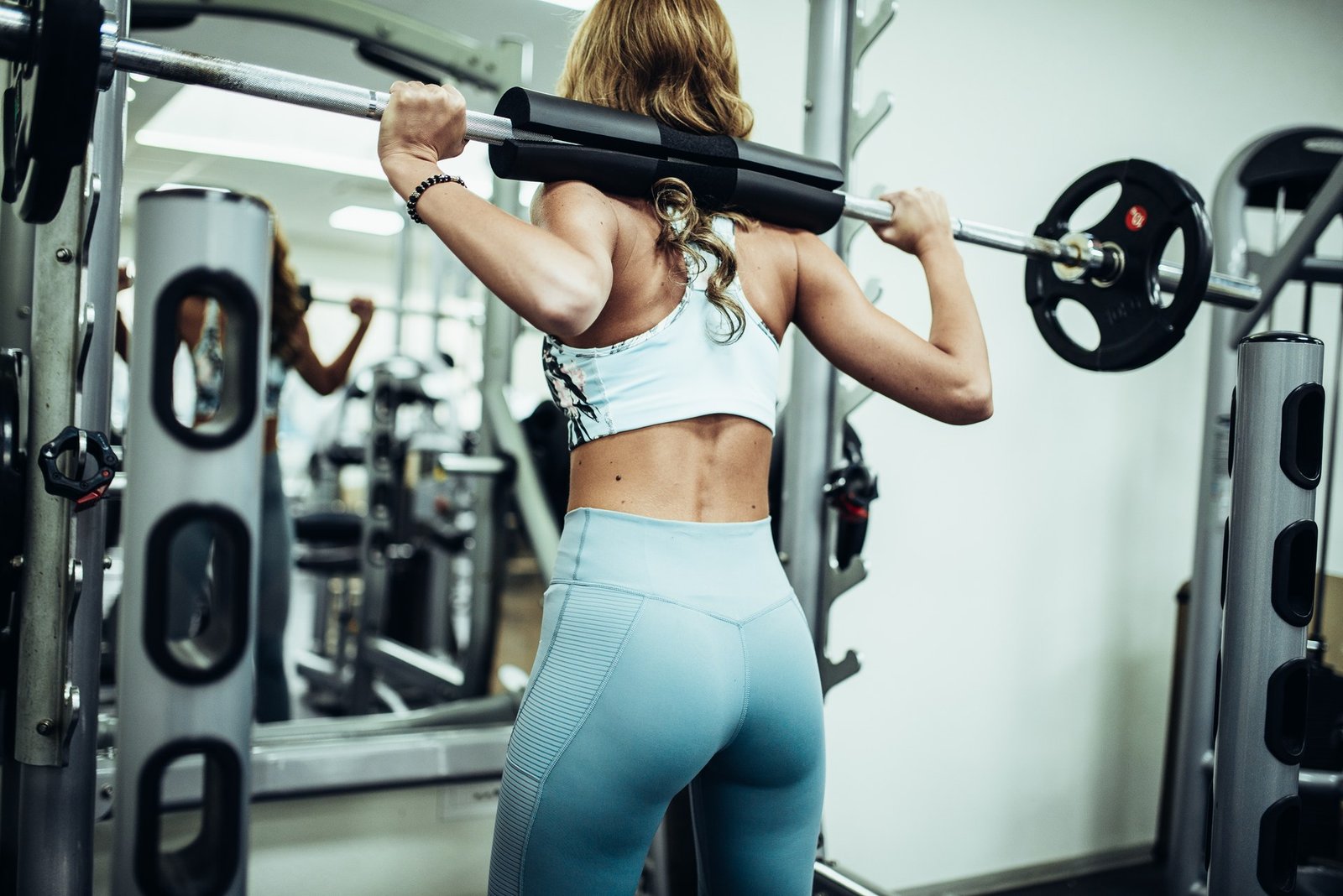
Photo: Nenad Stojkovic / Wikimedia Commons
5. ProsourceFit Puzzle Exercise Mat 1/2 in — Best Budget Foam Tiles
Who it suits: lifters and home exercisers who want a cheap, comfortable floor for floor work and light equipment, not for dropping weights.
ProsourceFit’s puzzle mat is a 1/2-inch EVA foam interlocking tile set, with 24-inch by 24-inch tiles and end borders for a finished edge. The 6-tile set covers 24 square feet, and larger sets cover 48 or 144 square feet for a whole room.
Foam tiles are the budget floor for a reason: they assemble in minutes, they cushion knees and elbows on hard floors, and they protect the floor under light equipment. They are not, and never were, a barbell-drop surface — a dropped plate will dent foam, and a heavy rack will compress it over time.
Pros: cheapest way to cover a home-gym floor; interlocking tiles with finished borders; cushions floor work and light equipment; assembles and disassembles in minutes.
Cons: EVA foam, not rubber — not for dropped barbells or heavy plates; one recent listing crawl showed no featured offers available, so check availability before ordering; foam compresses under heavy racks over time.
👉 Check price on Amazon (check availability — one recent crawl showed no featured offers).
6. BalanceFrom Puzzle Exercise Mat 3/4 in — Best Thick Foam Tiles
Who it suits: lifters who want the thickest foam floor available, for a home gym that mixes floor work, stretching, and light equipment.
BalanceFrom’s puzzle mat is a 3/4-inch high-density EVA foam tile set, with 24-inch by 24-inch tiles and end borders. The 6-tile set covers 24 square feet, and the 24-tile set covers 96 square feet for a full room.
At 3/4 inch, this is the thickest foam in the guide, and the extra thickness shows in comfort: knees, hips, and elbows on a hard floor feel the difference over a 1/2-inch tile. It still is not rubber, and it still is not a drop surface — thickness in foam is comfort, not impact protection for the floor.
Pros: thickest foam here at 3/4 inch; high-density EVA cushions joints on hard floors; interlocking tiles with finished borders; sets from 24 to 96 square feet.
Cons: foam, not rubber — not for dropped barbells, however thick; heavy equipment compresses foam over time, so keep racks on rubber where possible; check the thickness variant on the listing, since BalanceFrom sells 1/2-inch and 3/4-inch sets side by side.
How to Choose the Right Platform or Mat
Start with what actually hits the floor. If you drop barbells, you need rubber at least 3/4 inch thick where plates land — a stall mat, a platform, or both. If nothing is ever dropped, a rubber mat or rubber-top tiles under the equipment is enough.
Then measure the room: a platform needs its full footprint plus room to load the bar, and a tiled floor needs the room’s real dimensions, not a guess.
Platform vs interlocking tiles vs rolled mats
Platforms (Titan) are a defined lifting station: a frame, rubber plate zones, and a centre to stand on. Best for deadlifts and Olympic lifts, worst for small rooms, and the only option here built specifically for drops.
Interlocking tiles (Yes4All, ProsourceFit, BalanceFrom) cover a room in pieces you can lay, move, and replace. Best for whole-room floors and mixed training, worst for heavy drops unless the tiles are thick rubber.
Rolled and sheet mats (IncStores, Rubber-Cal) are single heavy sheets that stay down under their own weight. Best for one rack, one bench, or one drop zone, worst for rooms that need a finished, wall-to-wall look.
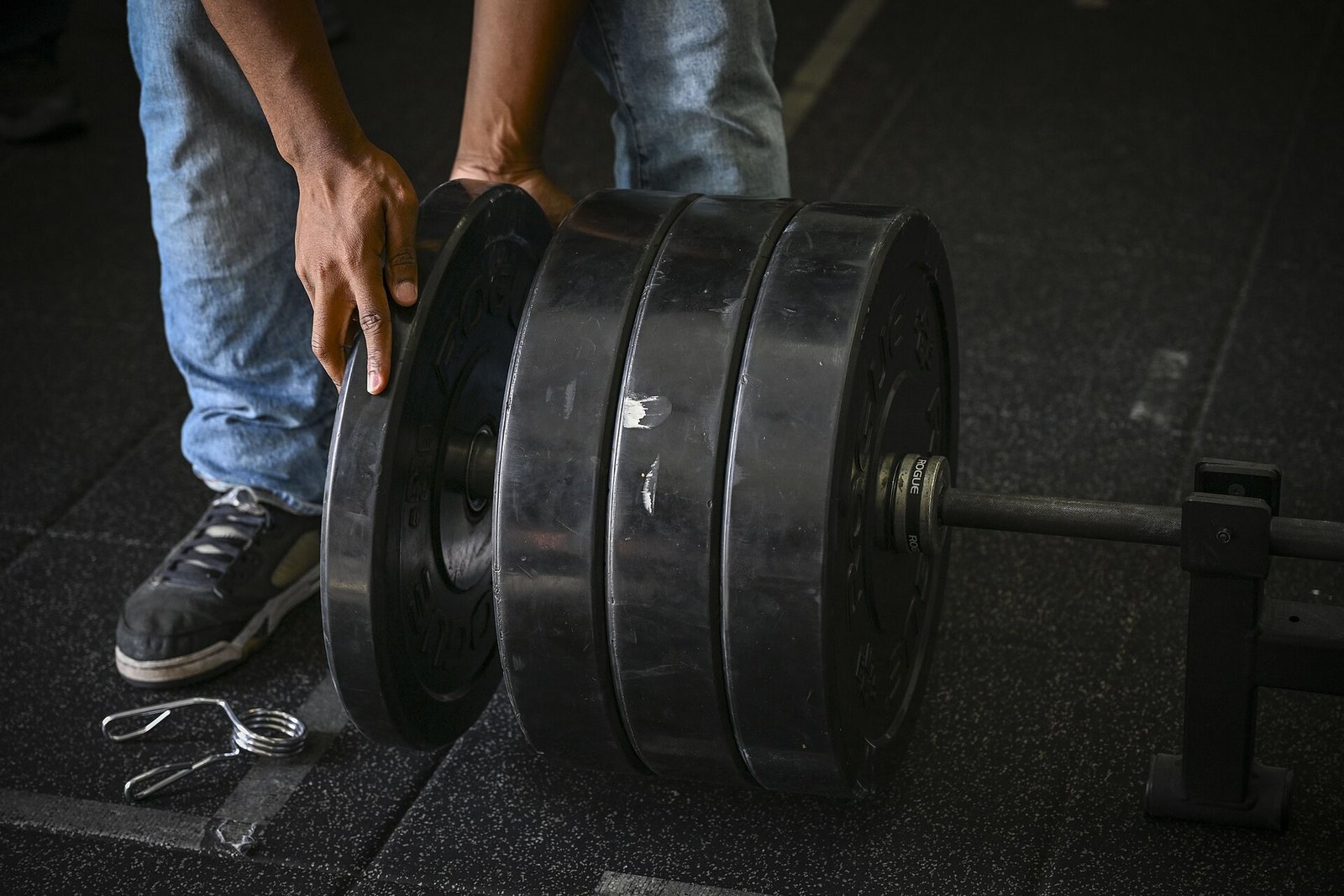
Photo: Wikimedia Commons
Thickness and density
Thickness alone does not tell the story — density does. A 3/4-inch dense rubber stall mat absorbs a dropped barbell; a 3/4-inch foam tile cushions a knee. Same number, different job.
For drops, the rule is simple: 3/4-inch rubber or thicker where plates land, on concrete. For equipment that never drops, 3/8-inch rubber is plenty. For floor work only, 1/2-inch to 3/4-inch foam is comfortable and cheap.
Do not buy thinner than you need to save money on a drop zone. A mat that is too thin for the job is not a bargain — it is a floor repair waiting to happen.
Size: Olympic platform vs deadlift pad
A full Olympic platform is about 8 feet by 8 feet or more, with room to drop a snatch or clean and jerk and step away from the bar. A deadlift platform is about 8 feet by 4 feet, with rubber where plates land and a centre to stand on.
The Titan half platform in this guide is the deadlift size: 8 by 4 feet, with the centre left for plywood. If you train Olympic lifts, you need the wider platform — or two stall mats side by side with a wooden centre, the classic DIY build.
Measure the bar, not just the platform. A loaded Olympic bar is over 7 feet long, and plates need clearance on both sides before they ever touch the floor.
Weight-drop protection vs noise
Rubber protects the floor; thickness and density quiet the drop. A stall mat on concrete does both well. A foam tile quiets footsteps and light equipment, but it does not protect a floor from a dropped plate.
Noise travels through the floor, not just through the air. On a suspended wooden floor, a platform helps, but it does not silence a drop — neighbours below will still hear it. If noise matters, drop less, and drop from lower.
Second-floor gyms need extra thought. A platform spreads the load, but it does not change what the floor joists underneath can carry. Check the floor before building a heavy platform upstairs.
Floor type underneath
Concrete slabs are the forgiving case: a stall mat or platform on concrete handles almost anything a home lifter drops. Suspended wooden floors are the careful case: spread the load, use a platform, and never drop a loaded bar on bare boards.
Tile and laminate floors need protection even for light equipment — a rubber mat under the rack stops scuffs and dents that no amount of careful lifting prevents. Carpet needs a hard layer under the platform, or the platform will rock on the pile.
Whatever the floor, keep it dry under the mats. Rubber traps moisture, and a damp mat on a wooden floor is a rot problem, not a gym problem.
Stall mats vs dedicated platforms
Stall mats are the budget platform: two 4-by-6 mats side by side, with a sheet of plywood between them if you want a wooden centre, make a lifting surface for a fraction of a framed platform’s cost. The trade is finish and definition — mats do not frame the lifting area the way a steel platform does.
Dedicated platforms are the finished station: a frame, matched tiles, and a centre, bought as one package. The trade is cost and size — they are bigger, heavier, and harder to move than mats.
Either works. What does not work is neither: a bare floor, a thin foam tile, or a rug under a loaded barbell.
What no platform makes safe
No platform makes dropping a loaded bar safe on any floor. A platform on a weak floor, a platform overloaded beyond its design, or a platform used for drops it was never built for will all fail — and the floor underneath fails with it.
No platform replaces a proper setup for heavy drops: bumper plates, not iron, for anything dropped from height; collars locked before every lift; and a clear area around the platform, with nothing and no one in the bar’s path.
If you have an injury, or a condition that affects how safely you can lift or move heavy plates, talk to a clinician or qualified coach before rearranging a home gym. This guide is general information only, not medical advice.
A note on the options not linked here
Tractor Supply’s 3/4-inch rubber stall mats are the best-known stall mats in home gyms, and the cheapest rubber per square foot when bought in store — but they are an in-store purchase, not an Amazon listing, so they are not linked here. If you can haul a 100-pound mat, they are the value pick.
Rogue’s deadlift and Olympic platforms top most roundups, but Rogue sells them direct from its own store, not through Amazon, so they are not linked in this guide either. If you already buy from Rogue, they are a sound choice; this guide covers what you can buy through Amazon links.
The classic DIY platform — two sheets of plywood with a stall mat on each side — is the cheapest real platform there is, and it is not a product to link. If you can cut plywood, it is worth building; if you cannot, the Titan framed platform above is the bought version.
Frequently Asked Questions
Do I need a platform, or will mats be enough?
If you drop barbells, you need a platform or 3/4-inch rubber mats where plates land. If nothing is ever dropped, a rubber mat or rubber-top tiles under your equipment is enough.
Are stall mats really the best home-gym floor?
For barbell training on concrete, yes — 3/4-inch dense rubber at a low cost per square foot is hard to beat. For a whole room, or a room that is also a living space, interlocking tiles look and feel better.
Can I drop a barbell on foam tiles?
No. Foam tiles cushion and quiet, but they dent under dropped plates and do not protect the floor underneath. Drops belong on rubber at least 3/4 inch thick, on a platform, or on a stall mat.
How big should my platform be?
About 8 feet by 4 feet for deadlifts, and 8 feet by 8 feet or more for Olympic lifts. Measure the loaded bar — over 7 feet long — and leave clearance on both sides before ordering.
Will a platform stop my neighbours hearing drops?
It helps, but it does not silence them. Rubber damps the impact and the noise, but sound travels through the floor structure too. On a suspended floor, drop less and drop from lower.
Can I use a platform on a wooden floor?
Yes, with care: spread the load on a platform or thick mats, never drop on bare boards, and check what the floor underneath can carry before building a heavy platform upstairs.
Our Pick in One Line
If you want one answer: two IncStores 4-by-6 premium mats side by side are the best all-round buy, because 3/4-inch dense rubber covers almost any home lifting need at a sane cost — but if you want a defined lifting station, the Titan half deadlift platform is the framed version of the same idea.
For the rest of your plate setup, see our bumper plates guide and our plate storage racks guide, and for keeping the bar loaded safely, see our barbell collars guide.
As an Amazon Associate, we earn from qualifying purchases made through links on this page, at no extra cost to you.
This guide is research-based: we compared verified buyer reviews and manufacturer specifications, and we did not buy or hands-on test these products. Prices and availability change, so check the listing before ordering. The training information here is general information only, not medical advice — if you have an injury or a condition that affects how safely you can lift, talk to a clinician first.